

Nepal Election Promises Jobs but Fails to Stem Youth Exodus as Migration Abroad Persists
Kathmandu, Nepal – February 26, 2026 – Nepal’s parliamentary elections, held amid widespread protests over economic hardship and youth unemployment, ended
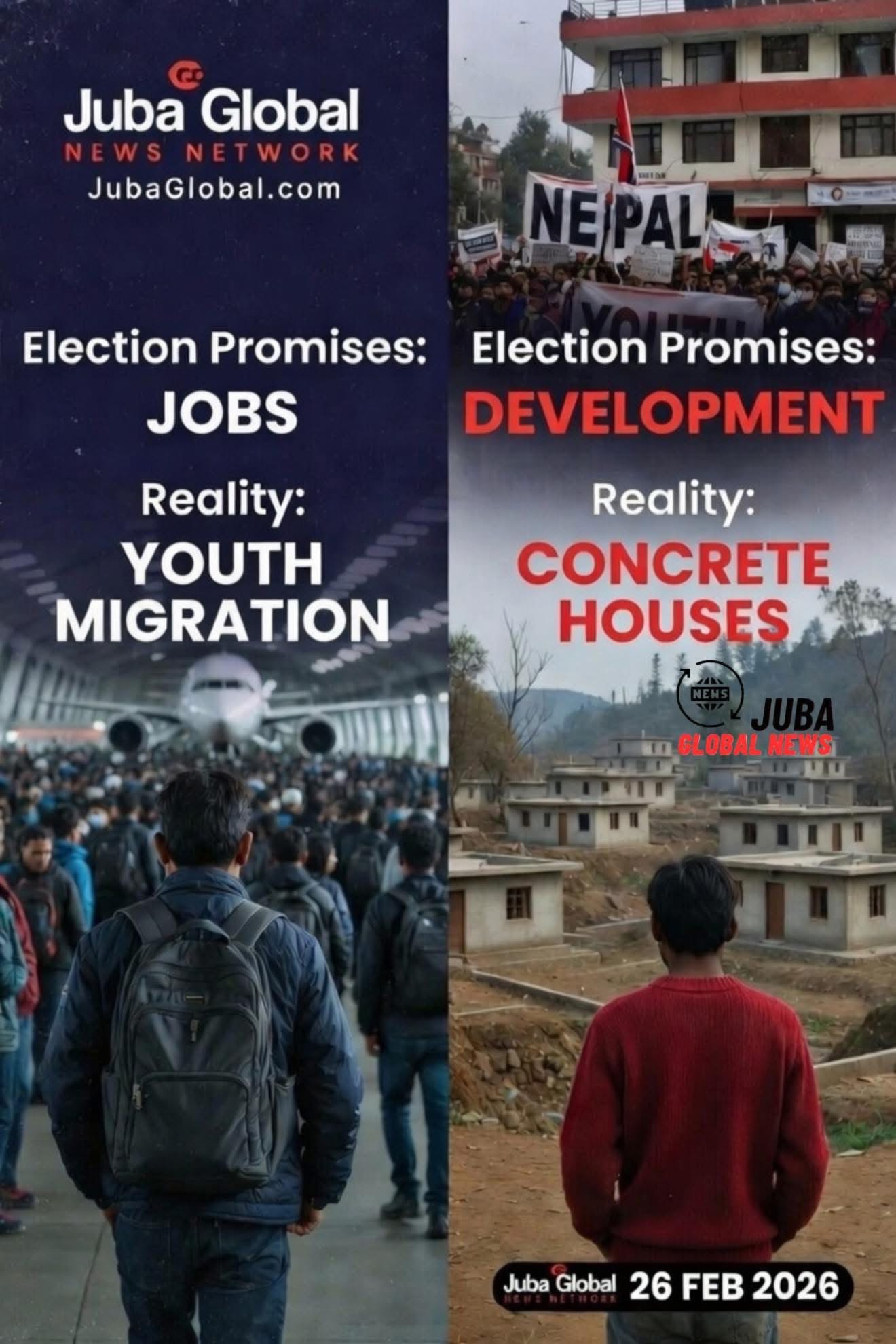
Kathmandu, Nepal – February 26, 2026 – Nepal’s parliamentary elections, held amid widespread protests over economic hardship and youth unemployment, ended with familiar promises from major parties: millions of new jobs, industrial revival, infrastructure megaprojects, and an end to the “brain drain” that has seen hundreds of thousands of young Nepalis leave every year for low-skilled work in the Gulf, Malaysia, South Korea, Europe, and beyond. Yet preliminary data and public sentiment indicate that the promises have done little to reverse the structural forces driving one of the world’s highest per-capita emigration rates.
Official figures released by the Department of Foreign Employment show that more than 780,000 Nepali citizens obtained foreign employment permits in 2025—roughly one every 40 seconds—and early 2026 numbers suggest the trend is accelerating rather than slowing. Remittances, which account for approximately 25–28% of Nepal’s GDP (among the highest ratios globally), reached a record US$12.4 billion last year, but the outflow of working-age population continues to hollow out rural communities and urban labor markets alike.
Election Rhetoric vs. Ground Reality
The three largest parties—Nepali Congress, CPN (UML), and Maoist Centre—each campaigned heavily on job creation. Nepali Congress leader Sher Bahadur Deuba promised to generate two million domestic jobs within five years through tourism revival, hydropower expansion, and agro-processing zones. UML chairperson KP Sharma Oli pledged massive investment in Special Economic Zones and vocational training tied to foreign investment from China and India. The Maoist Centre, led by Pushpa Kamal Dahal “Prachanda,” emphasized “decent work” and land reform to keep youth in agriculture.
Yet post-election focus groups and street interviews conducted by local think tanks (notably the Nepal Economic Forum and Social Science Baha) reveal deep skepticism. “They talk about jobs every five years,” said 24-year-old Ramesh Gurung, a recent civil-engineering graduate now preparing documents for a construction job in Qatar. “But when I apply for anything here, either there is no vacancy or they want five years’ experience for an entry-level post. Abroad I can earn in one month what I might make here in a year—if I get paid on time.”
The numbers back up the frustration. Nepal’s official unemployment rate hovers around 11–13%, but youth unemployment (ages 15–34) is estimated at 19–26% depending on the source. Underemployment is even more widespread: many who are “employed” work in low-productivity agriculture or informal urban services earning less than US$150 per month. Meanwhile, the average monthly salary for semi-skilled labor in Gulf countries ranges from US$400–800, often with food and accommodation provided.
Drivers of the Exodus
Several structural factors continue to fuel migration despite repeated political pledges:
- Education–Job Mismatch
Nepal produces roughly 400,000 new graduates annually, but the formal economy creates fewer than 100,000 new jobs per year. Engineering, nursing, and IT graduates frequently end up driving taxis in Kathmandu or working as security guards in Dubai. - Weak Private-Sector Growth
Manufacturing contributes less than 6% of GDP, tourism has not fully recovered from the pandemic and 2015 earthquake, and large-scale hydropower projects remain mired in delays and community opposition. - Remittance Dependency Trap
While remittances have financed consumption, education, and housing, they have also reduced pressure on politicians to create domestic employment. Many families now view foreign work as the default path to middle-class status. - Social and Cultural Normalization
Migration has become a rite of passage for young men in particular. Village after village in the hills displays new concrete houses built with Gulf or Malaysian earnings, reinforcing the perception that “success” lies abroad. - Lack of Returnee Reintegration
Return migrants often face stigma, skill mismatch, and lack of credit or entrepreneurial support. Many re-migrate within two years.
Political Fallout and Youth Discontent
The election saw historically low turnout among voters aged 18–35 (estimated at 52–58% compared to 72% overall), with many young people openly boycotting or spoiling ballots. Social-media hashtags such as #NoVoteNoFuture and #GharBasnuParchha (“We Must Stay Home”) trended for weeks before polling day. Independent youth candidates and small progressive parties gained visibility but won few seats.
Post-election protests in Kathmandu, Pokhara, and Biratnagar have continued, with demands shifting from “jobs” to systemic change: land reform, progressive taxation on remittance income, mandatory skill certification for foreign recruiters, and investment in green industries that can employ educated youth domestically.
Outlook: Can Nepal Reverse the Trend?
Experts remain divided. Optimists point to small successes—IT outsourcing growth in Kathmandu Valley, increased domestic tourism, and hydropower projects nearing completion—as seeds of change. Pessimists argue that without deep structural reform (land redistribution, labor-law enforcement, corruption reduction, and a coherent industrial policy), the exodus will continue until entire districts become “remittance colonies” with aging populations and shuttered schools.
For now, the airport in Kathmandu remains crowded with young men and women clutching new passports and work contracts. The election promised jobs at home, but for hundreds of thousands the real promise still lies in departure gates and foreign soil.
By: Juba Global News Network | JubaGlobal.com
Independent reporting from the heart of Africa, delivering global stories with regional insight. Follow us for unbiased coverage of international affairs.
