

Massive U.S. Fleet Heads Toward Iran Amid Rising TensionsTrump: U.S. is “watching Iran closely” as naval assets deploy to the Gulf region
On January 22, 2026, the Pentagon confirmed that a substantial U.S. naval task force—centered on the USS Abraham Lincoln Carrier Strike Group and reinforce
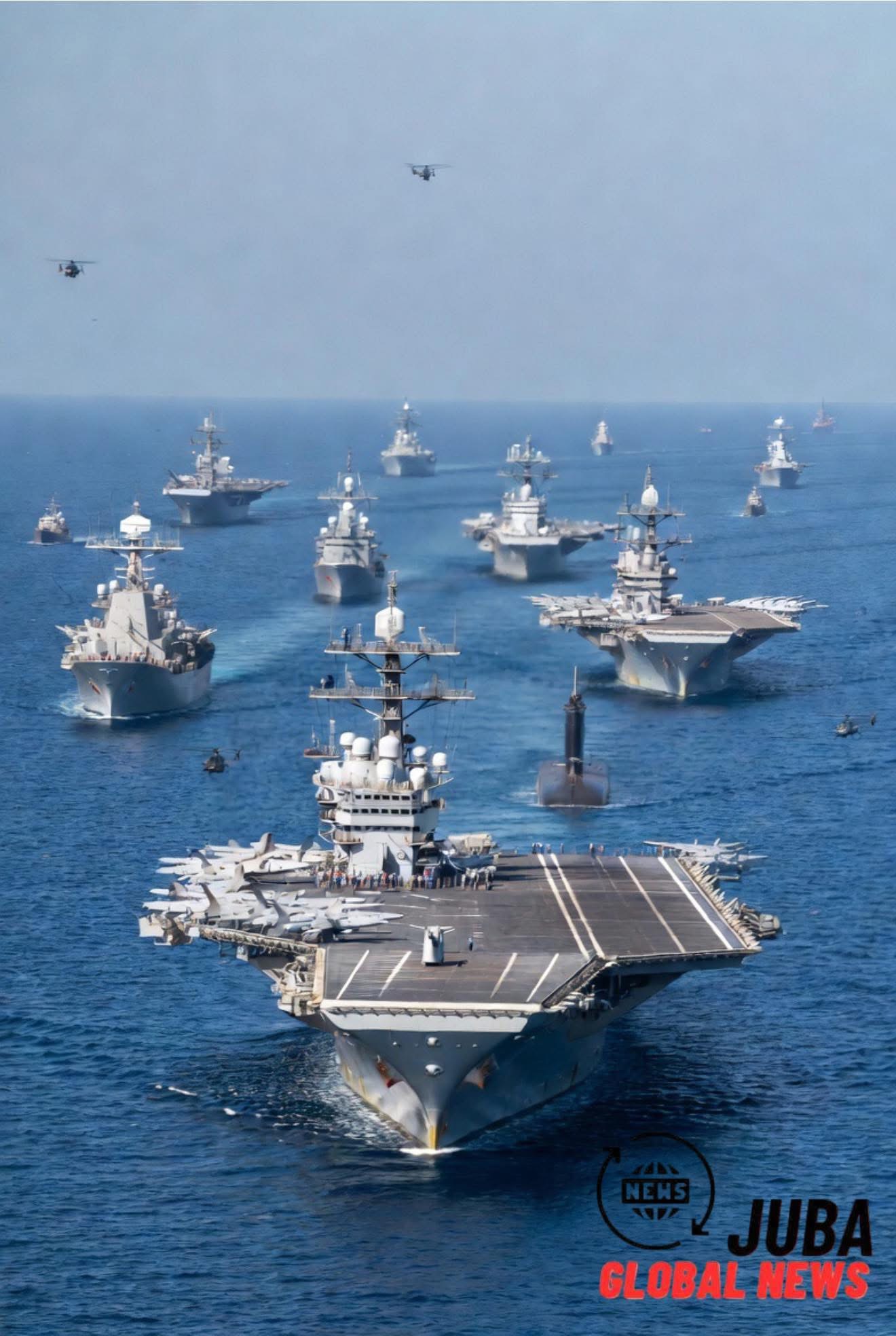
On January 22, 2026, the Pentagon confirmed that a substantial U.S. naval task force—centered on the USS Abraham Lincoln Carrier Strike Group and reinforced by elements of the USS Dwight D. Eisenhower Carrier Strike Group—has begun transiting toward the Persian Gulf and Arabian Sea. The movement represents one of the largest concentrations of American naval power in the Middle East since the height of the 2019–2020 tanker crisis and follows a sharp escalation in U.S.–Iran rhetoric and military posturing during the first weeks of President Donald Trump’s second term.
Speaking to reporters aboard Air Force One en route from Davos to Washington, President Trump described the deployment as a “very strong message” and stated that the United States is “watching Iran very closely—very, very closely.” He added: “They know what we’re capable of. We don’t want trouble, but if trouble comes, we’re ready. Nobody wants to see what happens if they cross the line.”
Composition and Scale of the Deployment
Defense officials briefed congressional leaders that the current movement includes:
- Two carrier strike groups (Abraham Lincoln and elements of Eisenhower), each comprising one Nimitz- or Ford-class nuclear-powered aircraft carrier, a Ticonderoga-class cruiser, 3–4 Arleigh Burke-class destroyers, and one–two Virginia-class attack submarines.
- Additional surface combatants from the 5th Fleet area of responsibility, including littoral combat ships and mine countermeasures vessels.
- Expeditionary strike group assets, with the amphibious assault ship USS Bataan and embarked Marine Expeditionary Unit (MEU) repositioning from the Mediterranean toward the Gulf of Oman.
- Logistics and replenishment ships to sustain extended operations without reliance on regional ports if access is denied.
Combined, the force comprises more than 12–15 major surface warships, 140–180 strike aircraft (F/A-18E/F Super Hornets, EA-18G Growlers, F-35C Lightning IIs), numerous helicopters, and several thousand embarked Marines and sailors. This represents roughly 30–35% of currently deployable U.S. carrier-based combat power being concentrated in or near the Persian Gulf theater.
The deployment builds on existing 5th Fleet assets already in the region, including the USS Cole (DDG-67) and several guided-missile destroyers conducting freedom-of-navigation operations near the Strait of Hormuz.
Timeline and Immediate Triggers
The decision to surge forces appears to have crystallized in the days following Trump’s inauguration and his first National Security Council principals meeting on January 21. Key reported triggers include:
- Iranian Revolutionary Guard Corps (IRGC) naval exercises in the Strait of Hormuz on January 19–20, during which fast-attack craft practiced swarm tactics and missile launches near commercial shipping lanes.
- A January 20 statement by IRGC Navy commander Rear Adm. Alireza Tangsiri threatening to “close the Strait” if U.S. sanctions were tightened further or if Israel conducted new strikes on Iranian-linked targets in Syria.
- Intelligence reporting (partially declassified in a White House fact sheet) indicating accelerated Iranian uranium enrichment activity at Fordow and Natanz, with estimates that breakout time to weapons-grade material has fallen below 10 days.
- Renewed Houthi attacks on Red Sea shipping using Iranian-supplied anti-ship ballistic missiles and drones, which the administration has directly attributed to Tehran’s support.
Trump administration officials have framed the deployment as both deterrent and defensive, aimed at protecting maritime commerce, deterring Iranian escalation, and reassuring Gulf allies—particularly Saudi Arabia, the UAE, and Bahrain—that the United States will back them against Iranian pressure.
Regional and International Reactions
- Iran — Tehran responded swiftly. Foreign Minister Abbas Araghchi called the deployment “provocative and dangerous” and warned that any violation of Iranian waters or airspace would be met with a “crushing response.” Supreme Leader Ali Khamenei’s office issued a statement saying the U.S. presence “only increases the risk of miscalculation.”
- Israel — Prime Minister Benjamin Netanyahu welcomed the move in a private call with Trump, according to Israeli officials, viewing it as a necessary counterweight to Iran’s nuclear and proxy activities.
- Gulf Cooperation Council states — Saudi Arabia and the UAE issued restrained statements of support for “freedom of navigation” but privately expressed concern about being drawn into a wider conflict. Oman and Qatar called for de-escalation and dialogue.
- China and Russia — Both issued statements criticizing the deployment as “destabilizing.” China’s Foreign Ministry urged all parties to “exercise restraint” while Russia offered to mediate.
- European Union — EU foreign policy chief Josep Borrell called for “maximum restraint” and revival of nuclear talks, warning that military escalation could derail diplomatic efforts.
Strategic Implications
The positioning of two carrier strike groups within range of Iranian targets gives the United States the ability to conduct sustained air operations, enforce maritime interdiction, protect shipping through the Strait of Hormuz (through which roughly 20% of global oil passes), and, if necessary, strike Iranian nuclear, missile, and IRGC facilities. It also provides a visible reassurance to Gulf partners at a time when some question long-term U.S. commitment.
At the same time, the concentration of forces creates its own risks: a miscalculation, accidental collision, or Iranian asymmetric attack (small-boat swarms, mines, anti-ship missiles) could rapidly escalate into direct U.S.–Iran conflict. Pentagon planners are reportedly emphasizing deconfliction channels and rules of engagement designed to prevent unintended war while maintaining credible deterrence.
President Trump has signaled that the deployment is not prelude to preemptive strikes but rather a show of strength intended to compel Tehran to return to negotiations on nuclear and regional issues. Whether Iran interprets the move as coercion or provocation—and whether it responds with restraint or escalation—will likely determine the trajectory of U.S.–Iran relations in the critical early months of the second Trump administration.
Juba Global News Network will continue to monitor naval movements, Iranian responses, and diplomatic developments in the region. For real-time updates, visit JubaGlobal.com.
(End of article)
