

Mass Church Abduction in Nigeria Sparks Widespread Fear and Outrage: Over 160 Worshippers Seized in Bold Daylight Raid
By: Juba Global News Network | JubaGlobal.com January 23, 2026 KURMIN WALI, Kaduna State, Nigeria – In a brazen and horrifying attack that has sent shockwa
By: Juba Global News Network | JubaGlobal.com
January 23, 2026
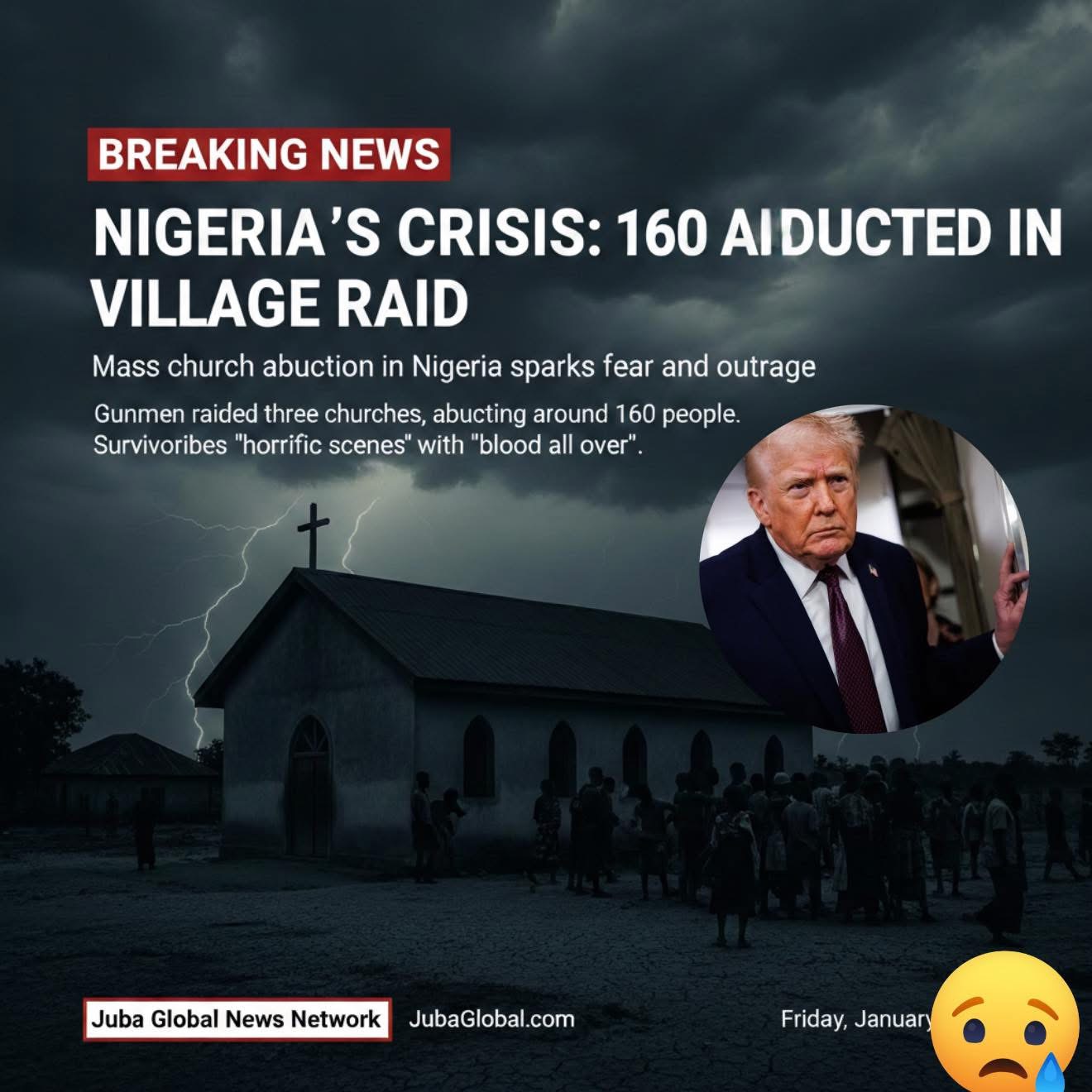
KURMIN WALI, Kaduna State, Nigeria – In a brazen and horrifying attack that has sent shockwaves across Nigeria and beyond, armed gunmen raided three churches during Sunday morning services in the remote village of Kurmin Wali, Kajuru Local Government Area of Kaduna State, abducting more than 160 worshippers. The incident, which unfolded on January 18, 2026, has exposed the relentless surge in mass kidnappings across the northwest, despite repeated government promises to curb banditry and insecurity.
Eyewitness accounts and survivor testimonies paint a picture of terror: gunmen, armed with sophisticated weapons and arriving on motorcycles, stormed the Evangelical Church Winning All (ECWA), Albarka Cherubim and Seraphim, and Haske Cherubim and Seraphim churches around 9–11 a.m., as congregants gathered for worship. They reportedly surrounded the village, beat residents, and forcibly marched victims into nearby forests. Initial reports from local residents and church leaders indicated 177 people were taken, though 11 later escaped, leaving at least 163–168 still in captivity.
One survivor, Sarah Peter (name changed for safety), described the chaos to the BBC: “Blood was all over.” She recounted being struck on the head by an attacker but managing to flee amid the confusion. “They gathered people together and later forced them to march into the bush,” she said. Other escapees and community members reported that the gunmen targeted worshippers indiscriminately, separating some older women and young children for release while marching the rest deeper into the wilderness.
Initial Police Denial Followed by Confirmation
The abduction initially drew controversy when Kaduna State Police Command denied the reports, dismissing them as “mere falsehood” being spread by conflict entrepreneurs. Spokesperson Benjamin Hundeyin stated there was no confirmation of such an incident. However, under mounting pressure from church leaders, local lawmakers, and media scrutiny, the police reversed course within days.
By January 20–21, authorities confirmed the attack had occurred, acknowledging that gunmen had targeted the three churches in Kurmin Wali. Hundeyin noted that operational units and intelligence sources had verified the abductions, though he refrained from providing specific numbers pending further investigation. A state lawmaker representing the area, Usman Danlami Stingo, told the Associated Press that 177 were initially missing, with 11 returns, leaving 168 unaccounted for. The Christian Association of Nigeria (CAN) in the north, led by Reverend John Hayab, reported 172 abducted initially, with nine escapes, leaving 163 in captivity.
The backtracking has fueled outrage, with critics accusing security forces of downplaying the crisis to avoid embarrassment or due to inadequate response capabilities.
Ransom Demands and Ongoing Search
As of January 22–23, the kidnappers—widely believed to be “bandits” operating in the region’s forests—began contacting families with ransom demands. Residents told the Associated Press that the gunmen are seeking 17 motorcycles as payment for the release of the hostages. Search operations by security forces remain underway, but the rugged terrain and the bandits’ knowledge of the area have complicated efforts.
This mass abduction ranks among the largest targeting religious sites in recent Nigerian history, highlighting how criminal gangs exploit vulnerable rural communities for profit through kidnapping-for-ransom. Kaduna State, like neighboring Zamfara, Katsina, and Niger, has seen a persistent wave of such attacks, often involving entire villages, schools, or places of worship. Bandits frequently target Christians and Muslims alike, though attacks on churches have drawn particular international attention amid concerns over religious targeting.
Broader Context of Insecurity
Nigeria’s northwest has been plagued by banditry for over a decade, with armed groups engaging in cattle rustling, village raids, and mass abductions. Despite military operations, community vigilantes, and promises from federal and state governments, kidnappings have surged in recent years. High-profile cases—such as the 2021 abduction of over 300 schoolboys in Kankara or repeated university kidnappings—have underscored the failure to restore security.
Church leaders and human rights groups have condemned the latest incident as emblematic of state failure. Reverend Hayab described it as a “merciless assault,” while Christian Solidarity Worldwide and Open Doors highlighted the risks to religious minorities in the region. Families of the abducted are gripped by fear, with many pleading for swift rescue and expressing despair over ransom affordability.
The attack has reignited calls for stronger security measures, better intelligence, and community protection. President Bola Tinubu’s administration faces mounting pressure to address the northwest crisis, even as other regions grapple with insurgency in the northeast and separatist tensions in the southeast.
As the search continues and families await news of their loved ones, the Kurmin Wali abduction stands as a grim reminder of Nigeria’s enduring security challenges. With over 160 lives hanging in the balance, the nation—and the international community—watches anxiously for any sign of resolution amid the persistent fear that such horrors could strike again.
By: Juba Global News Network | JubaGlobal.com
January 23, 2026
