

Massive Russian Assault on Kyiv: A Brazen Strike Amid Looming Peace Talks
By Juba Global News Network JubaGlobal.com December 27, 2025 In the early hours of December 27, 2025, the Ukrainian capital of Kyiv was jolted awake by one
By Juba Global News Network
JubaGlobal.com
December 27, 2025
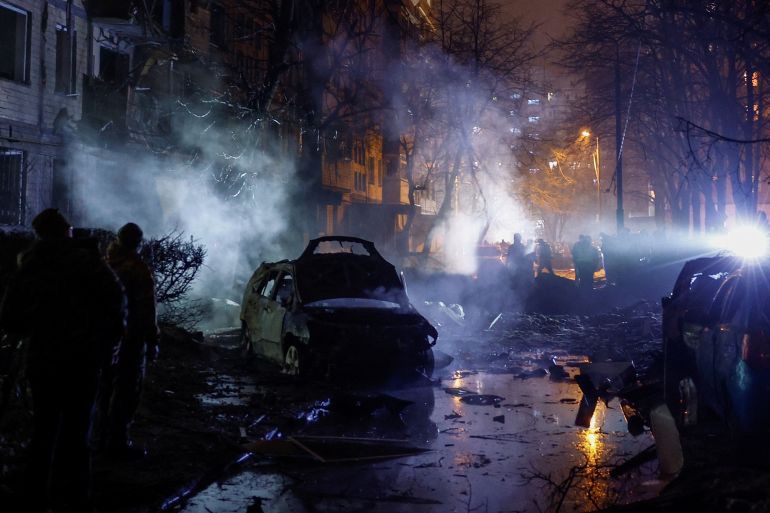
In the early hours of December 27, 2025, the Ukrainian capital of Kyiv was jolted awake by one of the most intense Russian missile and drone barrages in recent months. Explosions echoed across the city as air defense systems scrambled to intercept incoming threats, leaving residents in a state of terror and uncertainty. This attack, which targeted residential areas and critical infrastructure, resulted in at least one fatality and dozens of injuries, while plunging hundreds of thousands into darkness and cold amid a harsh winter. 0 The timing—mere hours before scheduled talks between Ukrainian President Volodymyr Zelensky and U.S. President Donald Trump—has raised questions about Russia’s intentions in the ongoing conflict, now entering its fourth year.
The Onslaught: A Night of Terror in the Capital
The assault began shortly after midnight, with Ukrainian authorities reporting a massive wave of Russian drones and missiles launched from multiple directions. Kyiv Mayor Vitali Klitschko urged residents to seek shelter as air raid sirens blared across the city. “Stay in shelters!” he posted on social media, as explosions rocked several districts. 28 Witnesses described the sky lighting up with anti-aircraft fire, interspersed with the ominous hum of incoming drones—primarily Iranian-made Shahed models—and the thunderous impacts of cruise and ballistic missiles.
According to reports, the attack lasted over 10 hours, marking it as one of the most prolonged barrages on the capital since the escalation of hostilities in 2022. 33 Russian forces reportedly fired a combination of hypersonic Kinzhal missiles, Kalibr cruise missiles, and dozens of drones, overwhelming Ukraine’s air defenses in some areas. Explosions were reported in at least seven districts, including central residential neighborhoods far from military targets. 14 One particularly harrowing video circulating on social media showed a Shahed drone striking a high-rise apartment building, sending debris cascading into the streets below.
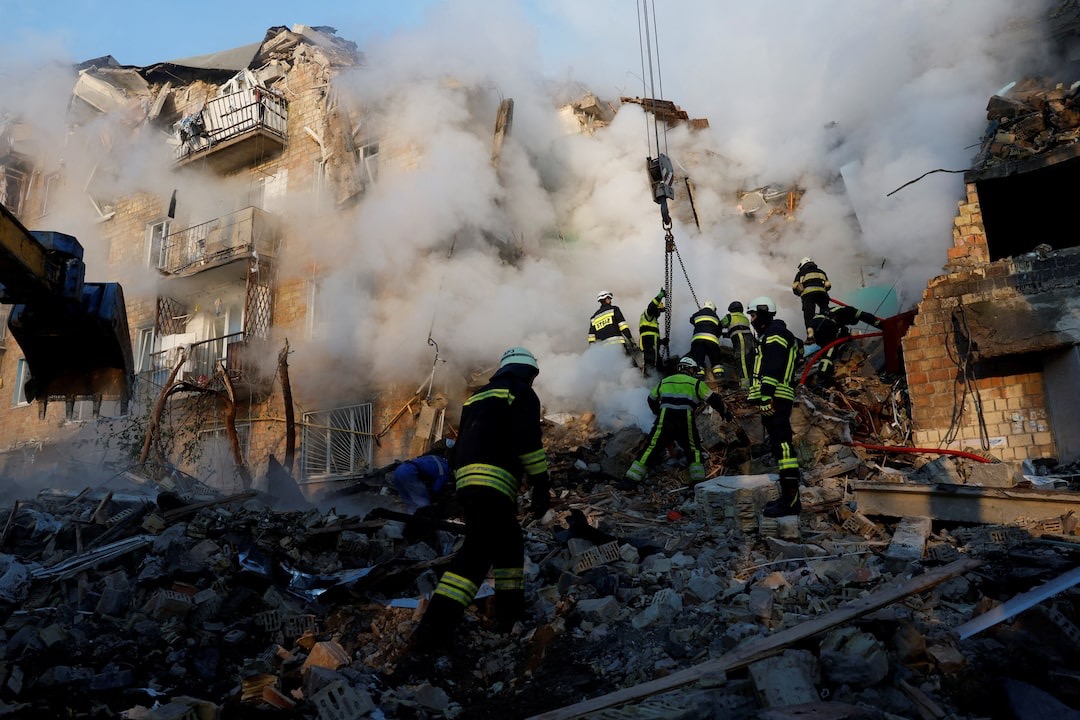
The Ukrainian Air Force claimed to have downed a significant portion of the incoming projectiles—over 50 drones and multiple missiles—but several got through, causing widespread damage. “This was a deliberate attempt to terrorize civilians,” said a spokesperson for the Kyiv Regional Military Administration. 1 In addition to Kyiv, strikes were reported in nearby regions, including Dnipro, where similar attacks caused further casualties.
Casualties and Devastation: Human Cost of the Barrage
The human toll of the attack has been stark. Initial reports confirmed the death of a 47-year-old woman in the Kyiv region, killed by shrapnel from a missile strike. 4 However, updated figures from the State Emergency Service indicate the casualty count has risen, with at least one confirmed death—a 71-year-old man—and up to 32 injuries, including two children. 37 Among the wounded were residents pulled from rubble in damaged apartment blocks, with injuries ranging from shrapnel wounds to burns and concussions.
The strikes also inflicted severe damage on infrastructure. Multiple residential buildings were hit, with fires breaking out in several high-rises. 21 One-third of Kyiv was left without heating, a critical issue as temperatures dipped below freezing, exacerbating the humanitarian crisis. 6 Hundreds of thousands of residents faced power outages after missiles targeted energy facilities, including attempts to damage a nearby hydroelectric power station. Emergency services worked tirelessly through the morning, with rescuers sifting through debris amid ongoing air raid alerts.
Personal accounts from Kyiv residents paint a vivid picture of the chaos. One teenager, 14-year-old Myron, described witnessing a drone strike on a residential complex: “It was terrifying; the explosion shook everything.” 8 Another local, posting from a shelter, noted waking multiple times to explosions, expressing gratitude for air defenses that mitigated worse outcomes. 18 These stories underscore the psychological strain on civilians, many of whom have endured similar attacks throughout the war.
Ukrainian Response: Defiance and Accusations
President Volodymyr Zelensky was quick to condemn the assault, framing it as a direct message from Moscow. “Missiles and drones speak for Russia,” he stated in a morning address, accusing the Kremlin of rejecting peace efforts. 33 Zelensky highlighted the attack’s timing, just ahead of his planned virtual meeting with President Trump, where discussions on potential ceasefires and territorial concessions were expected. He also warned of Russia’s increasing use of Belarusian territory to launch attacks, circumventing Ukrainian defenses.
Kyiv’s military leadership echoed these sentiments, reporting that the barrage was part of a broader strategy to weaken Ukraine’s resolve before negotiations. “This shows Russia doesn’t want to end the war,” Zelensky added, calling for bolstered international support. 3 Ukrainian forces, meanwhile, continued to operate air defenses effectively, though the sheer volume of the attack strained resources.
International Reactions: Condemnation and Calls for Action
The global community responded swiftly to the strikes. The United States, through a State Department spokesperson, condemned the attack as “barbaric” and reaffirmed commitment to Ukraine’s defense ahead of the Zelensky-Trump talks. 32 European Union leaders, including those from the UK, issued strong statements denouncing the assault. “These strikes are a rejection of diplomacy,” said UK Foreign Secretary, urging renewed sanctions on Russia. 35
Al Jazeera reported that the attack has heightened tensions in ongoing diplomatic efforts, with Belarus accused of aiding Russian maneuvers. 29 Reuters noted similar condemnations from NATO allies, who view the barrage as an escalation timed to disrupt peace initiatives. 30 Analysts suggest this could influence the Trump-Zelensky discussions, potentially pushing for stronger U.S. involvement or arms supplies.
Broader Context: The War’s Unyielding Grip
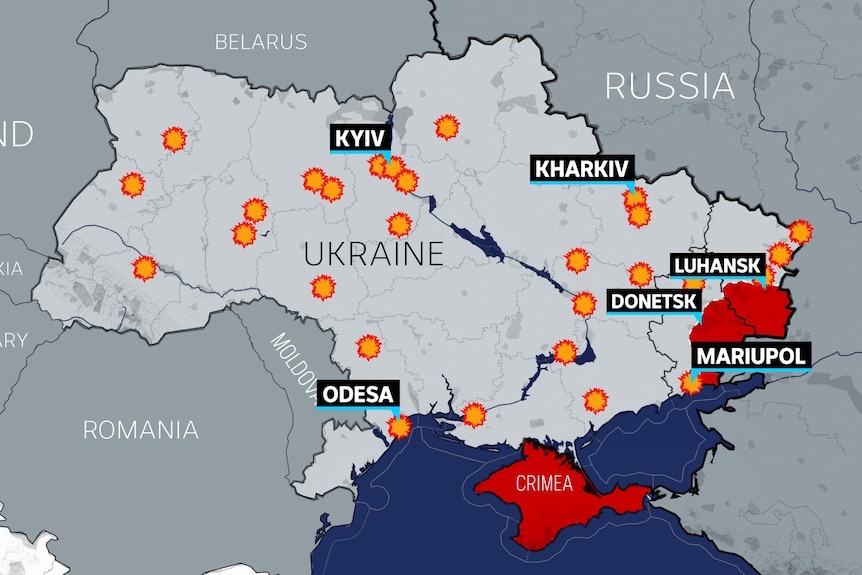
This attack occurs against the backdrop of a protracted conflict that began with Russia’s full-scale invasion in February 2022. Over the years, Kyiv has faced repeated bombardments, but recent months had seen a relative lull in the capital as fighting intensified in eastern regions like Donetsk and Kharkiv. The resurgence of strikes on urban centers signals a possible shift in Russian tactics, perhaps aimed at pressuring Ukraine into concessions amid stalled frontlines.
The upcoming Zelensky-Trump meeting adds another layer of complexity. Trump, who has promised a swift end to the war, has floated ideas of territorial swaps, which Zelensky has resisted. 31 Russian President Vladimir Putin has remained silent on the attack, but Kremlin spokespeople have justified similar actions as responses to Ukrainian incursions into Russian border areas. 9
Experts warn that such escalations could prolong the war, with winter conditions amplifying the suffering. “Nothing will break this city,” one Kyiv resident posted amid the chaos, reflecting the resilience that has defined Ukraine’s resistance. 11
Implications and the Path Forward
The December 27 assault not only inflicts immediate harm but also casts a shadow over diplomatic prospects. As power is gradually restored and wounds are treated, the international community must grapple with how to respond. Increased aid, stricter sanctions, or renewed calls for negotiations could follow, but the attack underscores the fragility of any peace process.
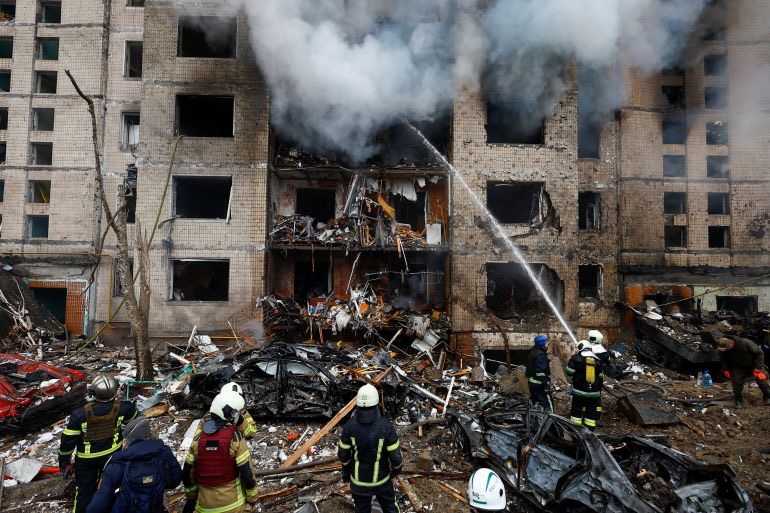
For Kyiv’s residents, the day serves as a grim reminder of the war’s persistence. As one local volunteer noted, “We’re ok for now, but this scum won’t stop.” 23 The world watches as Ukraine endures, hoping that talks in the coming days might finally pave the way for an end to the bloodshed.
Juba Global News Network is an independent outlet providing in-depth coverage of global conflicts. For more updates, visit JubaGlobal.com.
