M23 Senior Rebel Commander Killed in Drone Strike in Eastern Congo as Conflict Escalates Despite Ceasefire Promises
Goma, North Kivu, Democratic Republic of Congo – February 26, 2026 – A high-ranking commander of the M23 rebel group was killed yesterday in a precision dr
Goma, North Kivu, Democratic Republic of Congo – February 26, 2026 – A high-ranking commander of the M23 rebel group was killed yesterday in a precision drone strike in the hills near Rutshuru territory in eastern Democratic Republic of Congo, dealing a significant blow to the Rwanda-backed insurgency that has controlled large swathes of North Kivu since its resurgence in late 2021. The targeted killing—confirmed by both Congolese military sources and M23 spokespeople—marks one of the most significant losses for the group in recent months and comes amid fragile truce negotiations that appear increasingly at risk of collapse.
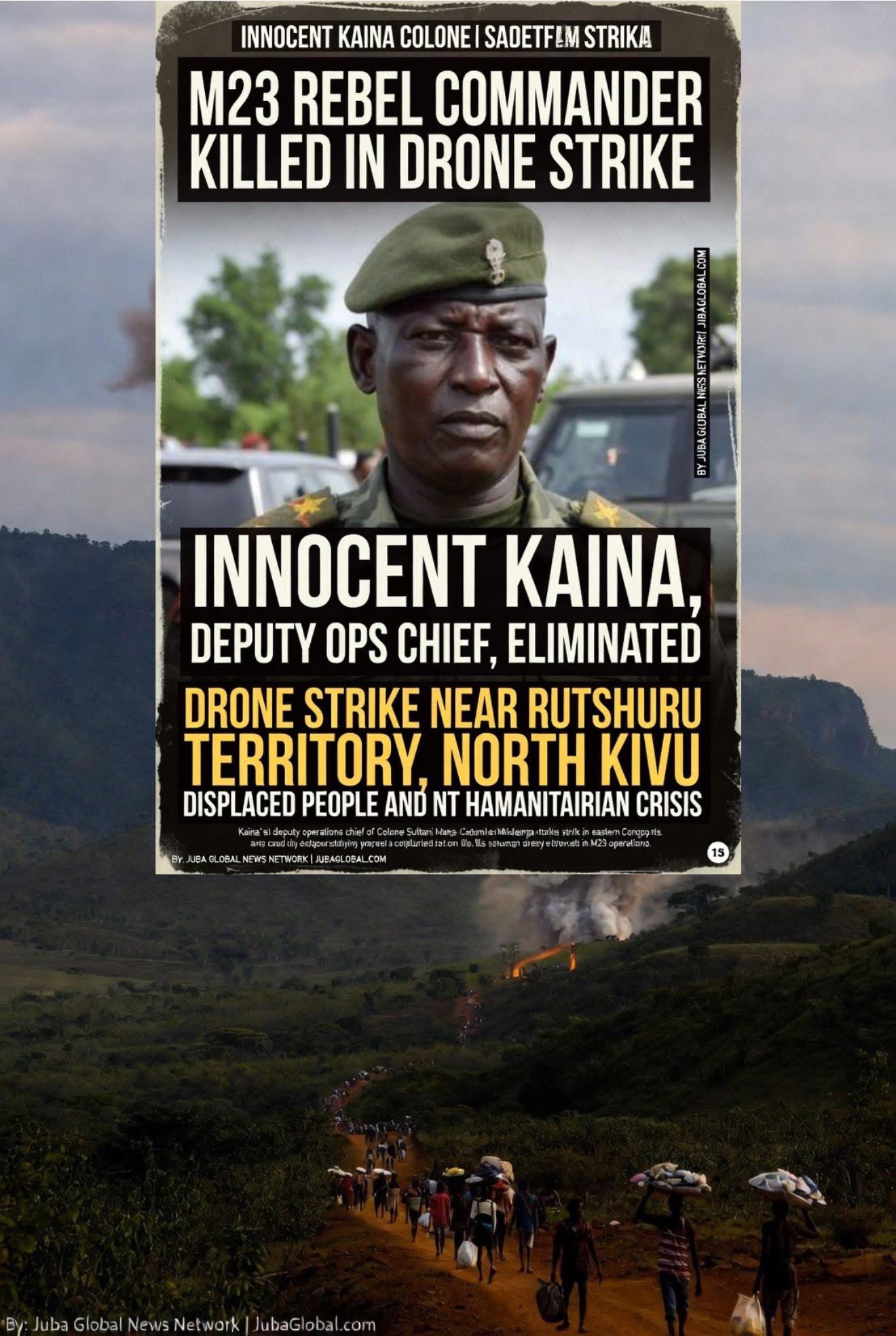
The slain commander, identified as Colonel Sultani Makenga’s deputy operations chief Innocent Kaina (nom de guerre “India”), was killed along with at least three bodyguards when a drone-launched munition struck their convoy on a dirt track approximately 18 km southwest of Kiwanja. Congolese army (FARDC) spokesperson Lieutenant Colonel Ndjike Kaiko announced the strike in a brief statement, describing Kaina as “a notorious war criminal responsible for numerous massacres, forced recruitment of child soldiers, and systematic looting in Rutshuru and Masisi territories.”
M23 quickly acknowledged the death in a communiqué posted on Telegram, vowing revenge and accusing the Congolese government of “treachery” while claiming the strike was carried out with “foreign technical assistance.” Though neither side named the operator, open-source analysts and regional diplomats widely attribute the drone capability to either the FARDC’s newly acquired Turkish Bayraktar TB2 fleet or covert support from a neighboring state—most likely Uganda or possibly South Africa via private security contractors.
Background: M23’s Resurgence and Stalled Peace Efforts
The M23 (March 23 Movement) first emerged in 2012 as a Tutsi-led rebellion alleging non-implementation of a 2009 peace accord. It captured Goma briefly before being defeated in 2013 with UN and regional intervention. The group re-emerged in late 2021, rapidly seizing territory in North Kivu and advancing to within 20 km of Goma by mid-2022. Despite multiple ceasefire declarations (most recently the Luanda Process roadmap of November 2024), fighting has continued intermittently, with M23 controlling roughly 8,000 km² of territory, key border crossings with Uganda, and lucrative coltan, gold, and tin mining areas.
The death of Colonel Kaina is particularly significant because he was considered one of M23’s most effective field commanders—overseeing logistics, recruitment, and coordination with allied Mai-Mai groups and Rwandan military “advisors” (a charge Kigali continues to deny despite mounting evidence from UN Group of Experts reports). His elimination disrupts command-and-control in a critical sector and sends a clear message that Kinshasa is willing to escalate kinetic operations even as diplomatic talks limp forward in Luanda and Nairobi.
Civilian Toll and Humanitarian Catastrophe
The broader conflict in eastern Congo has displaced more than 7.3 million people nationwide—the highest number of internally displaced persons in Africa—and pushed more than 25 million into acute food insecurity. In North Kivu alone, recent weeks have seen fresh waves of attacks on IDP camps, sexual violence, and looting by both M23 and FARDC-aligned militias. The UN’s OCHA reports that humanitarian access has shrunk by 40% in M23-held areas since January 2026, with aid convoys repeatedly blocked or hijacked.
Local residents in Rutshuru and Masisi territories live under constant threat. “We hear drones overhead almost every day now,” said a teacher from Kiwanja who asked to remain anonymous. “When they strike, everyone runs. But the fighting never stops—only the victims change.”
Regional and International Reactions
Kinshasa hailed the strike as “a legitimate act of self-defense” against an armed group responsible for war crimes. President Félix Tshisekedi, facing re-election pressure and criticism for failing to pacify the east, used the occasion to reiterate calls for stronger international sanctions on Rwanda and tougher enforcement of the Nairobi and Luanda processes.
Kigali issued a restrained statement expressing concern over “escalatory rhetoric” but avoided direct mention of the drone strike. Rwanda has consistently denied supporting M23, though successive UN reports have presented satellite imagery, intercepted communications, and eyewitness testimony documenting Rwandan troop presence and weapons supply.
The United Nations Organization Stabilization Mission in the DRC (MONUSCO) condemned the uptick in violence and called for immediate de-escalation. The U.S. State Department welcomed “progress against armed groups” but urged restraint to protect civilians. France—historically close to Kigali—remained silent on the strike itself while reiterating support for regional mediation.
What Comes Next?
The killing of Colonel Kaina is unlikely to end the war. M23 has repeatedly shown resilience after leadership losses, and analysts warn of possible retaliatory attacks on Goma or civilian areas. The group’s estimated 8,000–10,000 fighters remain well-equipped and disciplined, with strong morale reinforced by control of lucrative mineral trade routes.
For Congolese in the east, each drone strike brings momentary relief—and renewed fear of reprisals. As long as root causes—land disputes, ethnic tensions, resource competition, and foreign interference—remain unaddressed, the cycle of violence seems destined to continue.
In a region already bearing the scars of decades of war, yesterday’s strike is both a tactical victory for Kinshasa and another grim reminder that peace remains as distant as ever.
By: Juba Global News Network | JubaGlobal.com
Independent reporting from the heart of Africa, delivering global stories with regional insight. Follow us for unbiased coverage of international affairs.