

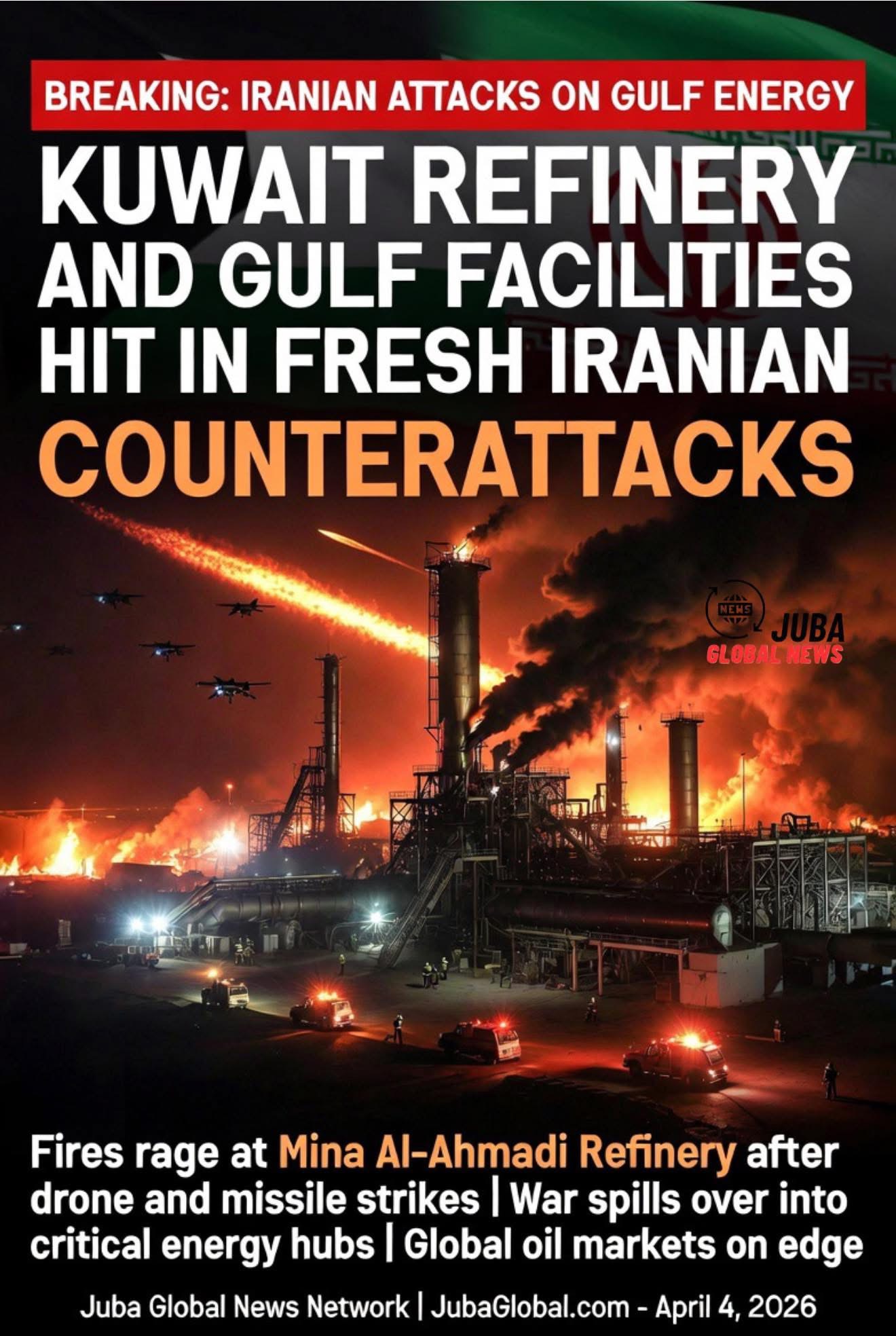
Kuwait Refinery and Gulf Facilities Hit in Fresh Iranian Counterattacks
By Juba Global News Network | JubaGlobal.com April 4, 2026 Iranian forces launched fresh counterattacks on Gulf energy infrastructure on Friday, striking a
By Juba Global News Network | JubaGlobal.com
April 4, 2026
Iranian forces launched fresh counterattacks on Gulf energy infrastructure on Friday, striking a major refinery in Kuwait and other oil facilities across the region. The assaults caused fires, temporary shutdowns, and heightened fears that the six-week-old war between the US, Israel, and Iran is rapidly spilling over into critical energy hubs in the Arabian Gulf.
Kuwaiti authorities confirmed that Iranian drones and missiles targeted units at the Mina Al-Ahmadi Refinery, one of the largest and most important oil processing facilities in the country. Thick black smoke was seen rising from the site as firefighters worked to contain multiple blazes. Initial reports indicate damage to processing units, though full details on the extent of the impact on production capacity remain under assessment.
Additional strikes were reported on energy infrastructure in other Gulf Cooperation Council (GCC) states, including facilities in Saudi Arabia and the United Arab Emirates, though these appear to have caused less severe damage. Iranian state media described the operations as “precise retaliatory strikes” in response to ongoing US-Israeli airstrikes on Iranian territory and infrastructure.
Escalating Spillover into the Gulf
The attacks mark a dangerous new phase in the conflict. While the primary theater remains inside Iran and along the Israel-Lebanon border, Tehran has increasingly turned to asymmetric warfare targeting the economic lifelines of US allies in the Gulf. By hitting energy facilities, Iran aims to raise the cost of the war for Washington and its partners while pressuring global oil markets.
The Mina Al-Ahmadi Refinery processes a significant portion of Kuwait’s crude oil into gasoline, diesel, and other refined products. Any prolonged disruption could affect both local fuel supplies and exports to international markets. Kuwaiti officials have activated emergency response protocols and are working with international partners to limit the fallout.
US Central Command (CENTCOM) condemned the Iranian strikes as “reckless aggression” that endangers civilian infrastructure and global energy security. American naval forces in the region have been placed on heightened alert, with increased patrols in the Persian Gulf and around key shipping lanes.
Impact on Global Energy Markets
The fresh attacks come at a time when oil prices are already volatile due to Iranian disruptions in the Strait of Hormuz. News of the refinery strike sent Brent crude and WTI prices spiking again in early trading, with analysts warning that repeated hits on Gulf facilities could push prices even higher and create longer-term supply concerns.
Insurance premiums for shipping and energy operations in the Gulf have surged dramatically since the war began. Several international oil companies have begun reviewing their operations and evacuating non-essential personnel from high-risk sites.
For ordinary citizens in Kuwait and neighboring countries, the attacks bring the war uncomfortably close to home. Residents reported hearing explosions and seeing plumes of smoke, while local authorities issued safety advisories and temporarily restricted movement near industrial zones.
Iranian Strategy and Capabilities
Despite weeks of intense US and Israeli bombardment that has degraded much of Iran’s conventional military infrastructure, Tehran continues to demonstrate the ability to launch drones and missiles at distant targets. Iranian officials claim these counterstrikes prove that their asymmetric capabilities remain intact even after significant losses.
The timing of the attacks appears designed to coincide with reports of US aircraft losses over Iran and intensified Israeli operations in Lebanon, signaling that Tehran will not absorb pressure without responding in kind.
However, military analysts note that Iran’s ability to sustain such attacks may be limited. Many of its advanced missile stockpiles have reportedly been depleted or destroyed, forcing reliance on cheaper, slower drones that are more vulnerable to Gulf air defenses.
Regional and International Reactions
Gulf leaders have expressed strong solidarity with Kuwait while urging restraint to prevent a wider regional war. The Arab League and GCC issued statements condemning the Iranian aggression and calling for immediate de-escalation.
The United States has pledged full support to its Gulf partners, with President Trump previously warning that any attacks on American allies would be met with overwhelming force. Additional US air and naval assets are reportedly being positioned to deter further Iranian strikes.
Humanitarian and environmental groups have raised concerns about potential oil spills and air pollution from the damaged refinery. The fires at Mina Al-Ahmadi have already released significant amounts of smoke and chemicals into the atmosphere, affecting air quality in nearby populated areas.
Strategic Implications
The strikes on Kuwait and other Gulf facilities highlight the interconnected nature of the current conflict. What began as a targeted campaign against Iran’s nuclear and missile programs has now evolved into a broader regional confrontation involving energy security, shipping routes, and the economic stability of multiple nations.
If Iran continues to successfully target Gulf infrastructure, it could force the US and its allies to divert more resources toward defensive operations, potentially slowing the pace of strikes inside Iran itself. Conversely, strong retaliation against Iranian launch sites could further escalate the cycle of violence.
As firefighters continue to battle blazes at the Kuwaiti refinery and Gulf states bolster their defenses, the war’s economic and human costs continue to mount. The coming days will be critical in determining whether these counterattacks lead to a dangerous expansion of the conflict or serve as a final warning before diplomatic efforts gain traction.
