

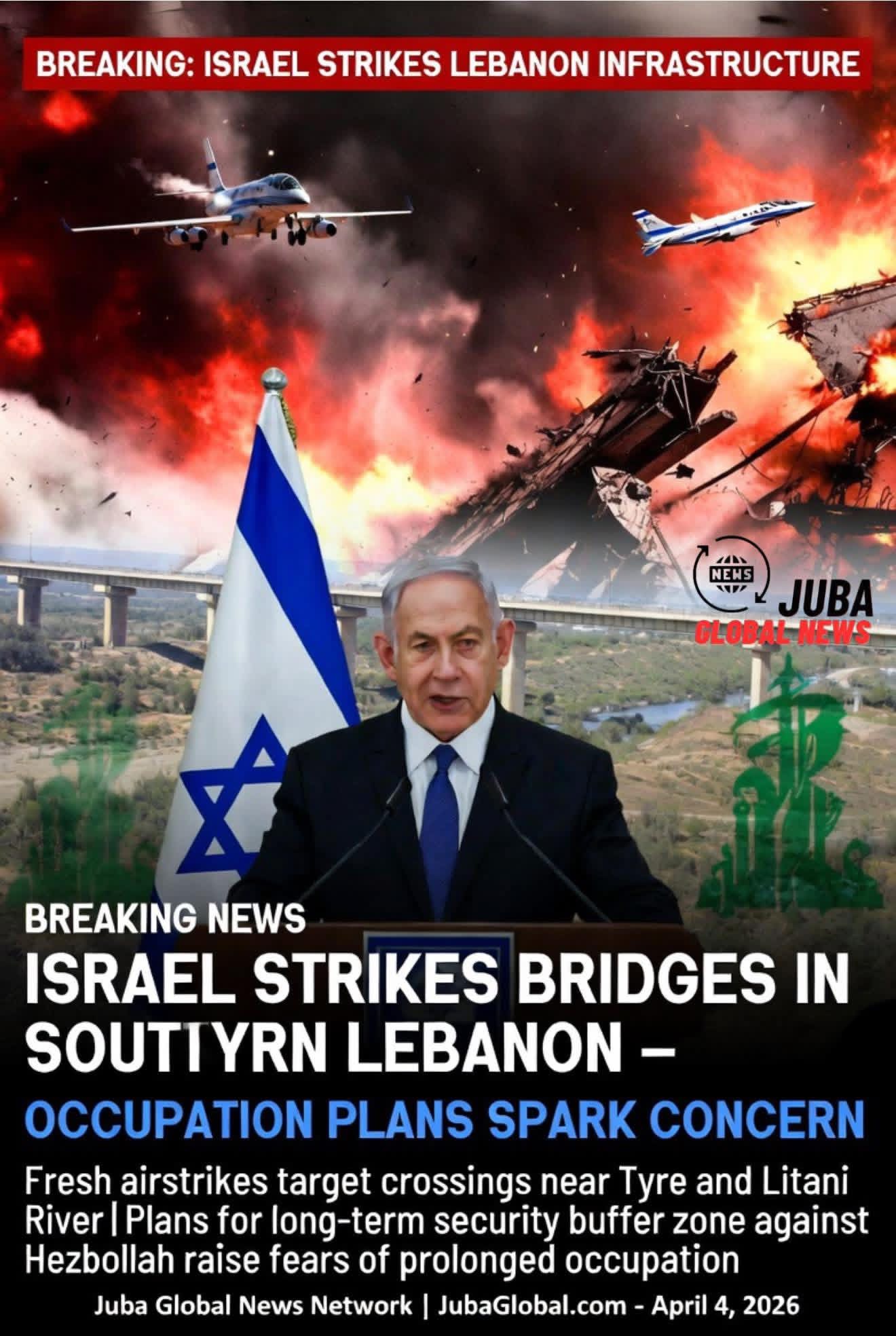
Israel Strikes Bridges in Southern Lebanon as Occupation Plans Spark Concern
By Juba Global News Network | JubaGlobal.com April 4, 2026 Israeli forces have carried out fresh airstrikes on multiple bridges and infrastructure targets
By Juba Global News Network | JubaGlobal.com
April 4, 2026
Israeli forces have carried out fresh airstrikes on multiple bridges and infrastructure targets in southern Lebanon, escalating military operations along the northern border as plans for a long-term security buffer zone continue to advance. The latest strikes come amid growing international concern that Israel may be preparing for a prolonged occupation of parts of southern Lebanon, raising fears of a deepening humanitarian crisis and a wider regional conflict.
According to Lebanese security sources and local media, Israeli warplanes targeted at least three bridges in the areas of Tyre, Nabatieh, and near the Litani River over the past 24 hours. The strikes destroyed key crossing points used for civilian movement and humanitarian aid, further isolating communities already strained by weeks of cross-border fighting with Hezbollah.
Israeli military officials stated that the operations were aimed at disrupting Hezbollah supply lines and preventing the militant group from regrouping or launching attacks into northern Israel. The Israel Defense Forces (IDF) described the targets as “terror infrastructure” and insisted that warnings were issued to civilians in advance to minimize casualties.
Background of the Parallel Conflict
The escalation in southern Lebanon runs parallel to the main US-Israel campaign against Iran. Since the outbreak of the broader war on February 28, 2026, Hezbollah has intensified rocket and drone attacks on Israeli towns and military positions, prompting a strong Israeli response that has included ground incursions and sustained airstrikes.
Israeli leaders have repeatedly signaled their intention to establish a “security zone” in southern Lebanon to push Hezbollah forces north of the Litani River — a move reminiscent of Israel’s earlier occupations in the 1980s and 1990s. Prime Minister Benjamin Netanyahu has described this buffer zone as essential for the safety of Israeli citizens, stating that Israel will not withdraw until Hezbollah is sufficiently degraded and a reliable security arrangement is in place.
Lebanese officials and Hezbollah representatives have condemned the bridge strikes as collective punishment against civilians, arguing that the destruction of infrastructure is designed to pressure the Lebanese government and population into accepting Israeli security demands.
Details of the Latest Strikes
• Tyre Region: A major bridge linking coastal roads was hit, disrupting movement between the city and surrounding villages.
• Nabatieh Area: Multiple smaller crossings and access roads were damaged, affecting both civilian traffic and potential Hezbollah resupply routes.
• Litani River Crossings: Strikes near the river, which has long served as a symbolic and strategic boundary, have raised fears that Israeli forces may soon attempt to establish permanent positions south of the waterway.
Satellite imagery and on-the-ground reports show significant damage to concrete structures, with craters visible and sections of bridges collapsed into riverbeds or valleys. Local residents report power outages and difficulties accessing medical care and food supplies due to the damaged roads.
Humanitarian organizations, including the Red Cross and UN agencies operating in Lebanon, have expressed alarm over the increasing isolation of southern Lebanese communities. Aid convoys have faced delays, and some villages are now reachable only by difficult alternative routes.
Growing International Concern Over Occupation Plans
The United Nations Interim Force in Lebanon (UNIFIL) has called for an immediate de-escalation and warned that any long-term Israeli presence in southern Lebanon could violate international agreements and further destabilize the country.
Several European countries and Arab states have voiced concern that Israel’s actions risk turning a border conflict into a full-scale occupation, potentially leading to years of resistance and guerrilla warfare similar to past conflicts in the region. Iran, despite facing its own intense military pressure, has publicly pledged continued support to Hezbollah, describing Israeli moves as “aggression that will not go unanswered.”
Inside Israel, public opinion remains divided. While many support strong action against Hezbollah, others worry about the human and economic costs of another prolonged engagement in Lebanon, especially while the country is simultaneously involved in the larger war against Iran.
Humanitarian and Civilian Impact
Southern Lebanon has already suffered significant damage from weeks of fighting. Thousands of civilians have been displaced northward, with many living in temporary shelters in Beirut and other cities. Hospitals report treating increasing numbers of injuries from airstrikes and shelling, while schools remain closed in affected areas.
The destruction of bridges not only hampers daily life but also complicates efforts to deliver food, medicine, and reconstruction materials. Aid workers warn that if the infrastructure damage continues, a serious humanitarian emergency could develop by the end of April.
Strategic Analysis
Military analysts suggest that Israel’s bridge strikes serve multiple purposes: degrading Hezbollah’s mobility, creating conditions for a possible ground operation to secure the buffer zone, and sending a strong message to both Hezbollah and its backers in Tehran.
However, the strategy carries risks. Further destruction of Lebanese infrastructure could harden local support for Hezbollah and complicate any future diplomatic efforts to reach a ceasefire. It may also strain Israel’s resources at a time when its military is heavily committed to operations against Iran.
The coming weeks will be critical. If Israel proceeds with formal occupation plans, the conflict in Lebanon could evolve into a long-term quagmire, diverting attention and resources from the primary theater against Iran. Conversely, successful pressure on Hezbollah might open a path toward a negotiated border security arrangement.
As smoke continues to rise from damaged bridges in southern Lebanon, the region faces the prospect of yet another chapter in its long history of conflict and occupation. The international community watches closely, hoping for restraint before the situation spirals further out of control.
