

Iran’s New Supreme Leader Named Amid War; Hardliner Mojtaba Khamenei Vows ‘Surprises’ for US-Israel
In By Juba Global News Network | JubaGlobal.comMarch 10, 2026 a move that solidifies hardline control over the Islamic Republic during its most existential
In By Juba Global News Network | JubaGlobal.comMarch 10, 2026
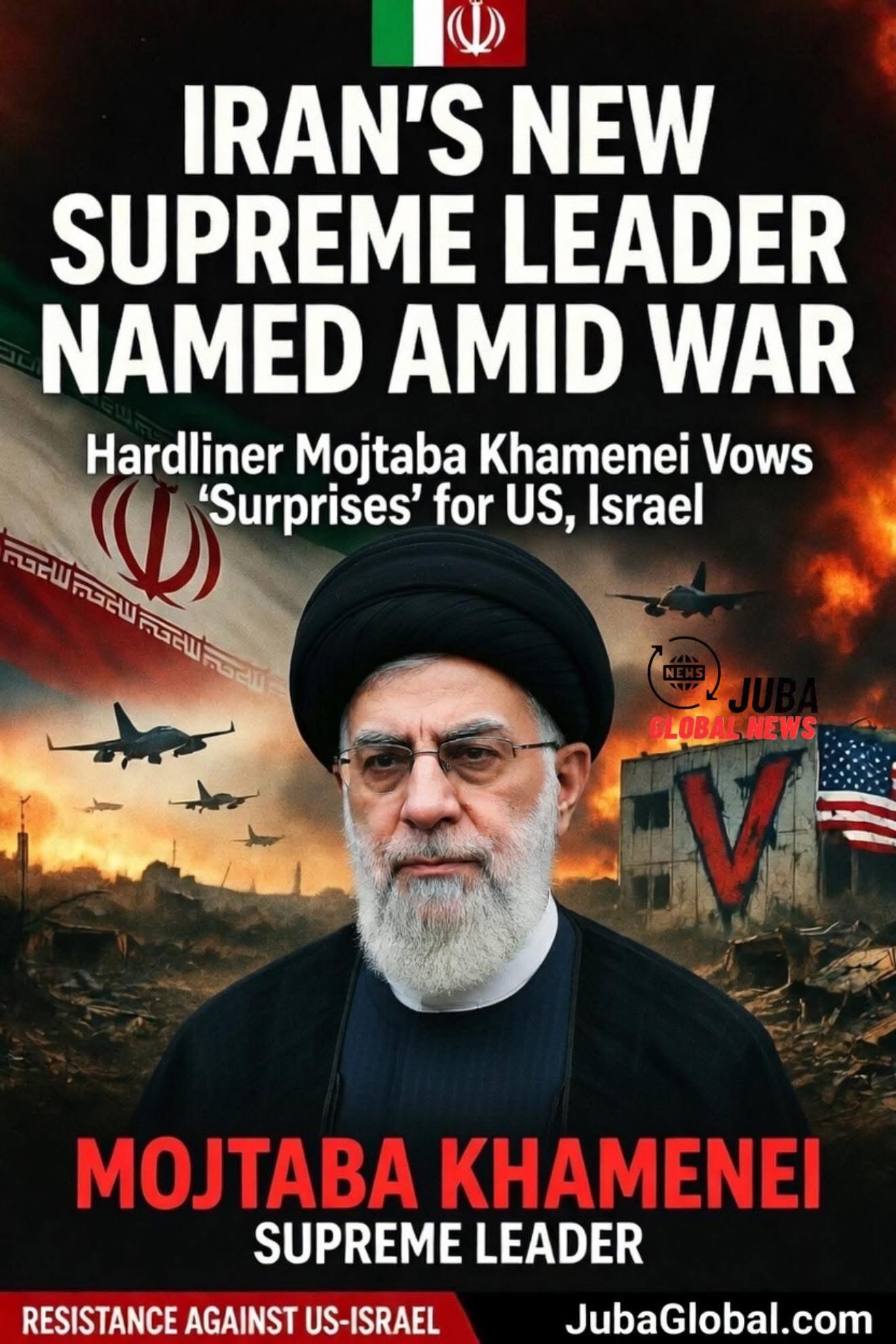
a move that solidifies hardline control over the Islamic Republic during its most existential crisis in decades, Iran’s Assembly of Experts has appointed Mojtaba Khamenei—the 56-year-old son of the slain Ayatollah Ali Khamenei—as the country’s new Supreme Leader. The announcement, made on March 8, 2026, comes just over a week after U.S. and Israeli airstrikes killed his father on February 28, the opening day of the ongoing war. This father-to-son succession marks a historic and controversial shift in Iran’s theocratic system, sending a clear signal of defiance amid escalating military pressure from the U.S.-Israel coalition.
The Succession Process in Wartime
Under Iran’s constitution, the 88-member Assembly of Experts—a body of senior clerics responsible for selecting and supervising the Supreme Leader—must act swiftly following a vacancy. Following Ali Khamenei’s death, a temporary three-person leadership council assumed interim authority to maintain governance stability. Reports indicate intense deliberations, with heavy influence from the Islamic Revolutionary Guard Corps (IRGC), which reportedly pushed for Mojtaba to ensure continuity of the regime’s hardline stance.
The Assembly voted to elevate Mojtaba, a mid-ranking cleric long rumored as a behind-the-scenes power broker, over other potential candidates such as senior figures like Ayatollah Ali Reza Arafi or moderates like former presidents Hassan Rouhani and Hassan Khomeini. State media portrayed the choice as a demonstration of national resilience, with supporters taking to the streets in Tehran and other cities to celebrate what they described as the “continuation of the resistance path.” However, pockets of dissent emerged, including reported chants against the new leader in parts of the capital, reflecting underlying tensions amid the war’s devastation.
Who Is Mojtaba Khamenei?
Born in 1969, Mojtaba Khamenei has operated largely in the shadows of Iranian politics for decades. A cleric educated in Qom’s seminaries, he has no formal elected or public government role but has wielded significant informal influence, particularly in intelligence, security, and economic spheres. U.S. sanctions imposed on him in 2019 cited his “significant ruling authority” despite lacking official positions, accusing him of involvement in suppressing dissent and controlling key assets.
Analysts describe Mojtaba as more hardline than his father in some respects, deeply aligned with the IRGC and committed to the “axis of resistance” against Israel and the West. His appointment has been framed domestically as ensuring the regime’s survival and ideological purity during wartime, with state broadcasters emphasizing continuity: “Khamenei just got younger.”
Vows of Continued Resistance and ‘Surprises’
In his first public statements following the appointment, Mojtaba Khamenei vowed unwavering resistance, warning that Iran would deliver “surprises” to its enemies. Top officials, including Foreign Minister Abbas Araghchi, reinforced this by declaring no future negotiations with the U.S., citing betrayal in past talks. The IRGC issued statements insisting that Iran—not Washington—would determine the war’s end.
This defiant posture comes as coalition forces claim major degradations to Iran’s military capabilities, including the near-elimination of its air force, navy, and large portions of its missile and drone arsenals. Yet Iran continues launching retaliatory barrages, including recent drone and missile strikes on Israel and Gulf states, demonstrating asymmetric resilience.
International Reactions: Rejection and Escalation Warnings
The appointment has drawn sharp condemnation from the U.S. and Israel. President Donald Trump previously labeled Mojtaba an “unacceptable” choice, emphasizing demands for regime elements aligned with peace. Israeli officials, including Foreign Minister Gideon Sa’ar, described him as perpetuating “extremist and mad policies,” with some warning that the new leader could become a target. Israel has reiterated that figures tied to Iran’s ruling elite remain legitimate military objectives.
Analysts view the succession as a “very bad sign” for de-escalation prospects, signaling the regime’s entrenchment rather than openness to compromise. Fareed Zakaria and others noted it shows “the Iranian regime is dug in,” potentially prolonging the conflict.
Broader Implications Amid Ongoing War
Mojtaba’s rise cements IRGC dominance, potentially accelerating asymmetric warfare tactics while complicating any internal reform or negotiation paths. With oil flows through the Strait of Hormuz disrupted, civilian casualties mounting, and global energy markets in turmoil, the leadership transition heightens risks of a prolonged regional war.
As strikes continue and Iran vows no surrender, the world watches whether this dynastic shift strengthens resolve or exposes fractures in the regime. Juba Global News Network will track developments closely.
Sources: Aggregated from BBC, Al Jazeera, Reuters, CNN, NBC News, AP, Iran International, and state media reports as of March 10, 2026.
