

Government Shutdown Ends as Trump Signs $1.2 Trillion Funding Bill: Relief for Federal Workers, But Immigration Battles Loom Ahead
On February 3, 2026, President Donald Trump signed a massive $1.2 trillion appropriations package into law, swiftly ending a partial government shutdown th
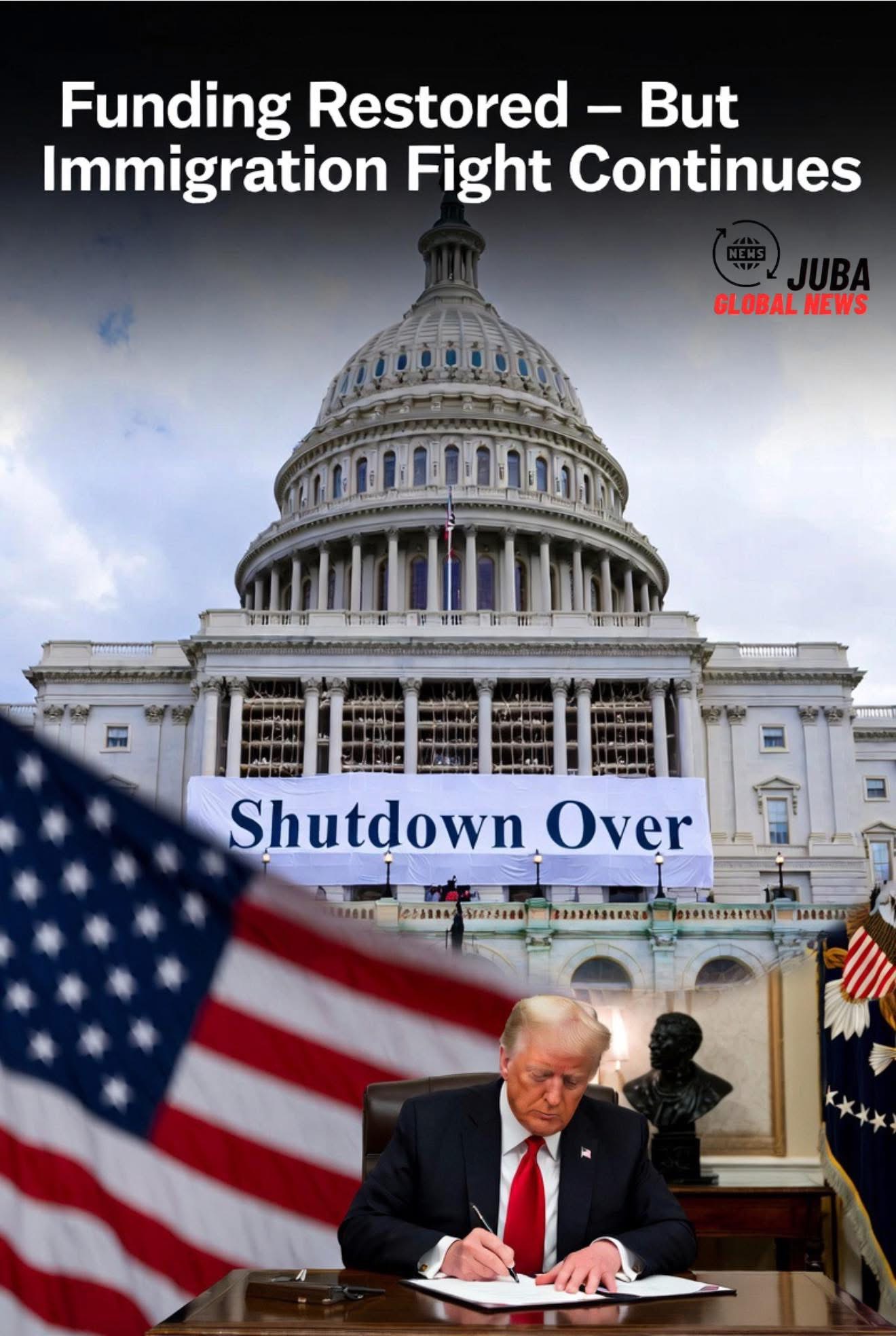
On February 3, 2026, President Donald Trump signed a massive $1.2 trillion appropriations package into law, swiftly ending a partial government shutdown that had disrupted operations since early Saturday morning. The bill—passed by the House in a razor-thin 217-214 vote earlier that day and cleared by the Senate the previous week—funds most federal agencies and programs through September 30, 2026, the end of the fiscal year. It provides critical back pay for furloughed workers, restores services across departments like Defense, Health and Human Services, Labor, and Transportation, and includes a military pay raise.
The signing ceremony in the Oval Office, attended by bipartisan lawmakers, marked a moment of relief after days of uncertainty. “This bill is a great victory for the American people,” Trump declared as he put pen to paper. “Instead of a bloated and wasteful omnibus monstrosity, we got it done.” Federal employees returned to work Wednesday morning, February 4, with operations resuming and essential services no longer at risk of lapse.
Yet the legislation is far from a full resolution. It carves out a critical exception: the Department of Homeland Security (DHS)—including Immigration and Customs Enforcement (ICE), Customs and Border Protection (CBP), and related agencies—receives funding only through February 13, 2026. This two-week extension was a hard-fought compromise, buying time for intense negotiations over new restrictions on immigration enforcement amid widespread controversy surrounding the Trump administration’s aggressive deportation and border security operations.
The Shutdown’s Origins: A Clash Over Immigration Enforcement
The partial shutdown stemmed from a standoff over DHS funding, triggered by Democratic demands for accountability measures following high-profile incidents involving federal agents. In recent weeks, federal officers fatally shot two U.S. citizens—Alex Pretti (an intensive care unit nurse at the Minneapolis VA Medical Center) and Renee Good—in separate encounters tied to immigration enforcement actions in Minneapolis and other cities.
Democrats, led by figures like Senate Minority Leader Chuck Schumer and House Appropriations leaders, insisted on “guardrails” before approving full-year DHS funding. Key demands include:
- Ending “indiscriminate” or roving ICE patrols in communities
- Requiring judicial warrants for home entries by immigration officials
- Mandating body cameras on federal agents during enforcement operations
- Allowing local authorities to investigate incidents involving federal officers
- Greater transparency, such as unmasking agents during raids
Republicans and the White House countered that such restrictions would hinder border security, mass deportation efforts, and enforcement against illegal immigration—core promises of Trump’s agenda. The impasse blocked progress on the full appropriations package, leading to the lapse at midnight Friday/Saturday.
After marathon talks, a deal emerged: most government funding through September, but DHS on a short-term leash to force negotiations. Senate passage on January 30 cleared the path, though the House vote remained close amid GOP hardliners’ frustration and Democratic opposition to the broader package.
Economic and Human Impacts of the Brief Shutdown
Though short (lasting about four days), the shutdown affected hundreds of thousands:
- Furloughed workers in non-essential roles across agencies lost paychecks temporarily (back pay is secured in the bill).
- Essential personnel (e.g., air traffic controllers, Border Patrol, TSA) worked without immediate pay.
- National parks, some federal offices, and services like passport processing faced disruptions or closures.
- The Pentagon received full funding, including service member pay raises, avoiding broader military impacts.
The quick resolution minimized long-term damage compared to past shutdowns (e.g., 2018-2019’s 35-day closure), but it highlighted ongoing fiscal brinkmanship in a divided Congress.
The Next Deadline: February 13 DHS Funding Cliff
With DHS funding expiring in just nine days (as of February 4), attention shifts to high-stakes talks. Democrats have vowed to block extensions without concessions on enforcement reforms. Republicans aim to protect ICE/CBP operations and fund Trump’s deportation priorities.
Potential outcomes include:
- A compromise bill with limited guardrails (e.g., body cameras but no warrant mandates)
- Another short-term continuing resolution (CR) kicking the can further
- A renewed lapse if talks collapse, potentially shutting down DHS components
Trump has signaled willingness to negotiate but emphasized “strong borders.” House Speaker Mike Johnson and Senate leaders from both parties face pressure to avoid another shutdown amid public fatigue.
Broader Context: Fiscal Year 2026 Appropriations and Political Stakes
The $1.2 trillion package consolidates 11 of 12 annual appropriations bills, funding non-defense discretionary programs, veterans’ affairs, agriculture, energy, and more. It reflects compromises on spending levels after months of negotiations.
Politically, the episode tests GOP unity under Trump and Democratic leverage in a narrowly divided Congress. Immigration remains a flashpoint ahead of midterms, with public opinion split on enforcement vs. accountability.
For federal workers in places like Westland, Michigan, and across the country, the immediate crisis is over—but uncertainty lingers. As one furloughed employee told reporters: “We’re back to work, but everyone’s watching February 13.”
The bill’s passage ends one chapter of fiscal drama while opening another. Whether Congress can bridge the immigration divide—or face repeated shutdown threats—will shape government operations, border policy, and public trust through 2026.
(This article is based on reports from Politico, PBS News, AP, BBC, The Washington Post, Reuters, The Guardian, NBC News, and other sources as of February 4, 2026. Details on negotiations and outcomes remain fluid.)
For a suggested image poster:
- The Capitol Building with “Shutdown Over” banner across the front, President Trump signing the bill at a desk in the Oval Office foreground, American flags waving, text overlay “Funding Restored – But Immigration Fight Continues”.
Share your thoughts: Relieved the shutdown ended quickly, or worried about the next deadline? How should Congress handle DHS funding and immigration reforms?
