ECOFEST 2025: When West African Culture Became the Last Line of Defence Against Chaos
By: Juba Global News Network
Dakar, 8 December 2025
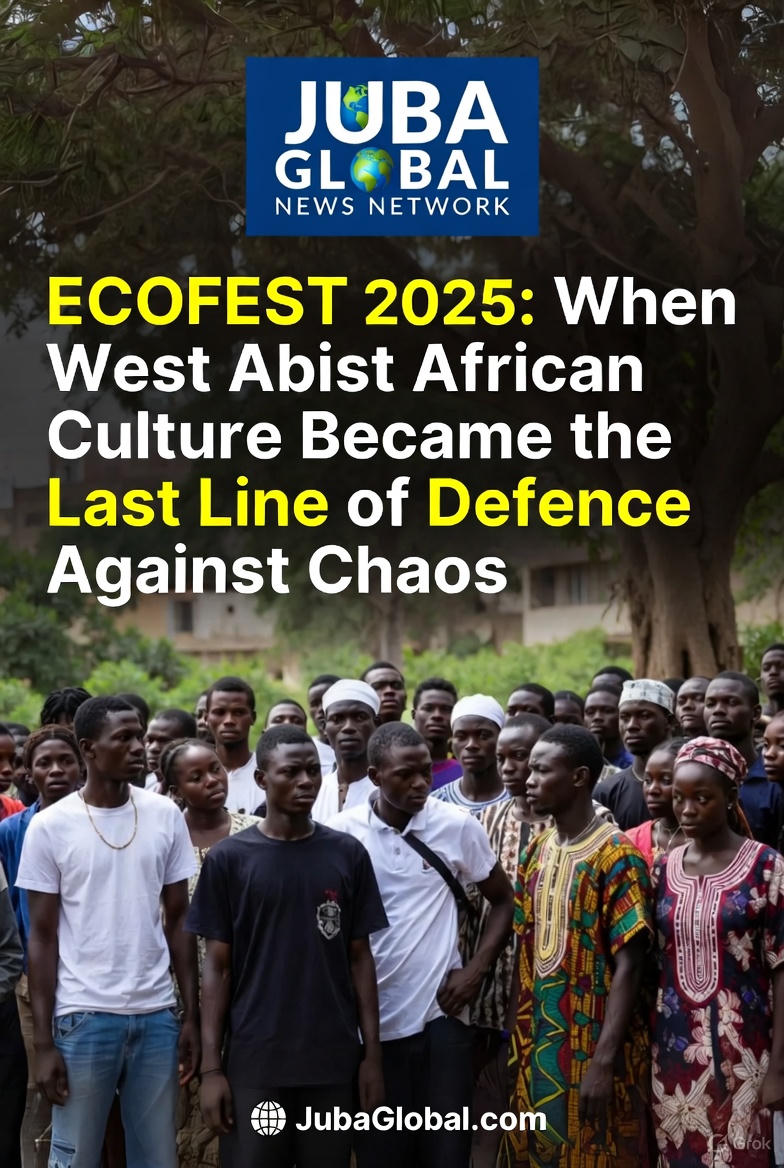
Under the salty Atlantic winds swirling around Dakar’s Gorée Island, something quietly radical took shape last week. While soldiers were staging coups in Conakry and Bamako, presidential guards fired live rounds at protesters in Ouagadougou, and yet another wave of evacuation warnings poured in from foreign embassies all over the Sahel, more than 40,000 young West Africans converged for five nights straight. Their goal? To do what their politicians haven’t managed in years: speak together, as one. They called it ECOFEST 2025—the Economic Community of West African States’ first-ever youth culture festival on a continental scale—but honestly, that name barely stuck. On the ground, folks just called it “The Resistance.”
From Coup Capital to Culture Capital
Nobody missed the irony that Dakar—Senegal’s democratic capital—became host to the largest pan-West African gathering precisely as democracy seemed to be unraveling in nearly every nearby capital. Since 2020, West Africa’s racked up eight successful or attempted coups: Mali (twice), Guinea, Burkina Faso (twice), Niger, Gabon, and, most recently, a failed mutiny in Guinea-Bissau on December 2nd, 2025. ECOWAS, the regional bloc that was supposed to stop just this sort of chaos, has been reduced to churning out tough-talking statements, while its sanctions regimes are crumbling under public indifference. So, against this backdrop of regional gloom, Senegal’s President Bassirou Diomaye Faye and ECOWAS Commission President Omar Alieu Touré took a risk: if the politicians had let down West Africa’s youth, maybe culture could manage what diplomacy simply couldn’t.
Five Nights That Shook the Region
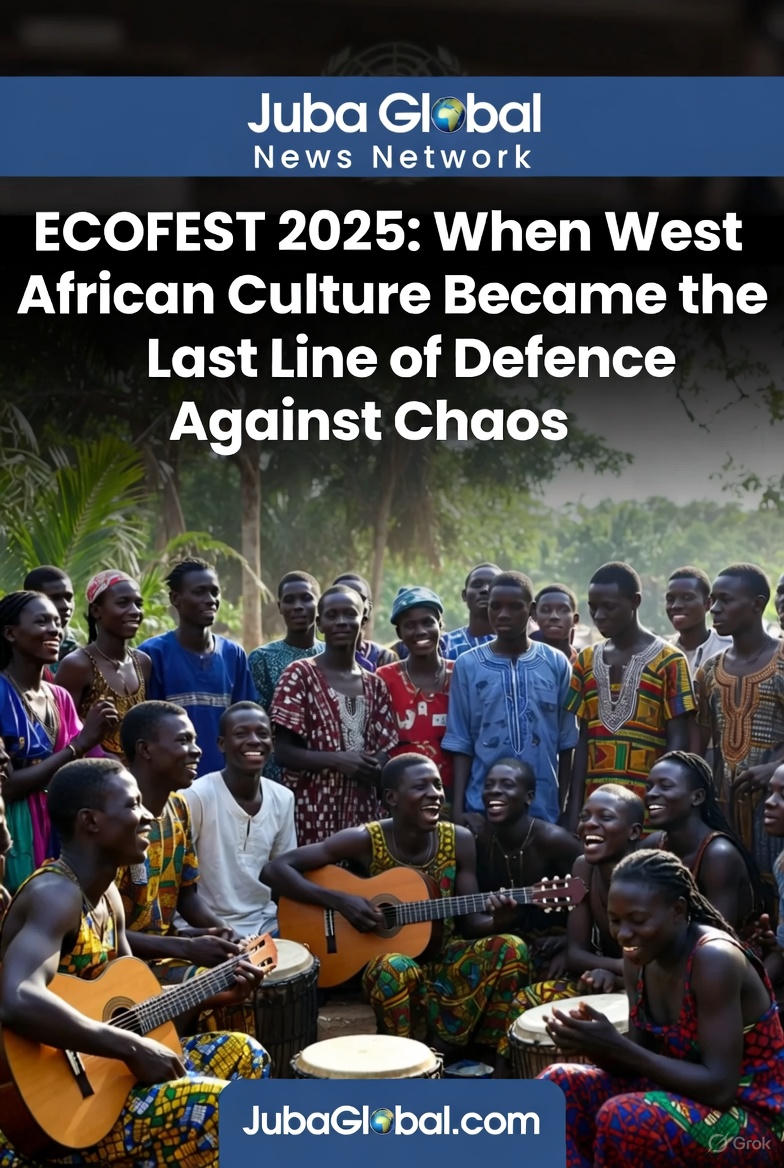
The festival kicked off on Gorée Island, then spilled onto Dakar’s mainland esplanade from December 3–7, 2025, showcasing 187 artists from all 15 ECOWAS countries, plus Mauritania and Chad. But here’s the thing: ECOFEST wasn’t just a music fest. Daytime discussions carried titles like “Can Art Stop a Coup?”, “From Hashtag Activism to Street Revolution,” and “When the Microphone Replaces the Kalashnikov.” By night, concerts transformed into massive civic education sessions—only set to a beat.
On the main stage, Nigerian megastar Burna Boy paused mid-set to recite the names of 43 protesters killed in Burkina Faso the previous month. Malian rap group Tata Pound dedicated their show to the women of Bamako who keep marching even when faced with live ammunition. Takana Zion from Guinea performed his banned protest song “Camarade Général” for the first time ever on continental soil—and tens of thousands roared every forbidden lyric back at him.
The most electrifying moment? Probably the final night, when DJ Arafat’s mother, mother of the Ivorian coupé-décalé legend killed in a 2019 crash, joined the crowd for a minute’s silence for her son. That was followed by an explosive performance of “Libérez le Peuple” from a surprise supergroup, featuring artists from each coup-hit country. Phones lit up like constellations as the crowd—switching between French, English, Portuguese, Hausa, Wolof, and Bambara—chanted: “We are ECOWAS—the people, not the generals.”
The Numbers Behind the Noise
- Over 40,000 people attended in person (tickets sold out in a mere 11 minutes)
- 187 artists representing 17 countries
- 2.8 million watching live on TikTok, YouTube, and Facebook—the highest ever for a cultural event in West Africa
- 1.4 million posts using the hashtag #ECOWASDesJeunes within just 48 hours
- 23 heads of state invited—only 4 actually showed up (Senegal, Cabo Verde, Côte d’Ivoire, and Nigeria), the rest sent in videos, which, honestly, the crowd mostly booed
Art as Soft Power Diplomacy
Behind all the music, something even bigger was unfolding. While Bamako’s soldiers were busy tossing out sections of the constitution, youth delegates from Mali, Burkina Faso, and Niger gathered in closed-door talks—these sessions mediated not by politicians or diplomats, but by Senegalese griots and Beninese voodoo priests, traditional peacemakers who, frankly, have a level of respect no foreign ambassador could hope for.
By the last day, those youth delegates released the “Gorée Declaration”—a ten-point manifesto demanding:
- Immediate return to constitutional order in states under junta rule
- Independent probes into protester deaths
- The creation of a permanent ECOWAS Youth Parliament with power to veto military budgets
- Replacing foreign military bases with regional cultural exchange hubs
A total of 312 youth and civil society organizations signed on—more representative clout than most sitting governments in the region can claim these days.
A New Kind of Regional Integration
At the closing ceremony, President Faye made an announcement that caught everyone off guard: Senegal will bankroll half the cost of a permanent “ECOFEST House”—a cultural diplomacy campus in Dakar, open year-round, offering residencies to artists from every ECOWAS nation, running art-based conflict-resolution programs, and keeping a rapid-response fund for censored musicians and journalists. “No one bombs a concert hall,” Faye declared to raucous applause. “No one sends tanks after a dance troupe. If our generals have forgotten how to speak, let our artists remind them of the language.”
The Morning After
As dawn broke over Gorée Island on December 8—the same island from which millions were once forced into slavery—the departing ferries carried not just tired festival-goers, but also, maybe, something far more threatening to the region’s juntas: hope. Already, youth groups in Conakry have announced “ECOFEST Guinea” for January, openly defying the military government’s ban on assemblies. In Ouagadougou, graffiti reading “Gorée nous a libérés” popped up overnight. Even in Niamey, where the internet’s still blacked out, encrypted files of the festival’s final concert are making the rounds by Bluetooth in city markets and mosques.
For five nights in Dakar, West Africa’s youth showed that when institutions break down, culture steps up as maybe the last regional integration mechanism standing. Are the generals paying any attention? Hard to say. But for the first time in years, West Africans have stopped waiting for permission to dream up a new future. They’re already singing it into being.
© 2025 Juba Global News Network – All Rights Reserved
JubaGlobal.com