Daring Raid Ends Maduro Era: U.S. Captures Venezuelan President in “Operation Absolute Resolve”
By Juba Global News Network | JubaGlobal.com January 4, 2026 In a stunning and unprecedented military operation that has reshaped the geopolitical landscap
By Juba Global News Network | JubaGlobal.com
January 4, 2026
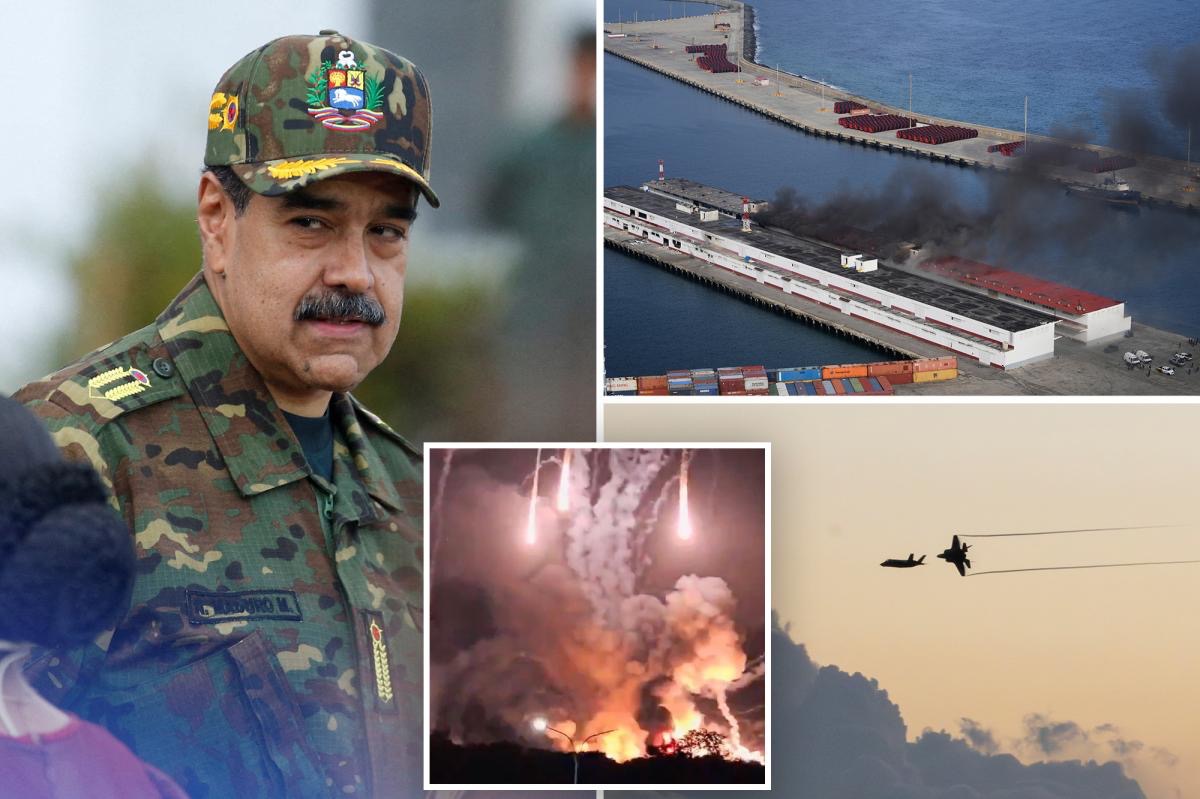
In a stunning and unprecedented military operation that has reshaped the geopolitical landscape of Latin America, U.S. forces captured Venezuelan President Nicolás Maduro and his wife, Cilia Flores, in the early hours of January 3, 2026. Dubbed “Operation Absolute Resolve,” the raid involved elite special operations troops, precision airstrikes, and months of meticulous intelligence gathering, culminating in the swift extraction of the longtime leader from his fortified compound in Caracas.
President Donald Trump announced the success of the mission via his Truth Social platform at approximately 4:21 a.m. EST, stating that Maduro and Flores had been “captured and flown out of the Country.” Hours later, Trump posted a photograph of a blindfolded and handcuffed Maduro aboard the USS Iwo Jima, an amphibious assault ship in the Caribbean, captioning it simply: “Nicolas Maduro on board the USS Iwo Jima.” By evening, Maduro had arrived in New York, where he was processed and transferred to the Metropolitan Detention Center in Brooklyn, awaiting arraignment on federal charges including narco-terrorism conspiracy, cocaine importation, and weapons offenses.
The operation marks the most direct U.S. intervention in Latin America since the 1989 invasion of Panama, drawing comparisons to historical regime-change efforts while igniting fierce debate over its legality, implications for international norms, and Venezuela’s vast oil reserves.
The Raid: A Masterclass in Special Operations
Details emerged rapidly from U.S. officials, including Chairman of the Joint Chiefs of Staff Gen. Dan Caine, who briefed reporters alongside Trump at Mar-a-Lago. The mission began around 2:00 a.m. local time in Caracas, with U.S. forces launching airstrikes on multiple northern Venezuelan sites to suppress air defenses and create a clear path for helicopters.
Over 150 military aircraft were involved, including stealth drones for surveillance and MH-60M Black Hawks from the 160th Special Operations Aviation Regiment. The core assault was executed by Army Delta Force operators, supported by FBI Hostage Rescue Team elements.
Intelligence was key: A clandestine CIA team, aided by a high-level source within Maduro’s inner circle, had monitored his movements since August 2025. They mapped his “pattern of life”—sleeping habits, meals, even pets—and shared this with planners. Elite troops even built a full-scale replica of Maduro’s safe house at Fuerte Tiuna, Caracas’ sprawling military complex, for rehearsals.
As forces breached the compound using blowtorches on reinforced doors, Maduro reportedly attempted to flee to a steel-enforced safe room but was quickly overwhelmed. Venezuelan guards fired on the intruders, damaging one helicopter (which remained flyable), but U.S. troops returned “overwhelming force,” neutralizing resistance in seconds. Maduro and Flores surrendered without further incident.
By 3:29 a.m. EST, helicopters were over international waters, heading to the USS Iwo Jima. No U.S. personnel were killed, though a handful sustained minor injuries from bullets and shrapnel. Venezuelan casualties remain unconfirmed, but satellite imagery shows significant damage to military sites, including destroyed vehicles at La Carlota air base and fires at Fuerte Tiuna.
Trump, who monitored the operation live from Mar-a-Lago with aides including Secretary of State Marco Rubio and Defense Secretary Pete Hegseth, gave final approval at 10:46 p.m. EST on January 2. He described the raid as “an amazing job” and praised the troops for their “speed” and “violence of action.”
Charges and Legal Ramifications
Maduro faces a superseding indictment unsealed in the Southern District of New York, building on 2020 charges from Trump’s first term. Prosecutors allege he led the “Cartel de los Soles,” a narco-terrorist network collaborating with Colombian FARC guerrillas to flood the U.S. with cocaine, using proceeds to fund his regime. Flores and other officials are also implicated.
Arraignment is expected Monday in Manhattan federal court. The U.S. has long offered rewards—up to $50 million—for Maduro’s capture, framing him as a “narco-state” leader responsible for Venezuela’s economic collapse, mass emigration, and human rights abuses.
Critics, including some Democrats and international lawyers, question the operation’s legality under international law, citing violations of sovereignty without UN authorization. Others draw parallels to the 1989 capture of Manuel Noriega in Panama.
Trump’s Vision: Temporary U.S. Oversight and Oil Revival
In a Mar-a-Lago press conference, Trump declared: “We are going to run the country until such time as we can do a safe, proper and judicious transition.” He emphasized tapping Venezuela’s massive oil reserves—the world’s largest—to “get the oil flowing” and benefit the Venezuelan people, while inviting U.S. companies to invest billions in infrastructure.
Defense Secretary Hegseth called it the “most successful special operations raid of all time,” while Rubio hinted at coordination with interim figures. Trump claimed contact with Vice President Delcy Rodríguez, suggesting she might cooperate, though she later condemned the action as “brutal aggression” on state TV.
Venezuela’s Supreme Court, loyal to Maduro, named Rodríguez interim leader to ensure “continuity.” Streets in Caracas remained eerily quiet post-raid, with mixed reactions: some residents expressed relief at Maduro’s removal amid years of hyperinflation and shortages, others fear chaos or prolonged U.S. involvement.
Global Reactions: Shock, Division, and Condemnation
The world reeled. Allies like Russia, China, Cuba, and Iran decried it as “imperialist aggression” and a dangerous precedent. Brazil’s President Lula da Silva called it “extremely dangerous” for international norms. Even U.S. partners like Britain and France expressed shock, with UK Prime Minister Keir Starmer seeking clarification.
Latin American nations were divided: Some quietly welcomed the end of Maduro’s rule, blamed for regional migration crises, while others evoked memories of past U.S. interventions.
In Miami’s Venezuelan exile community, celebrations erupted. Opposition leader María Corina Machado, a 2025 Nobel Peace Prize winner, called for “popular sovereignty” and the installation of Edmundo González as legitimate president.
What Next for Venezuela?
Uncertainty looms. With Maduro detained, power struggles may emerge among chavistas, military factions, and opposition. Trump insists no broader invasion is planned, but U.S. forces remain positioned in the Caribbean.
Oil markets reacted mildly, with analysts eyeing potential production surges under stabilized governance. Yet risks of insurgency, humanitarian fallout, or proxy conflicts persist.
This bold stroke ends Maduro’s 13-year rule, defined by authoritarian consolidation and economic ruin. Whether it heralds stability or further turmoil remains to be seen—but January 3, 2026, will be etched as a pivotal moment in hemispheric history.
Juba Global News Network continues monitoring developments from underrepresented perspectives in Africa, Latin America, and beyond. For updates, visit JubaGlobal.com.