

Australian Wildfires Rage: Victoria’s Devastating January 2026 Blazes Spark Insurance Catastrophe Declaration and Renewed Climate Concerns
By: Juba Global News Network | JubaGlobal.com Published: January 16, 2026 Australia is grappling with one of its most severe early-season bushfire crises i
By: Juba Global News Network | JubaGlobal.com
Published: January 16, 2026
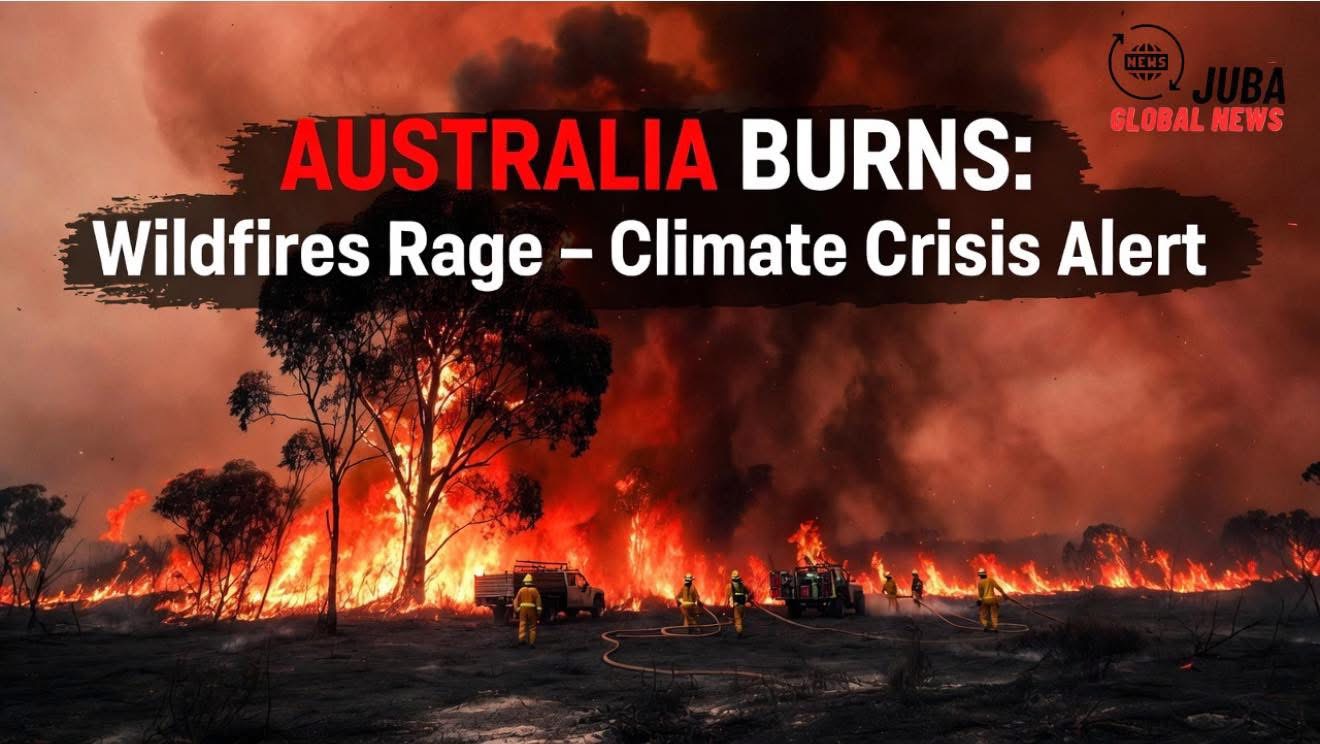
Australia is grappling with one of its most severe early-season bushfire crises in recent memory as ferocious wildfires continue to scorch large swathes of Victoria and parts of New South Wales. As of January 16, 2026, the blazes—fueled by an unrelenting heatwave, extreme winds, and bone-dry conditions—have burned over 400,000 hectares (more than five times the size of Singapore), destroyed hundreds of structures, claimed at least one life, and triggered a formal Insurance Catastrophe declaration by the Insurance Council of Australia (ICA). The fires, which erupted in early January following a prolonged period of record heat, have drawn sharp comparisons to the catastrophic Black Summer season of 2019–2020 and intensified warnings from experts about escalating climate-driven risks.
The crisis began accelerating in the first week of January when temperatures soared above 40°C (104°F) across southeastern Australia, with gusts reaching 100 km/h (62 mph) and low humidity creating “catastrophic” fire danger ratings. Lightning strikes ignited dozens of fires starting around January 7–9, with major blazes rapidly spreading in Victoria’s Longwood region (northeast of Melbourne, burning ~137,000 hectares), Walwa (near the NSW border, ~102,000 hectares), Ravenswood, Dargo in Gippsland, and scattered outbreaks in the Otways and other areas. Satellite imagery from Copernicus Sentinel missions and NASA has vividly captured the scale: plumes of smoke visible from space, infrared hotspots showing fire fronts advancing at alarming speeds, and vast scorched earth left in their wake.
Authorities declared a State of Disaster across 18 local government areas in Victoria on January 10, mobilizing hundreds of firefighters, over 70 aircraft (including water-bombing helicopters and large air tankers), and interstate support from New South Wales and other regions. Despite milder conditions in recent days allowing some containment progress, up to 12 major fires remained active as of mid-January, with officials warning that hot, dry, and windy weather could sustain dangerous activity for weeks or longer. Victoria Premier Jacinta Allan stated on January 12: “We are not through the worst of this by a long way,” emphasizing ongoing threats to communities, infrastructure, and agriculture.
Human and economic toll
The fires have exacted a heavy price. At least one person—a cattle farmer in the Longwood area—has been confirmed dead, with reports of human remains found near vehicles amid the chaos. Over 900 buildings have been destroyed or severely damaged (including more than 250 homes), according to updated tallies, with initial ICA figures showing 2,369 claims lodged across property, commercial, and motor lines as of January 16. Around 30% of property claims are estimated as total losses, and commercial impacts—particularly in rural and wine-growing regions—are expected to rise significantly. More than 15,000 livestock have perished, alongside devastating wildlife losses in already fragile ecosystems. Power outages affected tens of thousands, Hume Highway sections were closed, and regional rail services disrupted.
On January 16, the ICA escalated its “Significant Event” declaration to a full Insurance Catastrophe, enabling coordinated industry response, streamlined claims processing, and access to catastrophe reinsurance pools. Insurers have urged policyholders to document damage carefully while warning of potential premium pressures in high-risk zones as the sector absorbs mounting losses.
Climate and insurance concerns dominate discourse
Insurance insiders and analysts are sounding alarms over the broader implications. Moody’s analysis describes the 2026 fires as a stark reminder of how compound climate drivers—prolonged heatwaves, rainfall deficits, high fuel loads, and extreme wind—can rapidly translate into major insured losses, even outside peak drought years. Unlike Black Summer’s vast remote burns, many 2026 fires crossed into populated and agricultural areas, amplifying exposure and humanitarian impacts.
Experts note that bushfire risk has become one of Australia’s most complex perils, shaped by evolving climate variability, urban expansion into bushland interfaces, and changing fire behavior. The early onset (well before the traditional February peak) and intensity underscore persistent challenges: suppression capacity stretched thin, evacuation systems tested, and modeling needing updates for wider compound scenarios. Munich Re and other global reinsurers have highlighted wildfires, alongside severe thunderstorms and flooding, as key non-peak perils driving elevated losses in recent years.
The Insurance Council and risk modelers stress the need for continuous reassessment of peril interactions, exposure patterns, and adaptation measures. Calls are growing for enhanced land management (controlled burns, fuel reduction), resilient building codes in bushfire-prone zones, and stronger national climate resilience funding to mitigate future seasons.
As firefighters battle on and communities begin the long recovery, the January 2026 blazes serve as a sobering wake-up call. With heatwaves intensifying and fire seasons lengthening due to climate change, Australia faces an uncertain future where such events may become more frequent and severe. Juba Global News Network will continue monitoring the containment efforts, recovery operations, and evolving expert assessments as this disaster unfolds.
Sources: Insurance Council of Australia, Moody’s Analytics, The Guardian, ABC News, Reuters, BBC, The New York Times, VicEmergency, Copernicus Sentinel satellite data, Bureau of Meteorology, and official state government statements.
