

At Least One US Citizen Killed in Deadly Boat Clash Off Cuba: Cuban Forces Accuse Vessel of Terrorist Infiltration
In a rare and deadly maritime confrontation on February 25, 2026, Cuban border guard troops engaged in a firefight with a Florida-registered speedboat that
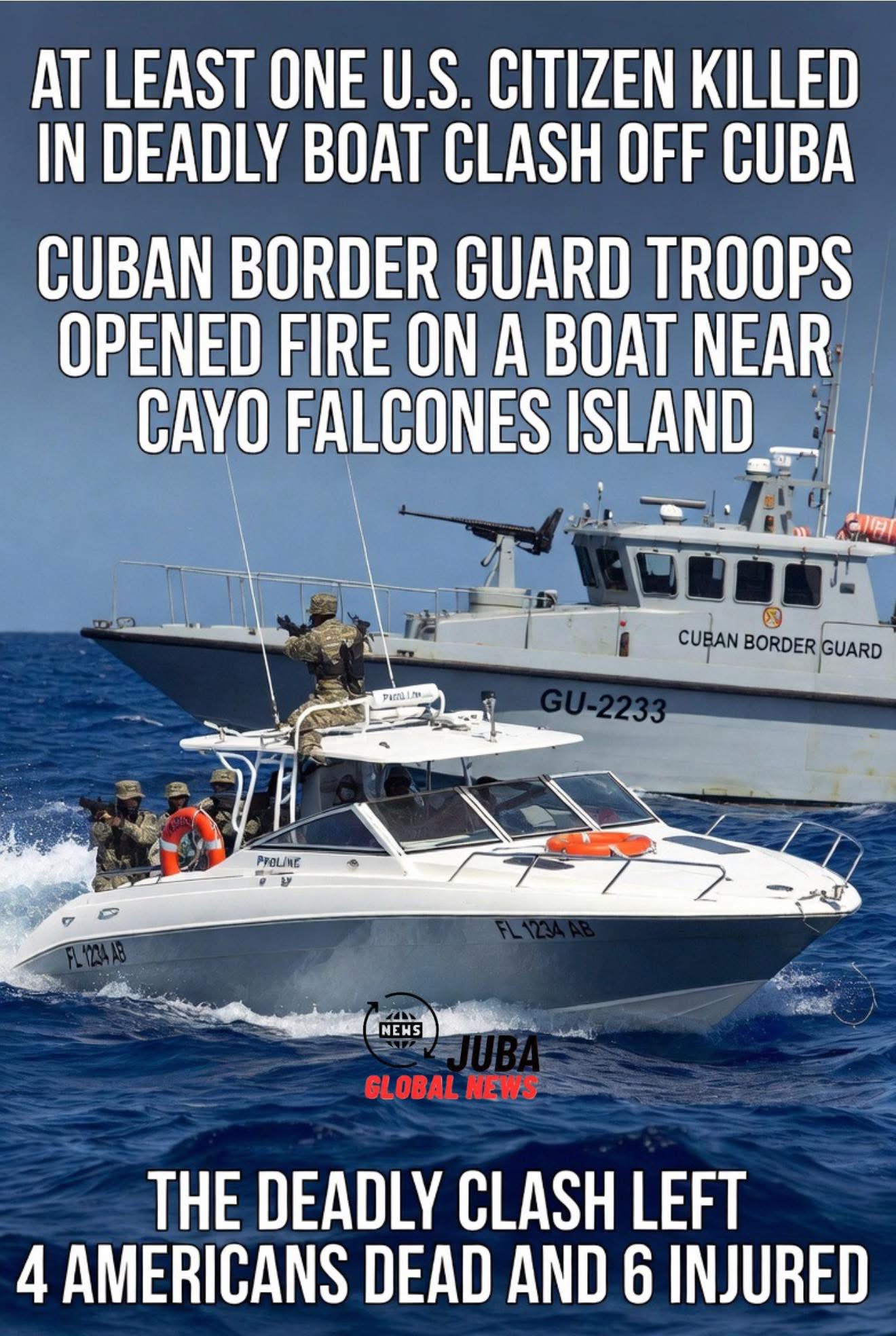
In a rare and deadly maritime confrontation on February 25, 2026, Cuban border guard troops engaged in a firefight with a Florida-registered speedboat that entered Cuban territorial waters near Cayo Falcones in Villa Clara province. The incident resulted in four deaths and six injuries among the boat’s occupants, with Cuban authorities labeling the group as attempting an “armed infiltration for terrorist purposes.” U.S. officials confirmed that at least one American citizen was among those killed, and another was injured and receiving medical treatment in Cuba, heightening tensions between Washington and Havana amid an already strained bilateral relationship.
The clash unfolded in the early morning hours when Cuban Border Guard Troops detected a 24-foot Proline speedboat (registration FL7726SH) operating about one nautical mile northeast of the El Pino channel, well within Cuba’s territorial waters—roughly 100 miles from Florida. A patrol vessel with five Cuban service members approached to identify the vessel. According to Cuba’s Interior Ministry, the speedboat’s crew opened fire first, injuring the commander of the Cuban patrol boat. Cuban forces returned fire, killing four individuals and wounding six others on board. The surviving six were detained, and authorities later arrested a seventh suspect on land accused of providing logistical support.
Cuban state media and the Interior Ministry identified all 10 passengers as Cuban nationals residing in the United States. Among the dead was Michel Ortega Casanova, confirmed by his brother Misael Ortega Casanova (speaking to the Associated Press) as a U.S. citizen who had lived in America for 20 years, worked as a truck driver, and was married. His brother described him as driven by an “obsessive and diabolical” quest for Cuba’s freedom, though he emphasized personal motivations rather than organized terrorism. The ministry claimed the group was heavily armed—with assault rifles, handguns, Molotov cocktails, ballistic protection, and military-style clothing—and intended to carry out terrorist acts inside Cuba. Two surviving detainees, Amijail Sánchez González and Leordan Enrique Cruz Gómez, were previously on Cuba’s national terrorism watch list for alleged involvement in planning or supporting terrorism.
U.S. Secretary of State Marco Rubio stated that the vessel carried no U.S. government personnel and was not part of any official operation. Washington launched independent federal and state investigations, with officials noting the boat may have been stolen from the Florida Keys. The White House and State Department confirmed U.S. citizens were aboard—at least two, per anonymous sources—and emphasized verifying facts before further response. Rubio described the incident as “highly unusual” and pledged a thorough probe.
Context of Escalating U.S.-Cuba Tensions
The confrontation occurs against a backdrop of renewed friction between the two nations. Under the second Trump administration, U.S. policy has hardened toward Cuba, including tightened sanctions, restrictions on oil shipments from allies like Venezuela (following the seizure of Venezuelan leader Nicolás Maduro and disruptions to fuel supplies), and public criticism of the communist regime. Cuba faces a severe energy crisis, with widespread blackouts and fuel shortages exacerbating economic hardship.
Havana has long accused anti-Castro exile groups in Florida of plotting infiltrations and sabotage, while U.S. officials often dismiss such claims as propaganda. This incident revives memories of past maritime incidents, including shootdowns of civilian aircraft in the 1990s and earlier exile attempts during the Cold War era. Cuban President Miguel Díaz-Canel vowed to “defend [Cuba] with determination and firmness against any terrorist and mercenary aggression,” framing the event as a successful defense of sovereignty.
Casualties, Investigations, and Diplomatic Fallout
- Cuban side: One border guard commander injured; no fatalities reported among Cuban forces.
- Boat occupants: Four killed (including at least one U.S. citizen, Michel Ortega Casanova); six wounded and detained.
- U.S. response: Investigations underway; no immediate military escalation announced, but the incident adds to regional volatility.
Both governments are conducting parallel probes, with potential for diplomatic fallout. The U.S. has demanded consular access to any detained American citizens, while Cuba insists the action was legitimate self-defense. Analysts note the timing—amid broader Middle East and Latin American pressures—could complicate de-escalation efforts.
For families like that of Michel Ortega Casanova, the incident brings personal tragedy amid geopolitical rhetoric. His brother expressed grief over what he saw as a misguided but heartfelt pursuit, underscoring the human cost of longstanding U.S.-Cuba enmity.
As investigations continue and details emerge, the February 25 clash serves as a stark reminder of how quickly maritime incidents in the Florida Straits can ignite broader diplomatic crises. With U.S.-Cuba relations already at a low point, the coming weeks will test whether this event leads to further confrontation or restrained diplomacy.
(Compiled from reports by NBC News, NPR, CNN, The New York Times, BBC, The Guardian, Associated Press, Reuters, and Wikipedia summary as of February 27, 2026. Developments remain fluid; official statements should be monitored for updates.)
