Bahrain Says Iranian Attack Hits Industrial Facility as Air Defences Intercept Strikes, and Tehran Links Hormuz Reopening to US Conditions
Bahrain said an Iranian attack set a civilian industrial facility on fire on Saturday while its air defences intercepted further attacks, as Iran's Revolutionary Guards claimed missile-and-drone strikes on US positions and Tehran repeated...
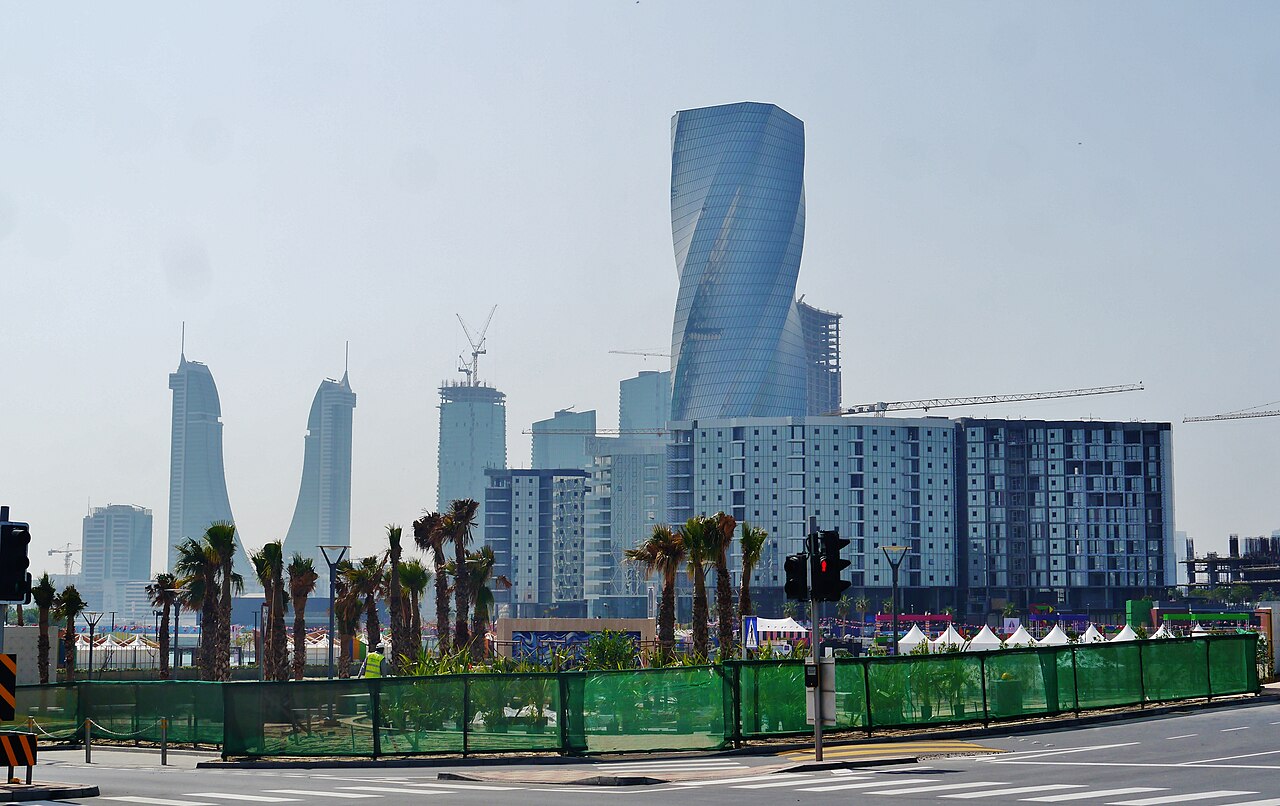
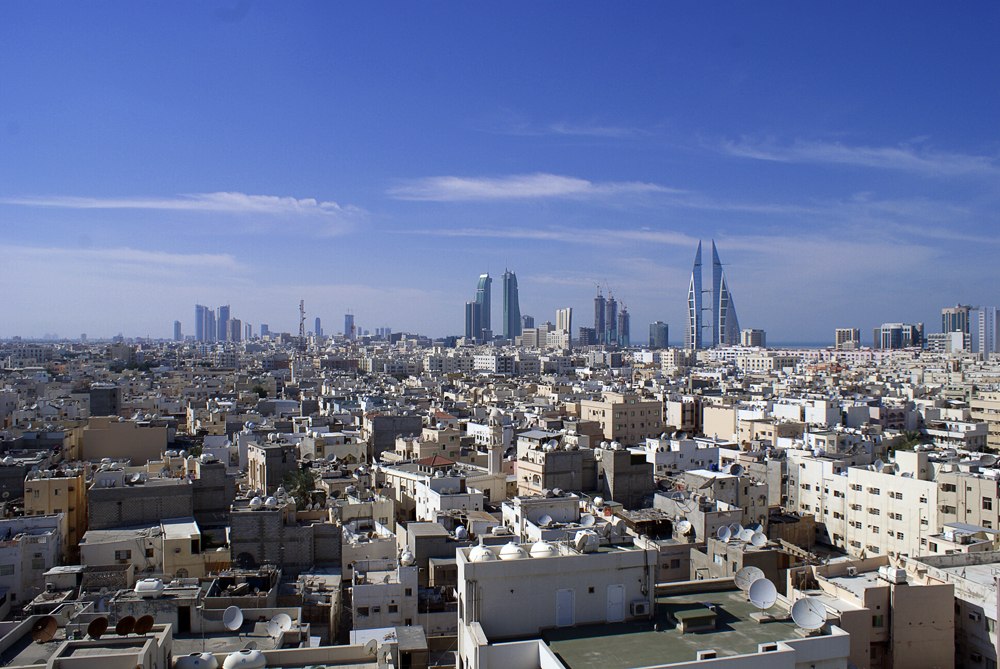
Bahrain Bay and the skyline of Manama, capital of Bahrain, home to the US Navy's Fifth Fleet headquarters. (Photo: Wikimedia Commons)
Bahrain said an Iranian attack set a civilian industrial facility on fire on Saturday while its air defences intercepted further attacks, as Iran's Revolutionary Guards claimed missile-and-drone strikes on US positions and Tehran repeated that the Strait of Hormuz could reopen if Washington met its conditions.
Bahrain said on Saturday that an Iranian attack had hit a civilian industrial facility, causing a fire but no injuries, while Iran's Revolutionary Guards said they had launched a missile-and-drone attack on United States military positions in the kingdom, which hosts the headquarters of the US Navy's Fifth Fleet. The interior ministry said Civil Defence teams were working to contain the fire at the facility, describing the strike in a post on X as a result of Iranian aggression and saying preliminary reports indicated material damage with no injuries. It gave no details on the location or nature of the site that was hit.
The night brought repeated alarms for residents of the small Gulf kingdom. The interior ministry first issued an alert urging residents to move to the nearest safe location because of a potential threat, without providing details, then issued an all-clear before sending a second alert as the attacks continued. Later, Bahrain's Defence Force said its air defences had intercepted a number of Iranian aerial attacks. Shrapnel from the interceptions caused material damage but no casualties, it said, adding that Tehran was continuing what it called a systematic hostile approach towards the kingdom.
Iran's Islamic Revolutionary Guard Corps, in a statement carried by the state news agency IRNA, said its aerospace forces had launched a combined missile-and-drone attack on US positions at the Al-Riffa and Awali bases in retaliation for ongoing aggression and repeated violations of Iranian airspace.
The attacks came on the same day that Iran's foreign minister, Abbas Araghchi, restated Tehran's terms for ending the wider standoff over the Strait of Hormuz, the waterway through which about a fifth of the world's oil normally passes. Speaking at a ceremony marking Oman's National Day, in remarks reported by the semi-official Tasnim news agency, Araghchi said reopening the strait was not difficult if the United States accepted Iran's reasonable conditions, which he described as in line with international law. He said the situation could be resolved only if Washington acknowledged its mistakes and fulfilled its previous commitments, and he was blunt about the alternative: as long as Iran's demands are not met, reopening the strait is not on the agenda.
Iranian statements over recent weeks have set out a list of conditions that includes ending the war on all fronts, unfreezing Iranian assets, lifting oil sanctions and ending the US naval blockade of Iranian ports, which Washington has maintained since April in response to Iran's restriction of shipping through the strait. In an earlier formulation, Araghchi said Tehran could reopen the strait on the second day if Washington fulfilled its commitments on the first day, framing the choice as resting entirely with the United States. He has also insisted that Iran's enriched uranium will not leave the country, describing that as a clear red line in any negotiation over the nuclear programme.
For his part, US President Donald Trump said on Saturday, in a telephone interview with an American television network, that any deal he makes with Iran will be permanent, and that he would not allow Iran to have a nuclear weapon. The war began with American and Israeli strikes on Iran in late February 2026; large-scale fighting ended in June, but the strait remains largely shut to shipping, the blockade remains in place, and the low-level exchanges of fire, like Saturday's over Bahrain, keep testing the fragile pause.
For Gulf states such as Bahrain, each new interception is a reminder that the confrontation sits on their doorstep, whatever the state of diplomacy between Washington and Tehran. Saturday's fire at a civilian facility, and the shrapnel falling from successful interceptions, underline why the smaller states of the region have pressed for the shipping route to reopen and the blockade politics around it to end. Until the conditions each side has set are addressed, however, the strait that carries so much of the world's energy will stay largely closed, and the kingdoms along its shores will keep their air defences on alert. (Source: Reuters)
Source: Juba Global News Network, reporting Reuters coverage.