Democratic Republic of Congo Struggles with Worst Cholera Outbreak in a Generation: Tainted Waters, Forgotten Needs
By: Juba Global News Network
Kinshasa, Democratic Republic of Congo – December 9, 2025
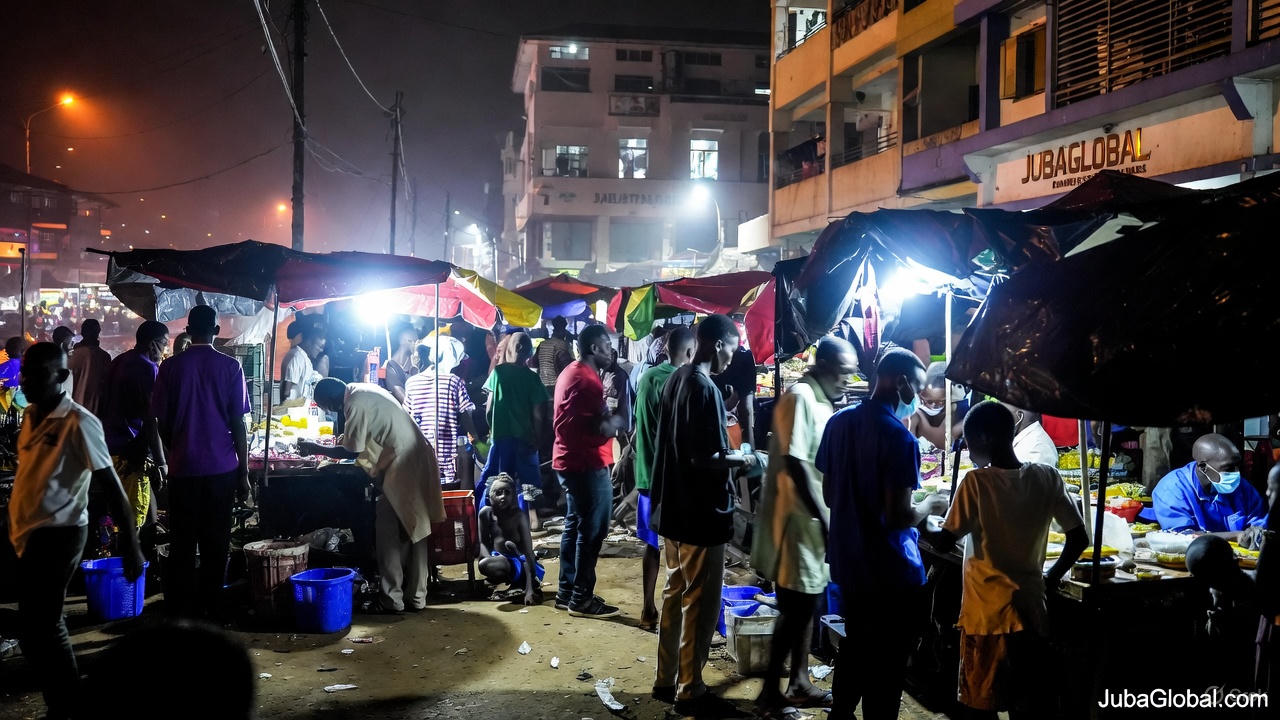
It’s a sweltering afternoon in Kinshasa, the city’s packed markets buzzing with activity, while the Congo River—a source of both life and danger—flows muddy and unchecked nearby. Here, a silent and ruthless killer has swept through with a force not seen in decades. Right now, the Democratic Republic of Congo (DRC) finds itself in the grip of the deadliest cholera outbreak it’s seen in 25 years, a crisis that’s snatched nearly 2,000 lives since January and sickened over 64,000 more. The United Nations Children’s Fund (UNICEF) put out a stark declaration on December 8: the outbreak, tallying 64,427 confirmed cases and 1,888 deaths, isn’t just a health emergency—it’s a blistering exposure of long-standing failures in water, sanitation, and healthcare across one of Africa’s most resource-rich but deeply unequal countries.
Cholera—this acute diarrheal disease caused by Vibrio cholerae—spreads like wildfire through tainted food and water, causing catastrophic dehydration that can kill in mere hours if left untreated. What makes this particular epidemic so gut-wrenching is just how much children bear the brunt of it: those under 18 make up 14,818 cases and 340 deaths, almost 23.4% of the infections countrywide. For a nation where more than 100 million people—countless of them kids—already battle poverty and war, these figures mean homes torn apart, schools upended, and a whole generation staring down losses that might never heal.
Ground zero for this catastrophe sits in Kinshasa, a city of 17 million souls, where the outbreak exploded early this year. Tragedy struck at an orphanage in the gritty Ndola Limbamba district. Within just days last month, the disease tore through the building, stealing the lives of 16 out of 62 children—many already displaced by conflict in the east. “These were kids who’d already lost everything,” remembered Sister Marie Kabila, a nurse at the orphanage who survived the ordeal herself. “They came here looking for safety, not to die from something as preventable as dirty water.” The harrowing story, flagged by UNICEF, has come to stand for the outbreak’s devastating human toll and sparked fresh cries for immediate help.
Now, seventeen out of the DRC’s 26 provinces are battling active cholera cases. Eastern regions—South Kivu, North Kivu, Haut-Katanga—are especially hard-hit, their struggles worsened by ongoing violence and waves of displaced people. More than seven million folks have been uprooted in these areas, crowding into temporary camps where clean toilets are rare and the river is the only option for water. Once the rains arrived in July, things got even worse—flooded latrines and wells only helped cholera’s spread.
According to the 2024-2025 Demographic and Health Survey, a mere 43% of Congolese even have access to basic drinking water—the lowest in Africa—and just 15% enjoy improved sanitation. In the packed slums of Kinshasa, families often make do with a single borehole shared among hundreds, turning something as simple as getting water into a dangerous gamble.
Thing is, cholera isn’t new to the DRC. The country’s vast rivers and porous borders have seen to it that outbreaks return again and again. But 2025’s epidemic is different; it’s even larger than the infamous outbreak in 2000, which claimed over 1,200 lives. Experts blame a toxic mix of factors: relentless eastern conflicts involving more than 120 armed groups have battered the health system, pushing out medical workers and destroying clinics. In Ituri province alone, nearly 40% of cholera centers have shut down since March because of fighting. Climate change isn’t helping, either—erratic rainfall and droughts disrupt crops, boosting malnutrition and making especially children even more vulnerable.
On top of that, the DRC—despite its immense mineral riches (think cobalt and coltan powering the world’s electronics)—remains among the world’s poorest countries, with GDP per capita under $700. Corruption bleeds public health funds dry, and foreign mining corporations tend to care more about what’s in the ground than what’s built on it. “We export billions in resources, but our people are stuck drinking poison,” said Dr. Emile Tshibangu, an epidemiologist based in Kinshasa. Poor city planning has left Kinshasa prone to floods, turning streets into stinking rivers where kids wade through raw sewage.
On the ground, response efforts are frantic and patchy—a mix of courage and frustration. UNICEF, the World Health Organization (WHO), and Médecins Sans Frontières (MSF) have swung into action, rolling out the Case-Area Targeted Intervention (CATI) strategy. This approach sends specialized teams into neighborhoods close to confirmed cases, jumping in with sanitation upgrades, chlorinating water sources, and tracing contacts. Between January and October, they managed to reach over 13.5 million people with vital lessons on handwashing, safe water handling, and the need to seek treatment early. UNICEF also strengthened 150 cholera treatment centers, providing oral rehydration salts and antibiotics to more than 50,000 patients. In Goma, a city bustling in the east, MSF set up tented wards right on the volcanic ash of Nyiragongo, treating thousands. “Patients show up so dehydrated, they collapse at our gates,” MSF coordinator Aisha Diallo explained. “We get fluids in them, but really, the fight is about stopping cases before they start.”
Vaccination drives, using the oral cholera vaccine, have managed to reach two million at-risk people since June, but vaccine shortages have slowed everything down. The DRC government and its partners rolled out the “River Congo Without Cholera” project in September—sending outreach teams by boat to river communities and stepping up community surveillance. Still, progress lags: so far, only 30% of the planned water points have actually been rehabilitated.
And then there are the stories that bring home the crisis’s raw urgency. In Bukavu, South Kivu, twelve-year-old Jolie Mbuyi lost her little brother to cholera after the family had to drink from a fouled stream during their escape from militia violence. “He was fine that morning, and then gone by evening,” Jolie whispered during a counseling session organized by UNICEF. “Now Mama cries every night, and school feels more like a distant memory.” Stories like these show the ripple effects—beyond deaths, the outbreak has forced school closures in affected areas, leaving over half a million kids missing class because of quarantines or family care. Malnutrition’s up 15% in the hardest-hit provinces, as families skimp on food to pay for medical transport.
Globally, pressure and outrage have mounted. UNICEF Representative John Agbor, speaking from Kinshasa, didn’t mince words: “Congolese children shouldn’t be suffering and dying from a disease that’s entirely preventable.” He’s urging a big boost in investment, especially for cholera hot zones like Tanganyika and Maniema. The agency is asking for $6 million in 2026 to keep CATI and WASH (water, sanitation, and hygiene) programs running. The DRC government has proposed a $192 million elimination plan stretching through 2030, focused on fixing infrastructure and tightening surveillance with neighbors like Zambia and Angola—where outbreaks are rising too. But a review in May showed chronic underfunding, with only 40% of the 2025 budget raised so far, leading to urgent pleas to the Global Fund and European Union for help.
Yet as the end of the year looms, there’s a mix of hope and hard reality. African health officials reported a 30% rise in cholera cases across the continent in November, fueled by the same kinds of WASH gaps seen in Burundi and Angola. When it comes to the DRC, experts are sounding the alarm: without a swift injection of $100 million in aid, the number of cases might just double by the middle of 2026. “This is a wake-up call,” WHO Africa Director Dr. Matshidiso Moeti insisted. “Cholera thrives where inequality festers; tackling it takes political will that goes way beyond borders.” As dusk settles over Kinshasa, city lights shimmer uncertainly on the Congo River’s dark swells—it’s hard not to see it as a symbol, a country caught between despair and the stubborn will to endure. In the shadow of this outbreak, families across the DRC are holding tight to hope, hauling water from chlorinated tanks and teaching their kids to scrub their hands in careful rhythm. Still, hope by itself won’t satisfy the hunger for justice. Unless clean water becomes a reality for everyone and conflict finds an end, cholera’s shadow will keep haunting the DRC—a plague that shouldn’t exist in a place with so much unrealized potential. The world is watching—and really, action needs to come soon, before the numbers climb even higher.