

Historic U.S.-Brokered Peace Deal Signed Between DRC and Rwanda: A New Dawn for Eastern Congo?
By: Juba Global News Network Washington, D.C. – December 9, 2025 In a moment that plenty of observers probably thought they’d never see, Democratic R
By: Juba Global News Network
Washington, D.C. – December 9, 2025
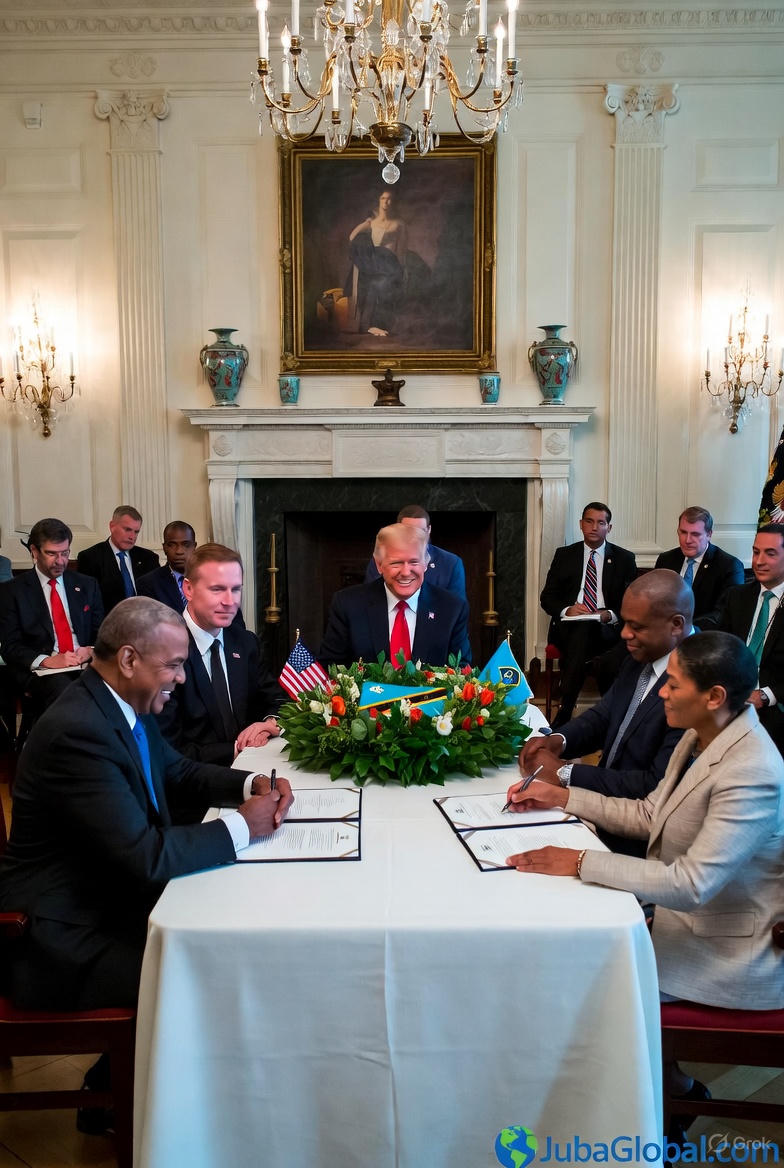
In a moment that plenty of observers probably thought they’d never see, Democratic Republic of Congo President Félix Tshisekedi and his Rwandan counterpart Paul Kagame stood together in the East Room of the White House on December 4, 2025. There, they put their signatures on a broad peace and cooperation deal that aims—finally—to bring an end to three decades of violence in eastern DRC. The ceremony was hosted by U.S. President Donald J. Trump himself, wrapping up 18 months of tough, mostly behind-the-scenes shuttle diplomacy led by U.S. Special Envoy for the Great Lakes, Ambassador J. Peter Pham, with quiet backing from Angola, Qatar, and the United Arab Emirates.
The deal, formally called “The Washington Agreement on Peace, Security, and Economic Cooperation in the Great Lakes Region,” leans on three tightly-linked pillars:
1. Security and Disarmament
- All sides agree to immediately cut any support for armed groups active in eastern DRC.
- Rwanda will pull out all its officers and personnel linked to the M23 rebels within the next 90 days.
- There’s going to be a joint DRC-Rwanda verification team, with U.S., Angolan, and Qatari officers keeping an eye on the process of disarming and regrouping M23 fighters.
- They’re setting up a permanent Joint Security Mechanism in Goma, which comes with a real-time intelligence sharing set-up.
2. Minerals Traceability and Economic Partnership
- They’re creating a new binational “Congo-Rwanda Critical Minerals Authority” to jointly certify conflict-free cobalt, coltan, gold, and lithium from both North and South Kivu.
- Profits from these certified minerals will be split 60-40, with DRC taking the larger share. Plus, 15% of Congo’s cut will be set aside for local development in the communities hardest hit by conflict.
- U.S. companies get a leg up when it comes to bidding under the new system, and Rwanda receives formal transit rights through Congo to the Atlantic port of Matadi.
3. Diplomatic Normalization and Regional Integration
- Diplomatic ties will be fully restored, and the Goma-Gisenyi “Grande Barrière” border will open around the clock.
- Both countries have agreed to a non-aggression pact and will recognize current borders.
- They’re also promising to back the Luanda Roadmap and the Nairobi Process, bringing these once-competing peace frameworks together at last.
Right after the signing, President Tshisekedi called the deal “the most important day for peace in my country since independence in 1960.” Kagame, sounding cautious, described it as “a pragmatic step toward ending a cycle of violence that has cost too many lives and held back an entire region.”
But, honestly, underneath all the formal handshakes and glasses of champagne, skepticism is still running high. In Goma, Bukavu, and Beni—the cities most scarred by M23 attacks since 2022—people met the news with a mixture of guarded optimism and outright disbelief. “We’ve seen these kinds of agreements before,” said Marie Kahindo, a mother of four who was forced out of Rutshuru in 2023. “Every time presidents shake hands in some far-off capital, the shooting starts up again just months later.”
Why might this deal stick when so many others have crumbled? Analysts point to a few reasons:
- Direct U.S. leverage: Washington is quietly threatening targeted sanctions on Rwandan military and Congolese politicians if they try to wreck the process.
- Economic incentives: Rwanda has taken a hit over its ties to M23; certified mineral access gives Kigali a face-saving way out.
- War fatigue: After three years of brutal fighting, which displaced more than 2.8 million people and killed tens of thousands, both governments are under huge pressure at home to finally deliver something.
There are also some tough, new enforcement tools in play. A U.S.-led Oversight Commission chaired by Ambassador Pham—with members from Angola, Qatar, and the African Union—will release compliance reports every three months. If they catch anyone cheating, mineral certification gets suspended automatically—a financial blow that neither side can really afford.
Maybe the most poignant moment happened the day before the signing, when Tshisekedi and Kagame together laid a wreath at the United States Holocaust Memorial Museum. It was a silent nod to the ethnic tensions that have poisoned relations between Kinshasa and Kigali for so long.
Regional leaders didn’t waste time endorsing the deal. Angolan President João Lourenço, who’d helped mediate the Luanda rounds, called it “the breakthrough we have all prayed for.” Tanzania’s Samia Suluhu said it was “a Christmas gift to the people of eastern Congo.”
But, let’s face it, big obstacles still loom. M23’s leaders have flat-out rejected disarmament unless they get political concessions, like power-sharing in North Kivu. Meanwhile, hardliners in the Congolese army—known as the Wazalendo coalition—are promising to keep fighting what they call “Rwandan occupation,” even if Kinshasa tells them to stop. And then there’s the Allied Democratic Forces (ADF), an ISIS-linked group that keeps carrying out massacres—problems not even directly tied to the Congo-Rwanda standoff.
Still, this week in the markets of Goma, something almost unheard of is happening: Rwandan traders are crossing the border again without fear, and Congolese students are openly chatting about maybe studying in Kigali. For the first time in a long while, “peace” isn’t just some distant hope, but a possibility you can almost reach out and touch.
As one old fisherman on Lake Kivu told Juba Global’s Amina Nkusi: “I’ve known nothing but war since Mobutu. If this deal gives my grandkids even five years without gunfire, I’ll die a happy man.”
Whether the Washington Agreement turns out to be just another forgotten note or the building block for lasting peace—that’s a story that’ll play out in the hills and valleys of eastern Congo over the coming months, not in grand marble halls. For now, against all logic, hope’s got an official signature at last—and the world’s waiting to see if it’ll actually be kept.
