

Winter Storm Death Toll Climbs to 29 as Arctic Blast Deepens Grip on Midwest and Northeast
By: Juba Global News Network | JubaGlobal.com January 27, 2026 A punishing multi-day winter storm system that has hammered much of the central and eastern
By: Juba Global News Network | JubaGlobal.com
January 27, 2026
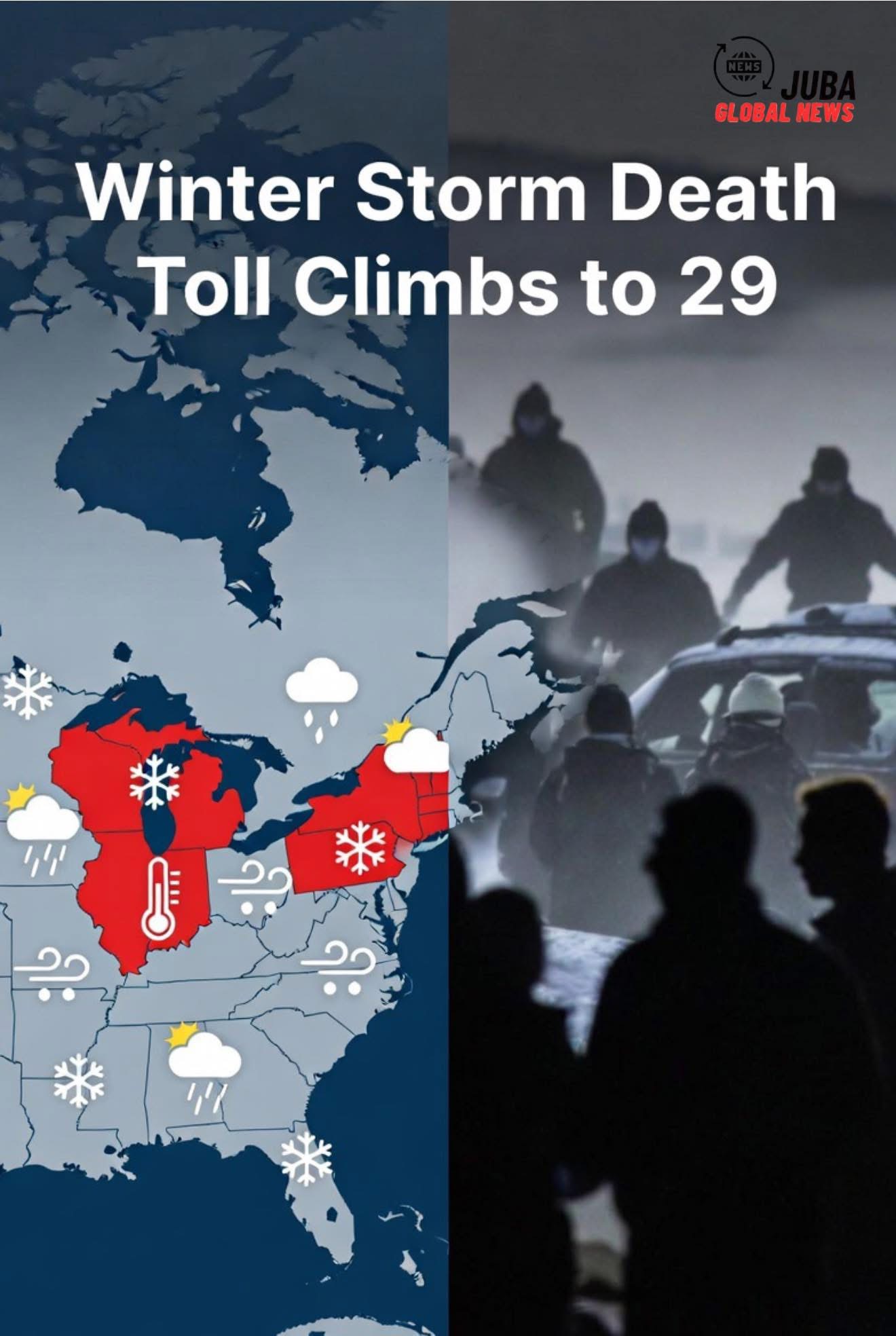
A punishing multi-day winter storm system that has hammered much of the central and eastern United States since late last week has now claimed at least 29 lives, with forecasters warning that the worst may still be ahead as dangerously cold air settles in behind the system. The National Weather Service (NWS) has issued rare “life-threatening cold” warnings across portions of the Upper Midwest, Great Lakes, and interior Northeast, while blizzard conditions continue to snarl travel and isolate communities.
The storm—dubbed “Winter Storm Elowen” by private weather firms—began as a powerful low-pressure system moving out of the Rockies on January 23, 2026. It rapidly intensified over the Plains, pulling Arctic air southward and producing widespread heavy snow, high winds, and dangerously low wind chills. As of January 27 morning, the death toll stands at 29 confirmed fatalities, according to state emergency management agencies and local coroners. That number is expected to rise as search-and-rescue operations continue in rural areas and as indirect deaths from carbon monoxide poisoning, hypothermia-related medical emergencies, and traffic accidents are tallied.
Breakdown of Fatalities by State and Cause
- Minnesota — 7 deaths
Most attributed to vehicle accidents on ice-covered highways and one confirmed case of hypothermia after a stranded motorist was found outside their vehicle. - Wisconsin — 6 deaths
Includes three fatalities in a multi-vehicle pileup near Eau Claire and two elderly residents who lost power and could not access heat. - Michigan — 5 deaths
Four traffic-related fatalities in the Upper Peninsula and one carbon monoxide poisoning case linked to improper generator use. - New York — 4 deaths
Two in upstate counties from snowmobile accidents, one heart attack during shoveling, and one exposure-related death in Buffalo. - Illinois — 3 deaths
All vehicle-related on Interstate 80 and Interstate 90 corridors. - Ohio & Pennsylvania — 2 each
Primarily weather-exacerbated medical events and one confirmed hypothermia case in rural Pennsylvania. - Other states (Iowa, Indiana, Vermont) — 1–2 each
The majority of deaths (over 60%) have been traffic-related, underscoring the combination of near-zero visibility, black ice, and high winds that produced whiteout conditions across several states.
Current Conditions and Forecast
As of 8:00 a.m. EST on January 27, 2026:
- Wind chills ranging from -30°F to -55°F are widespread across Minnesota, northern Wisconsin, the Upper Peninsula of Michigan, and parts of northern New York and Vermont. These values are expected to persist through Wednesday morning.
- Snow totals have reached 18–30 inches in bands across the Upper Midwest, with isolated reports of 36+ inches near Lake Superior due to lake-effect enhancement.
- Power outages affect more than 420,000 customers across 12 states, with hardest-hit areas in Wisconsin, Michigan, and upstate New York.
- Travel remains severely restricted: dozens of interstate highways are closed, major airports (Minneapolis–Saint Paul, Detroit, Buffalo) have canceled thousands of flights, and Amtrak service is suspended on several routes.
The NWS warns that the coldest air of the season is now in place behind the storm. Wind chills in the -40°F to -60°F range are forecast for parts of the northern Plains and Upper Midwest through early Wednesday, with dangerously low temperatures expected to linger into the weekend in some locations.
Public Safety Alerts and Response
State and local emergency managers are urging residents to:
- Stay indoors if possible, especially vulnerable populations (elderly, young children, those with medical conditions).
- Never use generators, grills, or camp stoves inside homes, garages, or enclosed spaces due to carbon monoxide risk.
- Check on neighbors, especially those living alone.
- Avoid unnecessary travel; if stranded, remain with your vehicle unless safety is clearly compromised.
The American Red Cross has opened warming shelters in multiple counties across affected states, and the Federal Emergency Management Agency (FEMA) is coordinating with state partners to preposition supplies.
Economic and Societal Impact
Beyond the human toll, the storm has disrupted supply chains, closed schools and businesses, and strained emergency services. Farmers in the Midwest report concerns over livestock safety and delayed feed deliveries, while retailers brace for significant sales losses during what is normally a strong post-holiday shopping period.
As the Arctic air digs in, meteorologists caution that even after the snow ends, the combination of extreme cold and lingering wind will keep wind-chill values in life-threatening territory for several more days. Officials are urging the public to treat this as a prolonged emergency, not a short-lived event.
For those in the storm’s path, the message is stark: extreme cold kills quietly and quickly. Preparation and caution remain the best defenses.
Juba Global News Network tracks major weather events and their human impact. This article is compiled from reports by the National Weather Service, state emergency management agencies, the Associated Press, CNN, NBC News, The Weather Channel, local news outlets, and power-outage tracking services as of January 27, 2026, 8:00 a.m. EST.
