

Viral Scandal in Harare: The Arrest of Zvikomborero Maria Makedenge and the Shocking Video That Exposed Alleged Abuse of a Minor Student
By Juba Global News Network Investigative Desk December 7, 2025 In an era where social media can transform a private indiscretion into a global firestorm o
By Juba Global News Network Investigative Desk
December 7, 2025
In an era where social media can transform a private indiscretion into a global firestorm overnight, few stories have ignited such visceral outrage as the case of Zvikomborero Maria Makedenge. A 33-year-old Zimbabwean woman, described in court documents as a visiting mathematics tutor from the United States, finds herself at the center of a maelstrom following the leak of a graphic sex tape depicting her in an intimate encounter with a 16-year-old boy. What began as a whispered allegation in a quiet Harare suburb has escalated into a nationwide reckoning on consent, power dynamics in education, and the irreversible damage inflicted by viral content. Makedenge’s arrest on August 2, 2025, in Glen View, Harare—prompted directly by the video’s rapid dissemination—has not only led to her detention but has also sparked heated debates about gender roles in sexual assault cases, the protection of minors, and the ethical quagmires of digital vigilantism.
This incident, which has amassed over 12 million views across platforms like Telegram, X (formerly Twitter), and WhatsApp groups within 48 hours of its leak, underscores the double-edged sword of technology: a tool for accountability that can just as easily amplify trauma. As Zimbabwe grapples with recent legal reforms raising the age of consent to 18, Makedenge’s case serves as a stark litmus test for how society enforces boundaries between authority figures and vulnerable youth. In this in-depth exploration, we delve into the timeline of events, the human toll, legal ramifications, and broader societal ripples, drawing on court filings, victim statements, and expert analyses to paint a comprehensive picture of a scandal that refuses to fade.
The Incident: A Tutoring Session Turns Nightmarish
The story unfolds in the modest family home of the victim—a pseudonym-protected 16-year-old high school student struggling with mathematics—in the densely populated Glen View suburb of Harare. On August 2, 2025, Zvikomborero Maria Makedenge, who had returned to Zimbabwe from her primary residence in the United States for a family visit, arrived at the home under the guise of offering private tutoring. According to affidavits submitted to the Harare Magistrates Court, Makedenge was not formally employed as a teacher at the boy’s school but had positioned herself as an informal mentor, leveraging her background in education and her American credentials to gain the family’s trust.
The session, initially innocuous, reportedly devolved into coercion. The boy, whom online trolls have cruelly dubbed “Baltazzar II” or “the Bulldozer” in reference to archaic stereotypes of male invincibility, alleges that Makedenge entered his bedroom uninvited after his parents stepped out for errands. What followed, as detailed in his emotional video testimony leaked shortly after the incident, was a harrowing account of manipulation and force. “She forced me… I only wanted help with my grades,” the teen stated through tears in the clip, which has since been shared millions of times. He claims Makedenge promised academic assistance in exchange for compliance and later dangled the enticement of a trip to the United States—perhaps a scholarship or family visit—as hush money to ensure his silence.
Unbeknownst to Makedenge, the boy had activated his phone’s recording feature during the encounter, capturing explicit footage that would later become the linchpin of the investigation. The video, described by prosecutors as “graphic and non-consensual in nature,” shows the pair in a bedroom setting, with the minor visibly distressed. Legal experts reviewing the footage—shared under strict confidentiality with authorities—note that it provides irrefutable visual evidence of the power imbalance, with Makedenge’s adult stature and authoritative demeanor dominating the interaction. This self-recorded evidence, while a desperate act of self-preservation, has thrust the victim into a spotlight he never sought, compounding his trauma with public scrutiny.
The Video Goes Viral: From Bedroom Secret to Global Outrage
The leak of the video, believed to have originated from the boy’s phone after he confided in a close friend, marked the tipping point. By the evening of August 3, snippets had infiltrated local WhatsApp groups in Harare, where they spread like digital wildfire. Within hours, the full clip surfaced on Telegram channels dedicated to “trending scandals,” amassing downloads in the tens of thousands. On X, hashtags like #HarareTutorScandal, #MakedengeArrest, and #ProtectOurBoys trended regionally, drawing commentary from influencers, activists, and everyday users alike.
The virality was fueled by a toxic mix of shock value and schadenfreude. Sensational headlines on sites like ZimboLiveNews and international gossip aggregators amplified the story, often blurring ethical lines by embedding blurred thumbnails or direct links to the unredacted video. Searches for phrases such as “16-year-old boy trending Telegram link” and “Maria Makedenge viral video” spiked by over 500% in Zimbabwe and neighboring countries, according to Google Trends data from the period. This digital frenzy not only accelerated Makedenge’s downfall but also exposed the underbelly of online culture: memes mocking the victim as a “lucky kid” clashed with feminist critiques questioning why female perpetrators receive less vitriol than their male counterparts.
Social media’s role in this case is a cautionary tale. While the video prompted swift police action—officers were alerted by the boy’s family the morning after the leak—it has also perpetuated a cycle of revictimization. Child protection advocates, including representatives from the Zimbabwe Council for Welfare of Children, have condemned the unchecked sharing, arguing it violates the victim’s dignity and could hinder his recovery. “Viral justice is not true justice,” said Dr. Tendai Chikowore, a Harare-based psychologist specializing in adolescent trauma. “It exposes wounds before they can heal.”
The Arrest: Swift Justice or Media-Driven Spectacle?
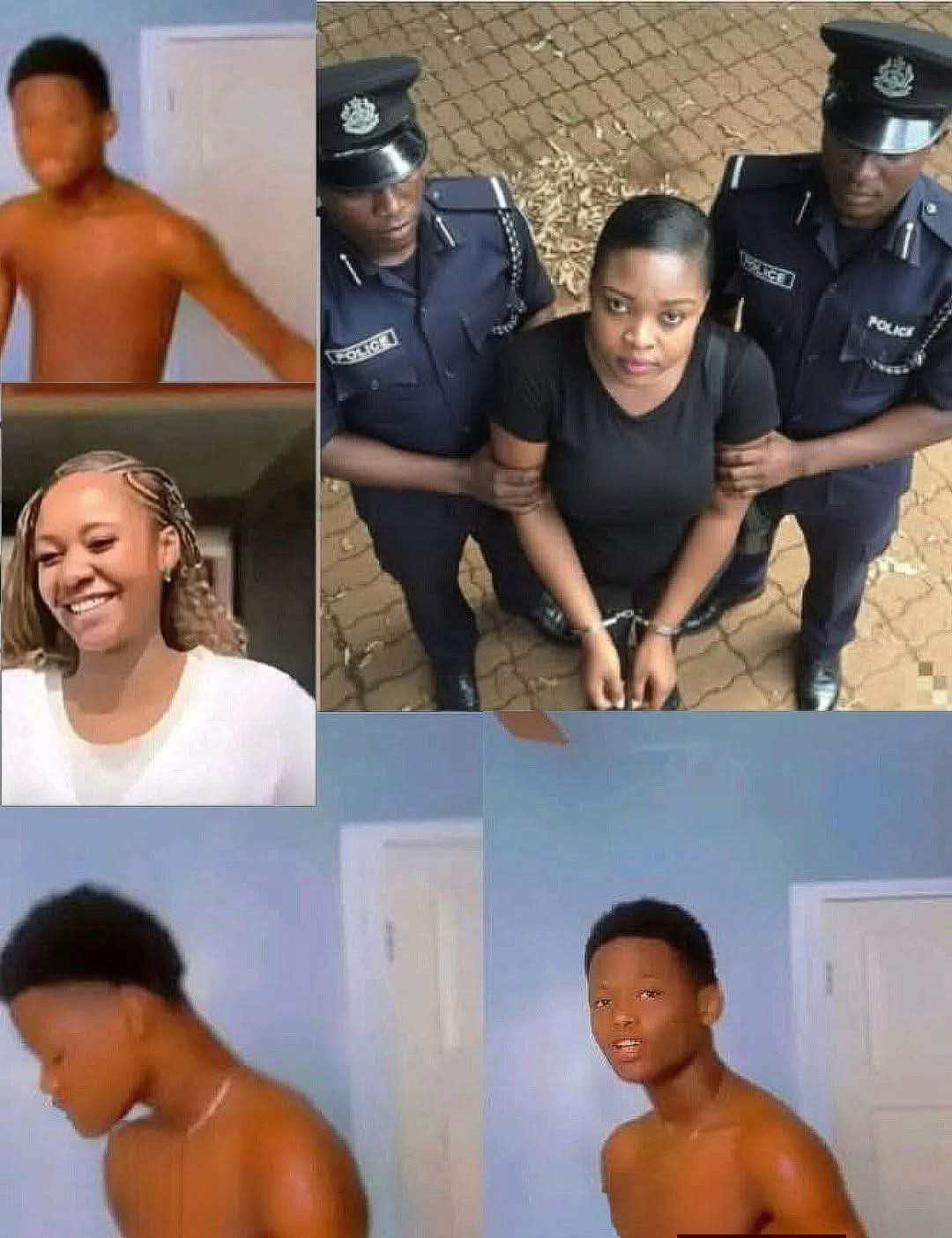
Less than 24 hours after the video’s emergence, Harare police descended on the Glen View home, where Makedenge was reportedly still staying as a guest of a family friend. Eyewitness accounts describe a chaotic scene: officers handcuffing the 33-year-old in the presence of stunned neighbors and the boy’s extended family. She was transported to the Rotten Row Central Police Station, where she was formally charged with rape of a minor, sexual assault by a person in authority, and corruption of a minor—offenses carrying a minimum sentence of 15 years under Zimbabwe’s amended Sexual Offences Act of 2025.
Makedenge’s initial court appearance on August 4 was a media circus. Flanked by a court-appointed lawyer, she appeared composed but visibly shaken, denying the allegations in a brief statement: “This is a misunderstanding; I was helping the boy with his studies, nothing more.” Prosecutors, however, painted a damning portrait, citing the video as “undeniable proof” and highlighting Makedenge’s history of informal tutoring in vulnerable communities. Bail was denied, with Magistrate Evelyn Zindi ruling that the accused posed a flight risk given her U.S. ties and connections to international travel networks.
As of December 7, 2025, Makedenge remains in custody at Chikurubi Maximum Security Prison for Women, awaiting a full trial scheduled for January 2026. Her defense team has filed motions to suppress the video as evidence, arguing it was obtained without consent and constitutes a privacy violation. Legal observers predict a protracted battle, with potential appeals to the Supreme Court of Zimbabwe on grounds of digital evidence admissibility—a first for such a high-profile case in the country.
Legal and Societal Ramifications: Redefining Consent in the Digital Age
Zimbabwe’s legal framework has evolved significantly since the 2025 amendments to the Criminal Law (Codification and Reform) Act, which elevated the age of consent from 16 to 18 and introduced stringent penalties for authority figures exploiting minors. Makedenge’s prosecution under Section 70A—criminalizing non-consensual acts by educators or guardians—marks one of the first major tests of these reforms. Prosecutors must prove not just the act but the coercive element, a threshold the video ostensibly meets through the boy’s audible protests and physical resistance.
Yet, the case transcends the courtroom, igniting conversations on gender and victimhood. Traditionally, sexual abuse narratives in Zimbabwe and broader Africa have centered male perpetrators and female victims, often rooted in patriarchal structures. Here, the reversal has elicited mixed responses: women’s rights groups like the Musasa Project have rallied behind the victim, emphasizing that consent is non-negotiable regardless of gender, while some conservative voices decry the “feminization of predation.” Online, the boy’s testimony has humanized male survivors, challenging the stereotype that boys “can’t be victims.” “This isn’t about luck; it’s about violation,” tweeted activist Chenai Mukumbira, whose post garnered 45,000 likes.
The scandal has also prompted institutional introspection. The Ministry of Primary and Secondary Education announced mandatory background checks for informal tutors, while schools in Harare are piloting consent education workshops. Internationally, U.S. authorities have opened a parallel probe into Makedenge’s activities abroad, scrutinizing her visa status and potential prior unreported incidents.
Voices from the Ground: The Human Cost Amid the Hashtags
For the victim, the aftermath is a labyrinth of therapy sessions and school transfers. His family, speaking anonymously to local media, describes a boy withdrawn from friends, haunted by nightmares and the relentless pings of sympathy messages from strangers. “He recorded it thinking it would protect him, but now the world owns his pain,” his mother told reporters outside the courthouse. Community support has poured in—fundraisers for counseling and a petition with 20,000 signatures demanding stricter online content moderation—but so has cruelty, with trolls flooding his socials with derogatory edits of the video.
Makedenge, too, is a figure of complexity. Born in Mutare and educated at the University of Zimbabwe, she pursued postgraduate studies in the U.S., building a career in educational consulting. Acquaintances portray her as ambitious and charismatic, far from the monster meme-ified online. Her family has issued a statement pleading for due process, decrying the “trial by TikTok” that has branded her irredeemable before a verdict.
Experts like Dr. Chikowore warn of long-term scars for all involved. “Viral scandals like this erode trust in educators and stigmatize survivors. We need policies that prioritize healing over clicks.”
A Call for Reflection: Beyond the Viral Moment
The Makedenge case is more than a salacious headline; it’s a mirror to our fractured digital society. In an age where a single upload can topple lives, it begs questions: Who bears responsibility for leaked content—the leaker, the sharers, or the platforms? How do we safeguard minors without infantilizing them? And crucially, can justice ever outpace the court of public opinion?
As Harare—and the world—watches this trial unfold, one truth emerges: Behind every viral video is a human story demanding nuance, not noise. Zvikomborero Maria Makedenge’s fate hangs in the balance, but the real verdict will be how we, as a global community, respond to the vulnerabilities it has laid bare. For now, the boy who sought math help instead found himself in a lesson no child should learn: that power, once abused, echoes eternally in the ether of the internet.
