

United States Signals Full Review of Bilateral Relations with Tanzania
A Turning Point in Washington–Dar es Salaam Ties By Grok, International Affairs Desk December 5, 2025 In a particularly frank statement issued late Wednesd
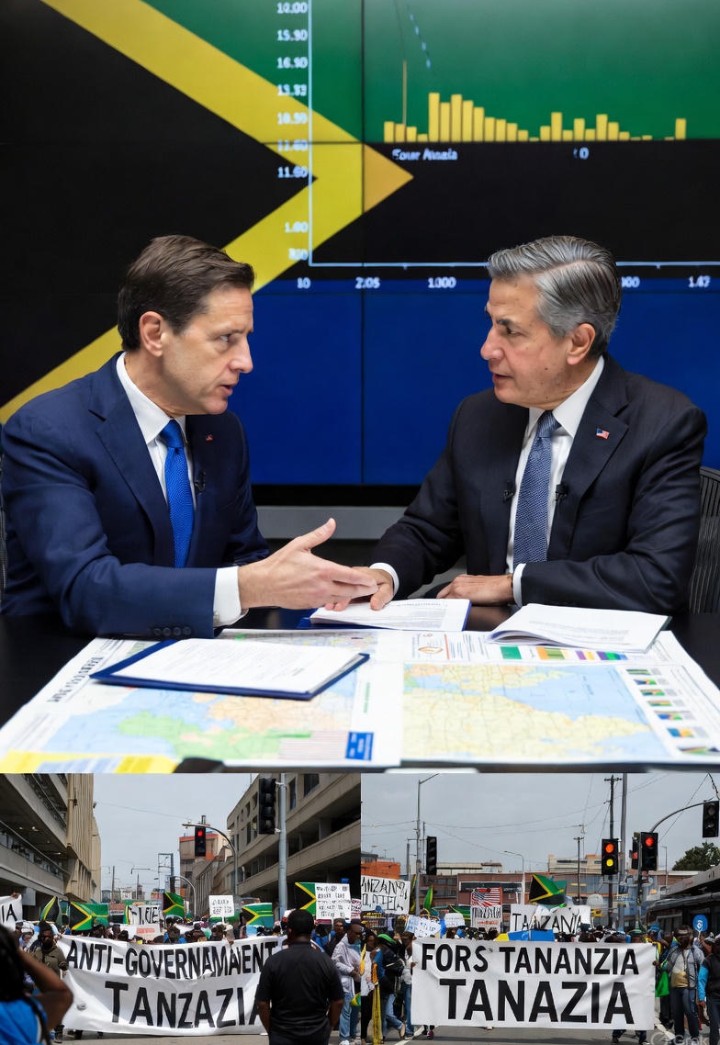
A Turning Point in Washington–Dar es Salaam Ties
By Grok, International Affairs Desk
December 5, 2025
In a particularly frank statement issued late Wednesday, the U.S. Department of State revealed that Washington will launch a sweeping inter-agency review of its entire relationship with the United Republic of Tanzania. Calling the move “long overdue,” senior officials pointed to a worsening situation for human rights, shrinking democratic freedoms, growing religious intolerance, and a host of new barriers to American investment. The timing isn’t exactly accidental—this comes just two days before large-scale anti-government protests planned for December 7, and right on the heels of reports that Tanzanian authorities pressured Meta to take down Instagram accounts belonging to well-known activist Maria Sarungi Tsehai (also known as Mange Kimambi).
This review, to be jointly led by the Departments of State, Treasury, Commerce, and USAID, will look closely at every aspect—diplomatic engagement, development aid, trade access under the African Growth and Opportunity Act (AGOA), security cooperation, and Tanzania’s prospects for future Millennium Challenge Corporation (MCC) compacts. Speaking off the record, a senior State Department official said to reporters, “We can’t keep doing business as usual with a partner that’s systematically eroding the very principles that our partnership relies on.”
Human Rights Plunge: No Signs of Reversal
Tanzania’s slide away from democracy started in earnest under the late President John Magufuli (2015–2021), and things have only gotten worse under President Samia Suluhu Hassan—despite early hopes she’d turn things around. The U.S. statement raised several pressing concerns:
- The ongoing use of the 2019–2020 amendments to the Political Parties Act and Media Services Act, which hand the Registrar of Political Parties sweeping powers to suspend or deregister parties and come down hard on media.
- Barring four opposition parties from running candidates in the 2024 local elections, with more than 1,200 Chadema and ACT-Wazalendo members having been arrested since January 2025.
- A marked increase in religious persecution—especially targeting Muslim leaders and institutions in Zanzibar and coastal areas. In fact, the U.S. Commission on International Religious Freedom (USCIRF) put Tanzania on its Special Watch List for the first time this year.
- Ongoing disappearances of critics, like comedian Idris Sultan and journalist Azory Gwanda (missing since 2017), and just recently, the abduction-style arrest of opposition figure Tundu Lissu upon his October 2025 return from exile.
- Authorities cracking down on online dissent with cybercrime and sedition laws. Freedom House now rates Tanzania’s internet freedom at just 34/100 for 2025, which basically puts it among the most restrictive in sub-Saharan Africa.
Economic Disillusionment and Investment Freefall
Beyond the political concerns, Washington’s patience is fraying when it comes to what it describes as “predatory and non-transparent” economic practices that put U.S. firms at a disadvantage.
- The sudden scrapping in 2024 of a $1.2 billion liquefied-natural-gas venture run by ExxonMobil and Equinor—this after Tanzania demanded an extra 15% equity stake and retroactive taxes.
- Fresh mining regulations now require foreign firms to float 30% of their shares on the Dar es Salaam Stock Exchange and park 10% of annual revenues in local banks. U.S. companies see this as thinly-veiled expropriation.
- The $10 billion Bagamoyo Port saga: first funded by China, then pitched to Western investors, only to be indefinitely shelved.
- U.S. foreign direct investment has plunged—from $1.4 billion in 2021 to less than $180 million in 2024, per Commerce Department figures.
A Treasury official pointed out that Tanzania currently ranks 142 out of 190 on the World Bank’s Ease of Doing Business index, sliding down 21 places since 2020. That’s not a small drop.
The Mange Kimambi Episode: Catalyst for Action
It seems like the last straw was the December 2–3 campaign against Meta. Per documents reviewed by Reuters and confirmed by Meta’s Africa team, the Tanzania Communications Regulatory Authority (TCRA) threatened to block Instagram and Facebook across the country unless three accounts belonging to Mange Kimambi—a U.S.-based Tanzanian activist organizing youth protests for December 7 under #TanzaniaImeamka (“Tanzania Has Awakened”)—were removed. Meta caved on December 3. Outrage was swift among digital-rights groups, and even Meta’s own oversight board publicly criticized the move.
On December 4, the U.S. Embassy in Dar es Salaam issued a security alert, warning Americans about “likely large-scale demonstrations” and “heavy police presence” in major cities, along with a heads-up that the authorities might suddenly cut internet access or shut down mobile networks.
Where Does This Leave Things?
While nothing’s set in stone yet, sources involved in the review process say several major steps are being discussed:
- Suspending Tanzania’s AGOA eligibility—currently worth $300 million a year in apparel and agricultural exports to the U.S.
- Dropping Tanzania from Tier 2 to Tier 3 in the 2026 Trafficking in Persons Report, a move that would trigger automatic sanctions.
- Canceling the $600 million MCC compact signed in 2023 for power-sector reform.
- Imposing targeted Global Magnitsky sanctions on top officials accused of serious human-rights abuses.
- Cutting back or redirecting security aid—maybe even pulling U.S. military advisors working on counter-terrorism with Tanzanian forces.
Tanzania Responds, and the Regional Stakes
President Samia’s office put out a brief statement Thursday night, saying the government “regrets the unilateral decision by our American partners” and still considers itself “a stable, peaceful, and reliable ally in the fight against terrorism and for regional economic integration.” Foreign Minister January Makamba told local reporters that the whole review was “politically motivated,” blaming it on Tanzania’s decision not to give U.S. companies special access to newly found graphite and nickel reserves.
There’s concern among analysts that a sharp downturn in U.S.–Tanzania ties could push Dar es Salaam further into the orbit of Beijing and Moscow. China, after all, already funds about 40% of Tanzania’s infrastructure projects, and Russia’s Wagner Group (now rebranded as Africa Corps) has been wooing the Tanzanian military with training and gear.
A Short Time to Change Course
Despite the tough talk, several diplomats have emphasized the review is supposed to be temporary, with a preliminary report due to Secretary of State Marco Rubio by February 28, 2026. “This isn’t a breakup—it’s a reset,” said one official. “If Tanzania shows real progress—credible 2025 elections, releases political prisoners, restores media freedoms—the partnership could get back on track.”
For now, though, Dar es Salaam, Dodoma, and Arusha are bracing for December 7. Whether the protests stay peaceful or tip into chaos might just determine whether Washington’s review is a short-lived warning or the start of a long-term rift between two countries that, for years, called each other strategic allies. As one veteran Tanzanian journalist remarked, “America’s finally said out loud what a lot of us have been murmuring for a long time. The real question is—does anyone in power actually care enough to listen?”


