

United States Launches Comprehensive Review of Bilateral Relations with Tanzania Amid Post-Election Repression Crisis
United States Launches Comprehensive Review of Bilateral Relations with Tanzania Amid Post-Election Repression Crisis By Juba Global News Network Washingto
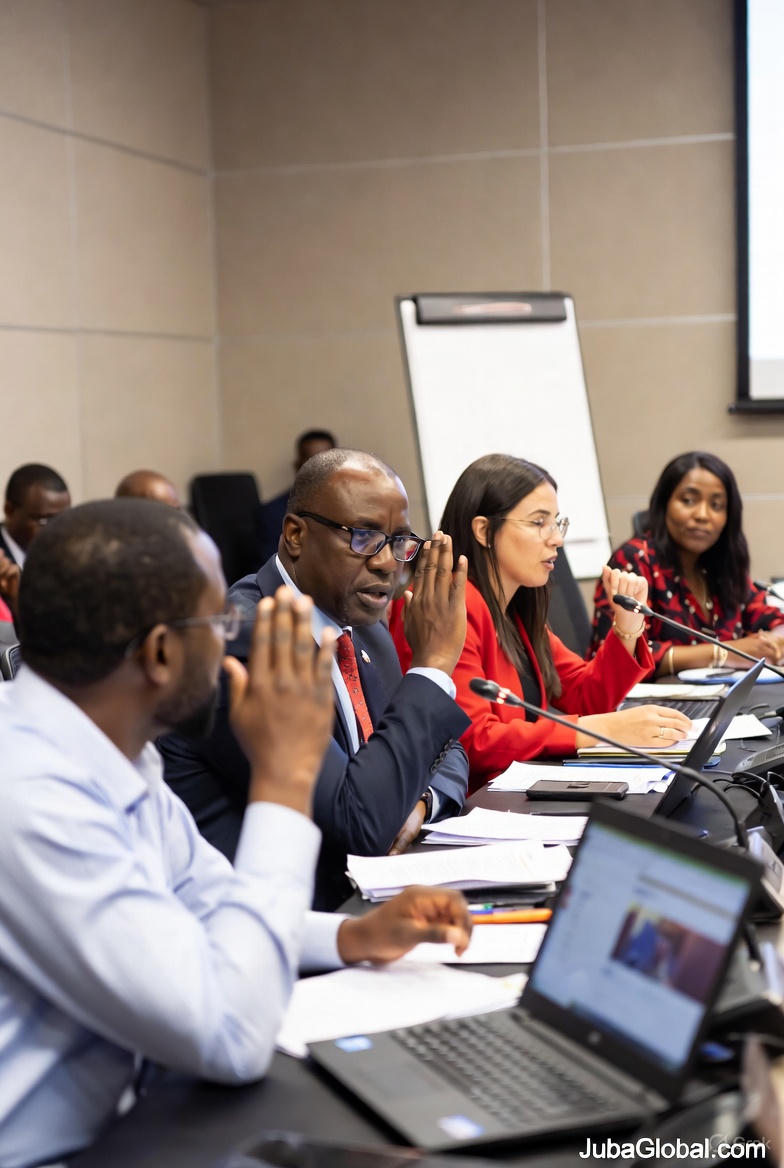
United States Launches Comprehensive Review of Bilateral Relations with Tanzania Amid Post-Election Repression Crisis
By Juba Global News Network
Washington, D.C. | 9 December 2025
In what may be one of the most dramatic moves in decades for U.S.–East Africa relations, the United States Department of State announced on December 8, 2025, that it’s kicking off a “comprehensive review” of the entire bilateral relationship with Tanzania. Senior officials are calling it “the most far-reaching reassessment of U.S.–Tanzania ties in more than thirty years,” and it comes straight on the heels of violent crackdowns against opposition protests after the highly contested local elections held on October 29.
A senior official at the State Department, speaking off the record to Juba Global News Network, said this review is set to dig into “every dimension of the relationship: development assistance, security cooperation, trade preferences, diplomatic engagement, and high-level visits.” Secretary of State Marco Rubio is personally overseeing the whole process, which should wrap up with official recommendations headed to President Donald Trump by February 15, 2026.
From Strategic Partner to Pariah State?
For the last 25 years or so, Tanzania’s pretty much been seen as a stable, moderate, and strategically important partner for Washington in what’s often a turbulent region. Under the Millennium Challenge Corporation (MCC), the country’s received upwards of $1.3 billion in grants since 2008. Tanzania also hosts Africa’s largest Peace Corps program, works closely with the U.S. Africa Command (AFRICOM) on counter-terrorism, and has consistently contributed to UN peacekeeping efforts.
But that image of Tanzanian stability has taken a real beating in the past six weeks. Reliable reports—coming from opposition groups, Tanzanian NGOs, leaked diplomatic cables, and satellite imagery reviewed by independent monitors—suggest that security forces killed somewhere between 522 and 712 people between October 29 and November 15 alone. On top of that, thousands more have been injured or detained without cause. The elections themselves were slammed by the African Union’s own observer team as “fundamentally flawed,” with the major opposition parties, Chadema and ACT-Wazalendo, essentially blocked from even running in over 90% of wards. The ruling Chama Cha Mapinduzi (CCM) party claimed a staggering 98.7% of all seats—a number that even some old-guard CCM members admit would’ve been unthinkable in a real democracy.
A Cascade of International Consequences
The U.S. announcement comes in the wake of other Western powers taking tough action:
- On December 2, the European Union put a freeze on €156 million in budget-support payments, and halted new commitments under the 2021–2027 National Indicative Programme.
- Denmark, Sweden, Finland, and Ireland have pulled the plug on bilateral aid, with no return date in sight.
- The World Bank’s holding back a $750 million budgetary support loan that was due this month.
- Seventeen countries—including Ghana, which was actually the first African nation to step up—have called jointly for an independent international probe into the killings.
Delivering a stinging critique at the UN Human Rights Council on December 6, U.S. Ambassador Michele Sison said, “The United States cannot, in good conscience, continue business as usual with a government that responds to legitimate democratic grievances with live ammunition and mass arrests.”
Inside the Review: What’s Really at Stake?
Diplomatic insiders in both Washington and Dar es Salaam have highlighted several tough options now on the table:
- Suspension or outright termination of the $698 million Millennium Challenge Compact II, which was signed back in 2022 and aims to overhaul Tanzania’s power sector.
- Pulling Tanzania’s eligibility for the African Growth and Opportunity Act (AGOA)—a move that could threaten more than 140,000 jobs in the textile and apparel industries.
- Targeted Global Magnitsky sanctions for senior Tanzanian officials and military commanders linked to the post-election killings—think possible asset freezes and U.S. visa bans.
- Scaling down military cooperation, which could mean suspending International Military Education and Training (IMET) programs and joint exercises altogether.
- Trimming the U.S. diplomatic footprint in Dar es Salaam, with even Ambassador Michael Battle potentially being recalled for consultations.
President Hassan’s Defiant Response
On December 8, President Samia Suluhu Hassan went on national TV and lashed out at Western governments, accusing them of “neo-colonial interference” and trying to force regime change through what she described as “economic strangulation.” She dismissed the reported death toll as “grossly exaggerated by foreign-funded NGOs,” insisting that the security forces acted with restraint against “violent mobs armed and financed from abroad.” The president also made a point of reminding her audience that China, Russia, Turkey, and the UAE have all publicly backed her government in recent weeks, with Beijing even rolling out an additional $800 million in concessional loans for Tanzanian infrastructure just days after the EU’s suspension.
Regional Silence and African Fractures
One of the most striking aspects of the international fallout is just how quiet Tanzania’s neighbors and usual African allies have been. Kenya, Uganda, Rwanda, and the East African Community secretariat offered nothing more than vague pleas for “calm and dialogue.” South Africa and Nigeria? Not a word. Ghana stands as the rare exception—President Nana Akufo-Addo, in a December 5 statement, demanded an “immediate, independent, and internationally supervised investigation into the atrocities committed against Tanzanian citizens.” Most see his intervention as a signal of his personal commitment to democracy and Ghana’s role as chair of the African Peer Review Mechanism.
A Relationship at the Crossroads
As the State Department review moves forward, analysts are warning that whatever comes next could have effects way beyond the U.S. and Tanzania alone. A decisive American break with Tanzania would send a sharp message to other authoritarian-leaning regimes in the region that backsliding on democracy comes at a real cost—even for friendly countries. On the other hand, a soft or hasty return to “business as usual” after a few cosmetic fixes might badly undermine America’s reputation on human rights, especially at a time when China and Russia are aggressively building their own influence across Africa.
For now, ordinary Tanzanians—many of whom once saw the United States as a beacon of democratic hope—are left feeling a mix of hope and anxiety. On this Independence Day, the stars and stripes that used to hang proudly next to the Tanzanian flag at joint events are nowhere to be seen in Dar es Salaam.
Juba Global News Network will keep tracking this story as the U.S. review plays out and recommendations become public in early 2026.
JubaGlobal.com
