

U.S. Suspends All Aid to Somalia’s Federal Government Amid Allegations of Food Aid Seizure and Warehouse Destruction
By: Juba Global News Network | JubaGlobal.com Mogadishu/Washington – January 9, 2026 In a dramatic escalation of tensions, the United States has suspended
By: Juba Global News Network | JubaGlobal.com
Mogadishu/Washington – January 9, 2026
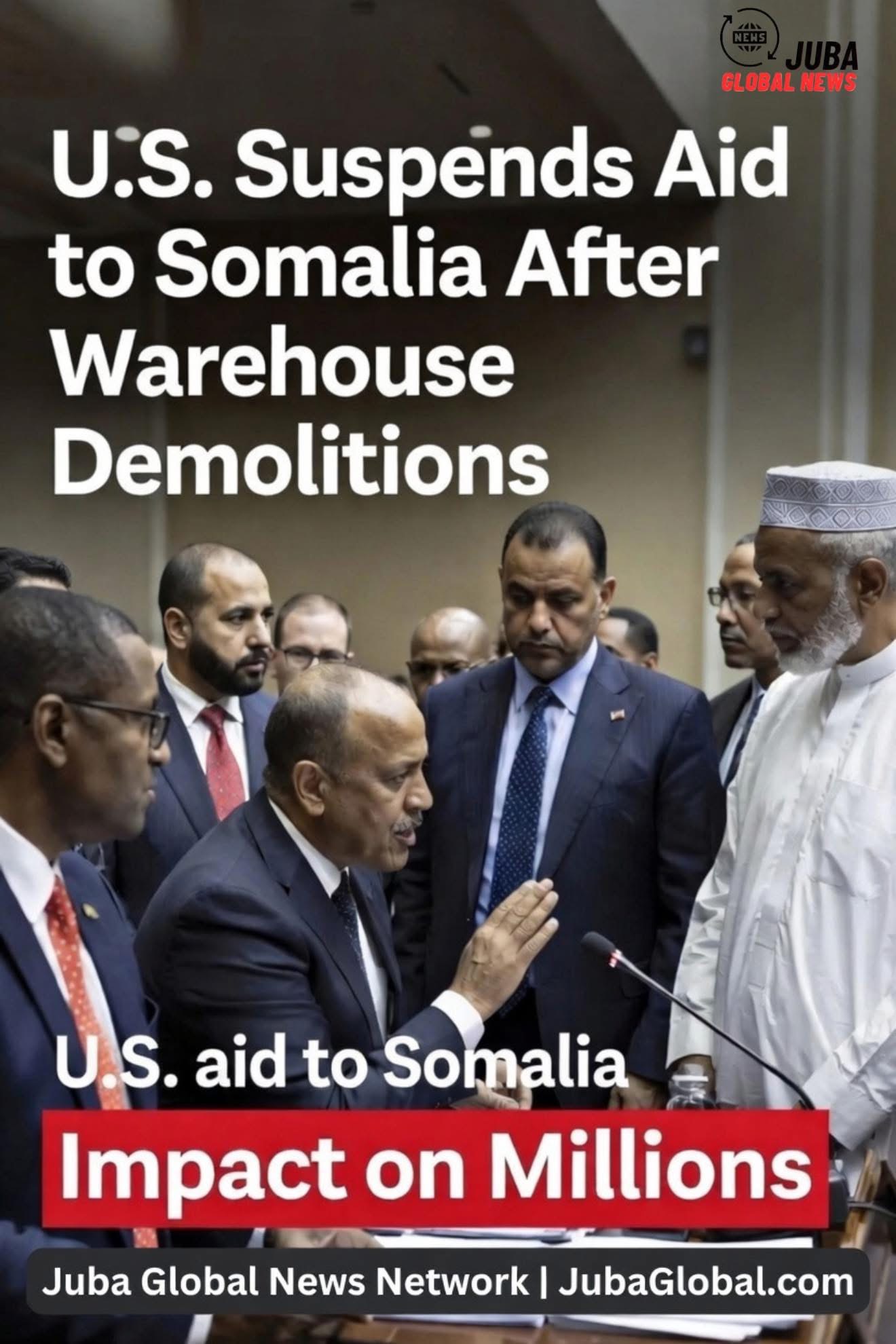
In a dramatic escalation of tensions, the United States has suspended all assistance to Somalia’s federal government following serious allegations that Somali officials demolished a U.S.-funded World Food Programme (WFP) warehouse in Mogadishu Port and illegally seized approximately 76 metric tons of donor-funded food aid intended for vulnerable civilians. The move, announced by the U.S. State Department on January 7, marks a significant low point in bilateral relations between Washington and Mogadishu under the second Trump administration.
The State Department cited a “zero-tolerance policy for waste, theft, and diversion of life-saving assistance,” stating that the suspension affects all ongoing U.S. programs benefiting the Somali Federal Government (SFG). Resumption of aid, officials emphasized, would depend on the SFG “taking accountability for its unacceptable actions and taking appropriate remedial steps.”
The Incident at the Heart of the Dispute
According to U.S. officials, port authorities in Mogadishu, acting on direct instructions from President Hassan Sheikh Mohamud, demolished a WFP warehouse without prior notification or coordination with international donors, including the United States. The facility, funded largely by American contributions, reportedly contained 76 metric tons (with some reports citing 75-83 tons) of specialized nutritious foods designed for the treatment of malnourished pregnant and breastfeeding women, as well as young children.
The WFP confirmed to multiple outlets that the warehouse—referred to as the “blue warehouse”—was indeed demolished by port authorities. However, the agency later noted that the commodities were relocated to another storage facility, and a handover note from the Mogadishu Port Authority indicated that the WFP had taken custody of the shifted supplies. A handwritten comment on the document mentioned pending lab tests to confirm the food’s suitability for consumption.
U.S. sources described the demolition as abrupt and unauthorized, raising concerns over potential diversion or misuse of aid. One senior State Department official, speaking anonymously, called Somalia a “black hole of poorly overseen U.S. assistance” and indicated that the Trump administration is reviewing and potentially terminating fraud-prone programs in the country.
Somalia’s Swift Denial and Counter-Narrative
The Somali government vehemently rejected the U.S. accusations on January 8, with the Ministry of Foreign Affairs issuing a statement asserting that no aid had been destroyed or seized. “The commodities referenced in recent reports remain under the custody and control of the World Food Programme, including assistance provided by the United States,” the ministry said.
Mogadishu attributed the warehouse demolition to ongoing expansion and repurposing works at the port as part of broader infrastructure development. Officials insisted that these activities “have not affected the custody and distribution of humanitarian assistance.” The government reaffirmed its commitment to “humanitarian principles, transparency, and accountability,” while expressing value for its partnership with the U.S. and other donors.
A technical inter-agency committee has reportedly been established to review the matter in collaboration with humanitarian partners, with further updates promised.
Broader Context: A Strained Relationship
This aid suspension comes amid a backdrop of deteriorating U.S.-Somalia ties since President Donald Trump’s return to office in 2025. The administration has significantly scaled back overall foreign aid, dismantled the U.S. Agency for International Development (USAID), and imposed restrictions on Somali immigration and refugee resettlement. Recent criticisms have focused on alleged fraud involving Somali communities in the U.S., particularly in Minnesota, and increased airstrikes against al-Shabaab militants in Somalia.
Geopolitical frictions have also played a role. Somalia has expressed anger over Israel’s recent recognition of the breakaway region of Somaliland, which Mogadishu considers an integral part of its territory. Additionally, the U.S. remains Somalia’s largest bilateral donor for security and humanitarian efforts, but direct government-to-government aid constitutes only a small fraction of total assistance—estimated at under $770 million provided in the final year of the Biden administration.
The humanitarian stakes are high. Somalia, one of the world’s poorest nations, continues to grapple with chronic insecurity, recurrent droughts, floods, and conflict-driven displacement. The WFP has warned of a worsening hunger crisis, with nearly 4.4-4.6 million people—almost a quarter of the population—facing crisis-level food insecurity or worse. The seized aid was critical for emergency operations targeting the most vulnerable.
Implications for Somalia and Regional Stability
Analysts warn that the suspension could exacerbate Somalia’s fragility, potentially undermining counter-terrorism cooperation against al-Shabaab and efforts to stabilize the Horn of Africa. While humanitarian aid channeled through UN agencies like the WFP may remain unaffected in the short term, any prolonged freeze on government-supporting programs could hinder development, security sector reform, and governance initiatives.
The U.S. has expressed cautious optimism following reports of the aid’s recovery but stressed that its ongoing investigation into diversion and misuse will guide future decisions.
As the dispute unfolds, both sides appear entrenched: Washington demanding accountability, and Mogadishu framing the incident as a misunderstanding tied to legitimate port development. Diplomatic channels remain open, but observers fear this could signal a broader recalibration of U.S. engagement in Somalia.
Juba Global News Network will continue monitoring developments, including any potential mediation by regional partners or the African Union.
Juba Global News Network – Connecting Africa, Informing the World.
JubaGlobal.com
