

U.S. Immigration Enforcement Faces Growing Backlash: Poll Shows Two-Thirds of Americans Believe ICE Has ‘Gone Too Far’
A new national poll released on February 5, 2026, reveals significant public disapproval of the tactics employed by U.S. Immigration and Customs Enforcemen
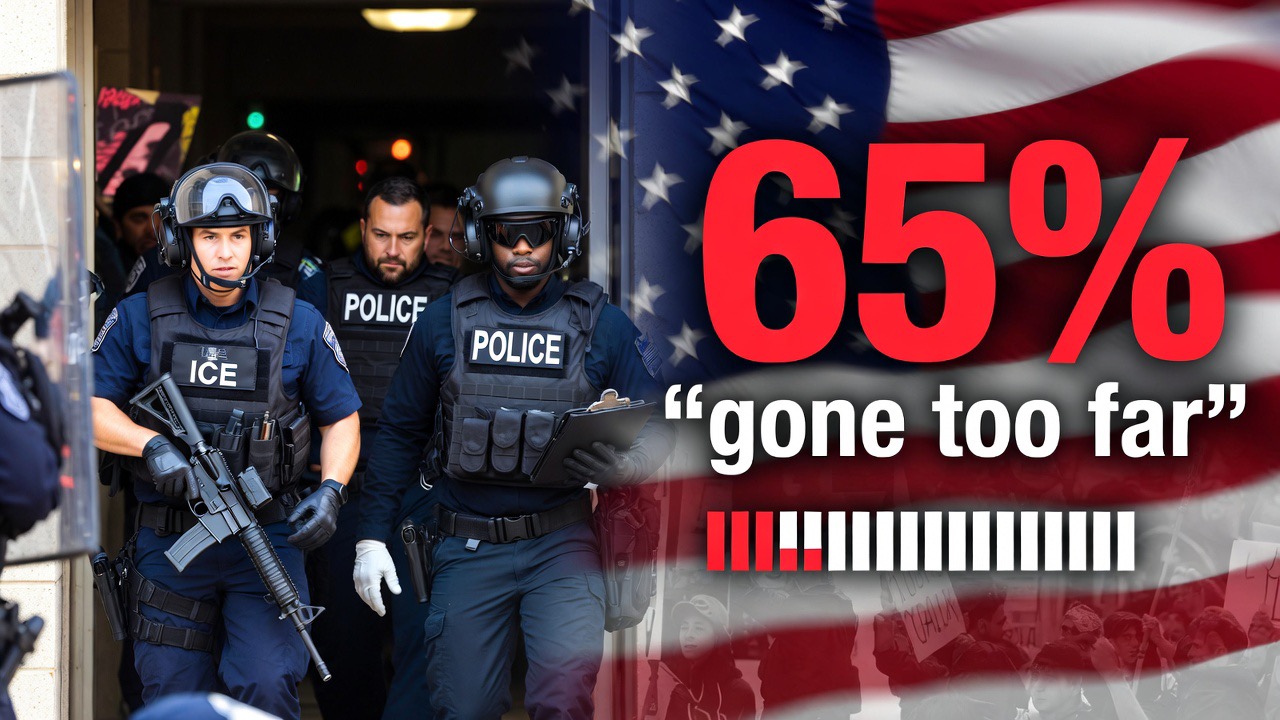
A new national poll released on February 5, 2026, reveals significant public disapproval of the tactics employed by U.S. Immigration and Customs Enforcement (ICE), with 65% of Americans saying the agency has “gone too far” in enforcing immigration laws. The findings, from the NPR/PBS News/Marist poll conducted January 27–30, 2026 (margin of error ±2.9 percentage points), mark an 11-point increase from 54% in June 2025, highlighting a sharp shift in public sentiment amid intensified enforcement operations under the Trump administration.
The poll underscores a broader erosion of support for aggressive interior enforcement, particularly following high-profile incidents in Minnesota and legal challenges in states like Oregon. While Republicans largely stand by ICE and the president, disapproval has surged among Democrats and independents, signaling potential political headwinds for the administration’s immigration agenda.
Key Poll Findings and Partisan Divide
According to the Marist data:
• 65% of Americans believe ICE’s actions have “gone too far” (up from 54% last summer).
• Only 12% say ICE has “not gone far enough” (down from 18%).
• More than six in ten Americans (over 60%) feel that ICE’s enforcement is actually reducing the safety and security of the American people.
The shift is driven primarily by Democrats and independents:
• Democrats show near-universal disapproval, with jumps in opposition reflecting concerns over civil liberties and overreach.
• Independents, a key swing group, have also moved sharply against the tactics.
• Republicans remain supportive, with most viewing the enforcement as necessary and aligned with campaign promises on border security and deportations.
Other recent surveys echo this trend. An Ipsos poll from late January/early February found 62% saying ICE efforts go “too far” (up from 58% the prior week), with even a 10-point rise among Republicans acknowledging excess. A New York Times/Siena poll in January showed 61% believing tactics had overreached, including nearly one in five Republicans. Quinnipiac and Harvard CAPS/Harris polls similarly report majority disapproval of ICE’s handling of enforcement in U.S. cities.
These numbers come as the Trump administration touts strong overall support for deportations of undocumented immigrants, with some DHS statements citing polls showing majorities favoring removal of criminal aliens and cooperation with local law enforcement. However, the data suggest a clear distinction: broad backing for deporting those with criminal records contrasts with growing unease over methods that appear indiscriminate or overly aggressive.
Triggering Events: Fatal Shootings in Minnesota
The poll’s timing aligns closely with controversies in Minnesota, where “Operation Metro Surge”—a massive deployment of federal agents to the Twin Cities—has drawn intense scrutiny. In recent weeks, two U.S. citizens were fatally shot by ICE agents during enforcement actions:
• Alex Pretti, a 37-year-old intensive care unit nurse at a VA hospital, was killed in Minneapolis.
• Another incident involved Renee Good.
These deaths sparked protests, bipartisan calls for investigations, and accusations of excessive force. Federal judges in Minnesota have criticized ICE for violating court orders—Chief Judge Patrick Schiltz noted nearly 100 violations in January alone, more than some agencies see in their lifetimes. A federal judge partially rejected Minnesota’s bid to halt the operation but acknowledged its “profound and heartbreaking” impacts on communities.
In response, the administration announced a partial drawdown: 700 ICE and Border Patrol agents are leaving Minnesota, citing increased local cooperation and reduced need for heavy federal presence. Border Czar Tom Homan described it as a sign of progress, though critics view it as a concession to mounting backlash.
Legal Pushback in Oregon and Beyond
Adding to the controversy, a federal judge in Oregon issued a preliminary injunction on February 4, 2026, barring ICE from warrantless arrests in the state unless there’s a clear risk of escape. U.S. District Judge Mustafa Kasubhai ruled against the “arrest first, justify later” approach in a class-action lawsuit, criticizing DHS practices during ramped-up operations.
Lawsuits from states like Minnesota, Illinois, and cities such as Minneapolis and Chicago allege violations of states’ rights, coercion against “sanctuary” policies, and disruptions to local safety and education. Judges have questioned the credibility of federal attorneys in some cases, with one ICE lawyer reportedly removed after complaining about overwhelming workloads and compliance issues.
These developments highlight tensions in federalism: while the administration emphasizes enforcing federal law, opponents argue aggressive interior enforcement infringes on state prerogatives and erodes public trust.
Broader Implications for Policy and Politics
The polling surge in disapproval coincides with the expiration of key arms control treaties and other global issues, but immigration remains a top domestic flashpoint. President Trump’s approval ratings on immigration have dipped in some surveys, with intensity of disapproval reaching levels not seen since post-January 6, 2021.
Advocates for reform call for better training, clearer guidelines on sensitive locations (schools, hospitals, courthouses), and a balanced approach focusing on criminals rather than broad sweeps. Immigration hardliners maintain that strong enforcement deters illegal crossings and upholds the rule of law.
As congressional negotiations over DHS funding continue—following a brief partial shutdown—the poll serves as a barometer of public mood. With independents and even some Republicans expressing unease, the administration may face pressure to moderate tactics while pursuing its deportation goals.
The NPR/PBS News/Marist poll, alongside converging data from Ipsos, Quinnipiac, and others, paints a picture of an agency under fire: supported by a loyal base but increasingly viewed as overreaching by a majority of Americans. Whether this translates to policy shifts or hardened positions remains to be seen, but the backlash is unmistakable.
