

U.S.-China Trade Tensions Escalate: Beijing Retaliates Against New Tariffs, Pushing the World’s Two Largest Economies Closer to Full Trade War
As of February 4, 2026, the U.S.-China economic relationship—already strained by years of tariffs, export controls, and geopolitical friction—has entered a
As of February 4, 2026, the U.S.-China economic relationship—already strained by years of tariffs, export controls, and geopolitical friction—has entered a new phase of escalation. Beijing announced retaliatory measures targeting select U.S. imports in direct response to President Donald Trump’s imposition of additional tariffs on Chinese goods. The moves come amid a broader pattern of tit-for-tat actions that began in early 2025 and have seen temporary truces give way to renewed confrontations, raising alarms about impacts on global supply chains, consumer prices, jobs, and economic growth in both nations and beyond.
This latest flare-up follows a rollercoaster year in 2025, where tariffs on Chinese imports reached peaks as high as 145% before partial de-escalations through negotiations. Despite a November 2025 agreement that lowered some duties and secured Chinese commitments to purchase U.S. agricultural products (including 25 million metric tons of soybeans annually through 2028), underlying tensions—fueled by U.S. concerns over fentanyl flows, rare earth dependencies, technology transfers, and trade imbalances—have persisted. The current retaliation signals that fragile pauses may not hold.
The Trigger: U.S. Tariff Actions in Early 2026
The escalation traces back to President Trump’s executive orders in February 2025, which imposed 10% tariffs on all Chinese imports under the International Emergency Economic Powers Act (IEEPA), citing national security and efforts to curb synthetic opioid supply chains. These were increased to 20% in March 2025, stacking atop existing Section 301 tariffs from Trump’s first term (covering hundreds of billions in goods). While a series of truces in mid-to-late 2025 reduced effective rates (e.g., fentanyl-related tariffs dropped to 10% in November), reciprocal pressures and non-tariff barriers continued.
Entering 2026, reports indicate fresh U.S. tariff adjustments or enforcements prompted Beijing’s response. On February 4, China’s Ministry of Finance and State Council Tariff Commission declared additional duties on key U.S. exports:
- 15% tariffs on U.S. coal and liquefied natural gas (LNG), effective February 10.
- 10% additional duties on American crude oil, agricultural machinery, and certain automobiles.
These targeted measures mirror earlier 2025 retaliations, focusing on politically sensitive U.S. sectors like energy and agriculture to pressure American policymakers and voters. China framed the actions as defensive, urging the U.S. to “immediately lift unilateral tariff measures” and resolve differences through “equal, respectful, and mutually beneficial” consultations.
A History of Tit-for-Tat: The 2025 Rollercoaster
The U.S.-China trade conflict has been marked by repeated cycles:
- February-March 2025: U.S. launches 10-20% broad tariffs on China; China responds with targeted duties on U.S. agricultural and energy products.
- April-May 2025: Escalation peaks with U.S. tariffs hitting over 100% on some goods; China retaliates with up to 84-125% levies and non-tariff measures (e.g., export curbs on rare earth elements).
- Summer-Fall 2025: Threats of 100-200% duties over rare earth magnets and software controls; temporary pauses extend deadlines.
- October-November 2025: High-level talks (including a Trump-Xi meeting in Busan, South Korea) yield a truce: U.S. lowers fentanyl tariffs to 10%, suspends higher reciprocal rates until November 2026; China suspends 2025 retaliatory tariffs, commits to massive soybean purchases, and eases some export restrictions.
- Late 2025-Early 2026: Port fees on ships, investigations into U.S. firms, and lingering export controls keep tensions simmering.
Despite the November deal, experts note that average effective tariffs remain elevated (around 30-48% on many goods), and de minimis exemptions for low-value shipments have been curtailed, hitting e-commerce.
Economic Impacts: Higher Prices, Disrupted Supply Chains, and Job Risks
The renewed retaliation threatens immediate and long-term consequences:
- For U.S. Consumers and Businesses: Tariffs on Chinese imports raise costs for electronics, apparel, machinery, and components. Retaliatory hits on U.S. energy exports (coal, LNG, crude) could pressure American producers in key states. Agricultural machinery tariffs may indirectly affect U.S. farmers already reliant on Chinese demand.
- For China: Energy import duties increase costs for coal and LNG-dependent industries; auto and machinery tariffs could slow recovery in manufacturing.
- Global Ripple Effects: Supply chain shifts accelerate “decoupling” or “friend-shoring,” but at a cost—estimates suggest prolonged high tariffs could shave 0.5% or more off U.S. GDP over a decade, disrupt manufacturing, and fuel inflation. Global growth forecasts for 2026 have been downgraded in part due to these frictions.
U.S. farmers face particular vulnerability: While China pledged record soybean buys through 2028, any breakdown could revive 2018-2019-style losses. Energy exporters in Texas and the Midwest may see reduced demand.
Diplomatic Landscape: Talks Continue Amid Distrust
President Trump has described recent interactions with Xi Jinping as “excellent” and “long and thorough,” emphasizing personal rapport. A planned April 2026 visit to China could offer another reset. However, Beijing insists on equality and respect, while Washington demands concessions on fentanyl, intellectual property, and market access.
Analysts see three pathways for 2026: continued fragile truces with narrow deals, renewed full escalation if provocations mount (e.g., over Taiwan, tech, or minerals), or pragmatic stabilization focused on technical issues.
Broader Implications: Beyond Economics
This trade clash intersects with security concerns—rare earth dominance gives China leverage in EVs, renewables, and defense tech. U.S. export controls on semiconductors and software persist, while China’s restrictions on critical minerals highlight mutual vulnerabilities.
As the world’s two largest economies (combined GDP over $50 trillion), prolonged conflict risks global recession, supply disruptions, and heightened geopolitical tensions. Yet history shows both sides have pulled back from the brink before, often via high-level leader diplomacy.
For now, February 2026’s retaliation serves as a warning: without deeper structural agreements, the trade war remains a live wire, capable of reigniting at any moment and exacting heavy costs on businesses, workers, and households worldwide.
(This article is based on reports from Reuters, CNBC, The New York Times, NPR, White House fact sheets, Peterson Institute for International Economics, J.P. Morgan Research, and other sources as of February 4, 2026. Tariff rates and impacts are often contested and subject to ongoing negotiations.)
For a suggested image poster:
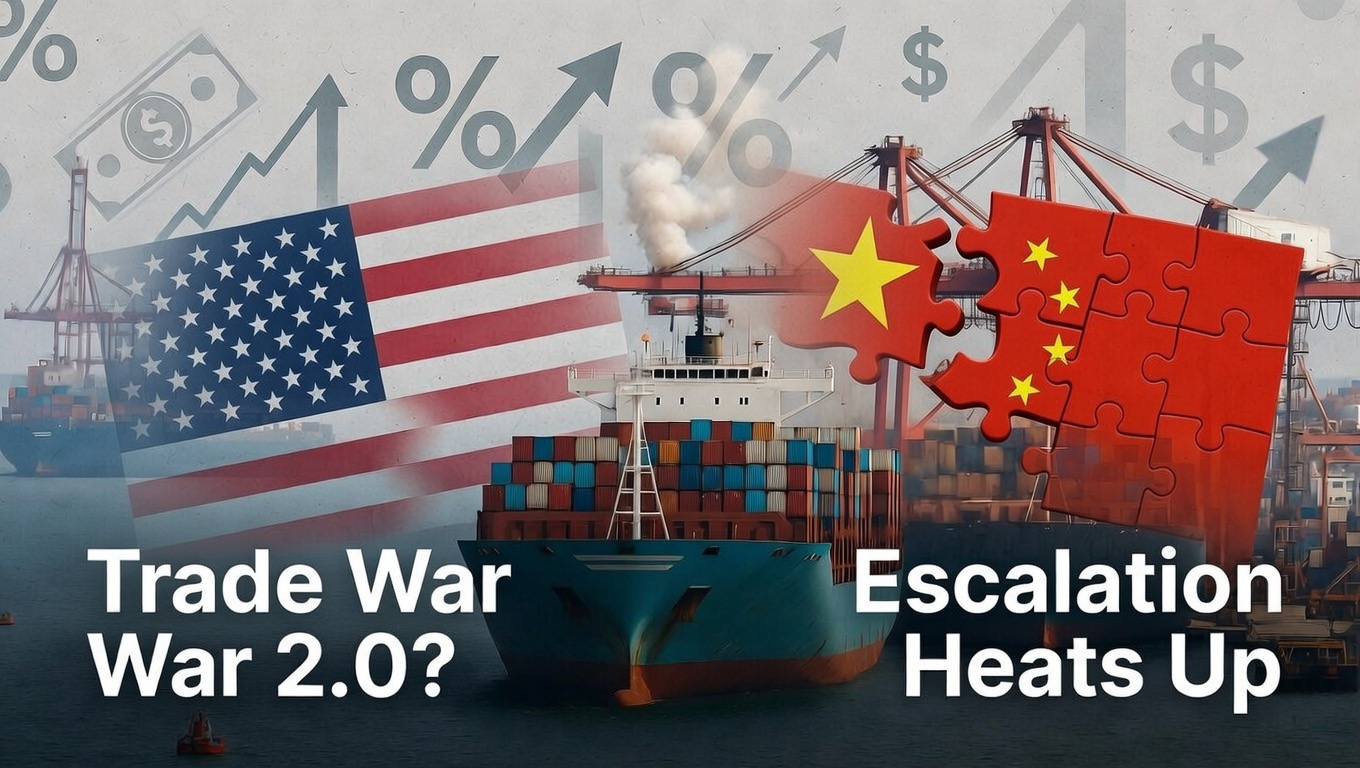
- Split image of U.S. and Chinese flags clashing like puzzle pieces, cargo ships loaded with containers in the background, tariff symbols (percentage signs, dollar bills) overlay, bold text “Trade War 2.0?” or “Escalation Heats Up”.
Share your thoughts: How will these tariffs affect your wallet or job? Do you see de-escalation ahead, or more pain coming?
