

U.S. Begins Transferring Up to 7,000 ISIS Detainees from Syria to Iraq: A High-Stakes Security Move Amid Regional Instability
January 22, 2026 — In a significant and urgent operation announced on January 21, the United States military has initiated the transfer of Islamic State (I
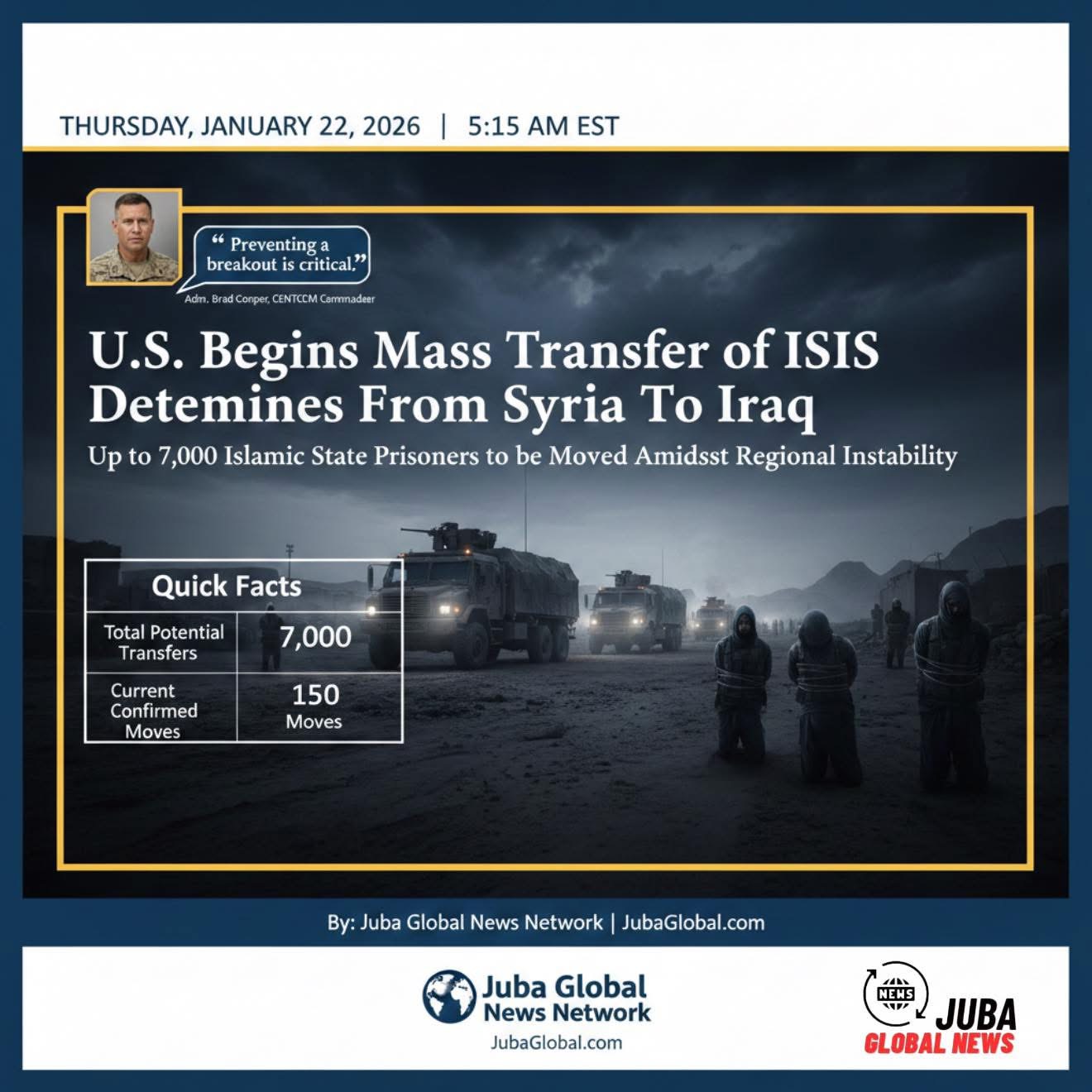
January 22, 2026 — In a significant and urgent operation announced on January 21, the United States military has initiated the transfer of Islamic State (ISIS) detainees from detention facilities in northeastern Syria to secure locations in Iraq. U.S. Central Command (CENTCOM) confirmed that the first batch of 150 fighters has already been moved from a facility in Hasakah, Syria, with plans to potentially relocate up to 7,000 individuals in total. This development, which ranked as the number-five global news headline on January 22, reflects mounting concerns over prison security as Syrian government forces rapidly expand control over areas long held by the Kurdish-led Syrian Democratic Forces (SDF), the U.S.’s primary partner in the fight against ISIS.
The transfers come at a critical juncture in Syria’s evolving post-Assad landscape, where shifting territorial control has raised fears of potential prison breaks, escapes, or even a resurgence of ISIS activity. The operation underscores the fragile balance of security responsibilities in the region nearly seven years after the territorial defeat of the so-called ISIS caliphate in 2019.
Background: The Lingering ISIS Detention Crisis
Since the fall of ISIS’s territorial strongholds, the SDF has detained thousands of suspected ISIS fighters and their family members in makeshift prisons and sprawling camps across northeastern Syria. These facilities—many built or expanded with U.S. support—hold a mix of Iraqi nationals, Syrians, and foreign fighters from dozens of countries. Estimates place the total number of male detainees at around 9,000–10,000, with thousands more women and children in displacement camps like al-Hol.
The SDF’s autonomous administration has repeatedly called for international repatriation of foreign fighters and sustainable solutions for local detainees. Western governments have been slow to act, citing security risks and legal complexities, leaving the burden largely on Kurdish forces with limited resources.
Recent developments have intensified the urgency. As Syrian government forces—backed by Russia and aligned militias—advance into SDF-held territory following the collapse of the Assad regime, control over key prisons has become contested. Reports of a jailbreak earlier in the week highlighted vulnerabilities, prompting swift U.S. action to prevent a large-scale escape that could revive ISIS networks.
The Transfer Operation: Details and Scope
According to CENTCOM’s official statement, the mission aims to “facilitate the orderly and secure transfer of ISIS detainees” to Iraqi government-run correctional institutions. Admiral Brad Cooper, CENTCOM commander, emphasized that the move is “critical to preventing a breakout that would pose a direct threat to the United States and regional security.”
- Initial Phase — 150 detainees, described as “Iraqi and foreign terrorists” involved in past violence against Iraqis, were transferred from Hasakah to an unspecified secure site in Iraq.
- Potential Scale — Up to 7,000 individuals could ultimately be relocated, representing a substantial portion of the detained ISIS population in Syria.
- Coordination — The transfers are being conducted in close cooperation with the Iraqi government, which has confirmed receipt of the first group and designated federal prisons in provinces like Sulaimani, Dhi Qar, and Baghdad for high-profile ISIS members.
Iraqi officials have described the incoming detainees as including both Iraqis and foreigners previously involved in atrocities. The Iraqi government has prepared specialized facilities to handle them securely.
Security Concerns and Rationale
The primary driver behind the transfers is the rapidly changing security environment in northeastern Syria. As the SDF hands over control of prisons and camps to Syrian authorities, questions arise about the new government’s capacity and willingness to maintain strict detention standards. A mass breakout could allow hardened ISIS fighters to regroup, exploit instability, or launch attacks across borders.
Experts warn that any large-scale release or escape would represent a major setback in the long-term effort to dismantle ISIS networks. The group, though territorially defeated, retains sleeper cells and ideological appeal, particularly in Iraq and Syria’s Sunni communities.
The operation also addresses long-standing U.S. concerns about the sustainability of SDF-managed detentions. With U.S. troop presence limited (around 900 personnel in Syria), Washington has sought to reduce reliance on Kurdish forces for long-term prisoner management.
Reactions and Implications
- Iraqi Perspective — Baghdad has welcomed the transfers as a step toward justice for Iraqi victims of ISIS. Officials stress that detainees will face due process in Iraqi courts, though concerns linger about fair trials, especially for foreign nationals.
- Syrian and Kurdish Views — The SDF has long pushed for international burden-sharing; this move partially relieves their load but raises questions about long-term oversight.
- International Concerns — Human rights groups express worry over conditions in Iraqi prisons, potential torture, or indefinite detention without trial. Some fear the transfers could complicate repatriation efforts for foreign fighters’ home countries.
- Broader Regional Impact — The operation occurs amid heightened tensions in Syria, including clashes between government forces and SDF units. It also intersects with diplomatic efforts in Davos, where leaders discuss Gaza reconstruction and global peace mechanisms—highlighting the interconnected nature of Middle East security challenges.
Outlook: A Step Toward Stability or a Temporary Fix?
While the transfers provide immediate relief from breakout risks, they do not resolve the underlying dilemma: what to do with thousands of ISIS-linked detainees in the long term. Repatriation remains politically toxic in many countries, and local prosecutions face capacity and fairness issues.
The U.S. move signals a pragmatic shift toward burden-sharing with Iraq, a key ally with experience prosecuting ISIS members. Success will depend on secure handling, fair judicial processes, and preventing radicalization in prisons.
As the first major prisoner transfer since the caliphate’s fall, this operation could set precedents for managing jihadist detainees in fragmented conflict zones. For now, it represents a critical effort to contain one of the enduring threats from the ISIS era—ensuring that defeated fighters do not rise again amid regional chaos. The coming weeks will reveal whether the transfers proceed smoothly or encounter new complications in an already volatile theater.
