

Trump’s Greenland “Framework Deal”: A Dramatic Reversal That Calmed Markets and Shook Alliances
On January 21, 2026, U.S. President Donald Trump made one of the most abrupt policy pivots of his second term. After weeks of escalating rhetoric—including
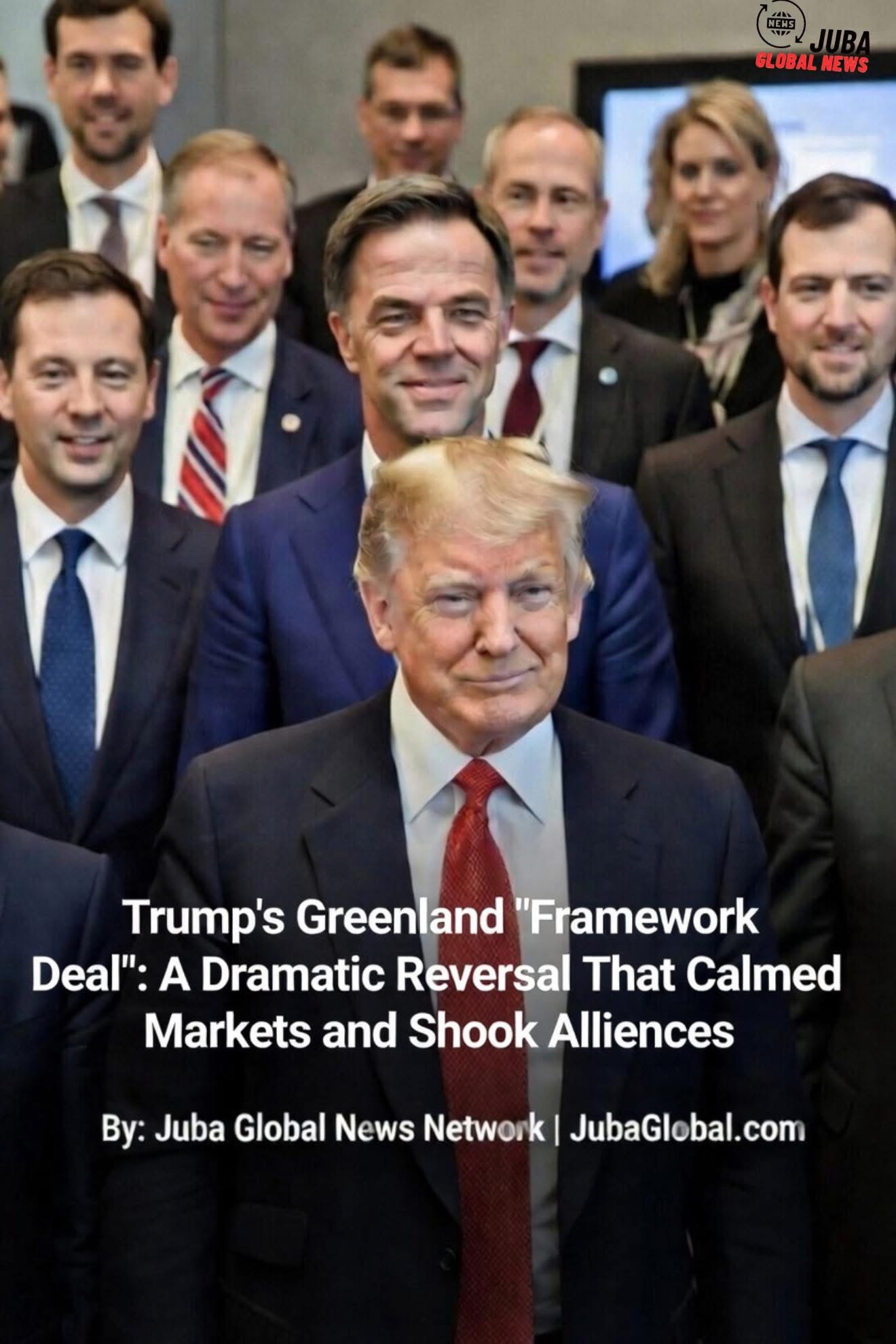
On January 21, 2026, U.S. President Donald Trump made one of the most abrupt policy pivots of his second term. After weeks of escalating rhetoric—including threats of military action and economic sanctions—he announced a “framework of a future deal” on Greenland following talks with NATO Secretary-General Mark Rutte at the World Economic Forum in Davos, Switzerland. In the same breath, Trump declared he would not impose the 10% (escalating to 25%) tariffs he had threatened against eight European NATO allies just days earlier. This development, posted on Truth Social and echoed in interviews, marked the top global news story of the day and sent shockwaves through diplomatic circles, financial markets, and Arctic geopolitics.
What began as a seemingly quixotic revival of Trump’s long-standing interest in acquiring Greenland—first floated during his first term—had ballooned into a transatlantic crisis. By stepping back, Trump avoided immediate escalation but left many questions unanswered about what the “framework” actually entails and whether it truly resolves the underlying tensions.
The Road to Crisis: Trump’s Renewed Push for Greenland
Greenland, the world’s largest island and an autonomous territory within the Kingdom of Denmark, has strategic significance far beyond its icy landscape. With a population of just 57,000, it sits atop vast untapped mineral resources (rare earth elements, uranium, zinc, and more) critical for modern technology and defense. Its location also makes it a key Arctic outpost for monitoring Russian and Chinese activities as melting ice opens new shipping routes and resource opportunities.
Trump first expressed public interest in “buying” Greenland in 2019, calling it a “large real estate deal” for national security. Denmark’s then-Prime Minister Mette Frederiksen dismissed the idea as “absurd,” prompting Trump to cancel a state visit. In his second term, the issue resurfaced with greater intensity amid heightened U.S. concerns over Arctic competition.
In mid-January 2026, Trump ramped up pressure. He declared Greenland essential for U.S. security, insisting the U.S. needed “right, title, and ownership.” When European allies resisted—Denmark repeatedly affirmed Greenland’s sovereignty cannot be negotiated—Trump threatened tariffs on exports from Denmark, Norway, Sweden, France, Germany, the Netherlands, Finland, and Great Britain. The tariffs were set to begin at 10% on February 1 and rise to 25% by June 1. He also ruled out force initially but left ambiguity, saying “something’s going to happen.”
Markets reacted nervously. The S&P 500 dropped sharply on January 20 amid fears of renewed trade wars and alliance fractures. Gold prices surged as a safe haven, and the VIX fear index spiked.
The Davos Pivot: Talks with NATO and the Announcement
Everything changed in Davos. On January 21, Trump delivered a speech at the World Economic Forum reiterating his desire for Greenland but explicitly ruling out military force. Hours later, after a meeting with NATO Secretary-General Mark Rutte, he posted on Truth Social:
“Based upon a very productive meeting that I have had with the Secretary General of NATO, Mark Rutte, we have formed the framework of a future deal with respect to Greenland and, in fact, the entire Arctic Region. … Based upon this understanding, I will not be imposing the Tariffs that were scheduled to go into effect on February 1st.”
Trump described the prospective agreement as the “ultimate long-term deal”—even “infinite”—that puts “everybody in a very good position.” He called it “complex” in remarks but offered few specifics.
Key elements reportedly under discussion include:
- Expanded U.S. military presence and basing rights in Greenland, potentially with pockets of land treated as sovereign U.S. territory (similar to British bases in Cyprus).
- Access to Greenland’s critical minerals for the U.S. and allies.
- Integration of Greenland into Trump’s proposed “Golden Dome” missile defense system.
- Broader Arctic security cooperation to counter Russia and China.
NATO officials emphasized that Danish sovereignty over Greenland was never on the table in the talks. Rutte focused discussions on Arctic security rather than ownership transfer. Denmark welcomed continued dialogue on strengthening Arctic defenses but insisted sovereignty remains non-negotiable.
Reactions: Relief, Skepticism, and Lingering Doubts
The announcement triggered immediate relief. Stock markets rebounded strongly on January 21, with the Dow gaining over 500 points and the S&P 500 up more than 1%. European leaders and businesses praised the tariff reprieve, avoiding what could have been a damaging trade spat.
However, skepticism abounded. Greenlandic and Danish officials expressed doubt that much had truly changed. Some media reports suggested the “framework” might involve limited U.S. sovereignty over military sites rather than full acquisition—far short of Trump’s original vision. Critics accused Trump of manufacturing a crisis to claim victory in de-escalating it.
NATO allies welcomed the cooling of tensions but remained wary of Trump’s unpredictability. The episode highlighted fractures in the alliance: Trump’s willingness to threaten allies over strategic interests, and Europe’s firm defense of sovereignty.
In Greenland itself, residents voiced concern over external pressures on their future, with many preferring greater autonomy within Denmark rather than U.S. involvement.
Geopolitical Implications: Arctic Stakes and Beyond
Greenland’s future touches on larger issues. The Arctic is warming faster than any region on Earth, unlocking resources and routes but also intensifying great-power competition. Russia has militarized its Arctic coast, while China seeks mining investments and polar research presence.
A U.S.-centric deal could strengthen NATO’s northern flank and secure supply chains for critical minerals. But forcing concessions risks alienating allies at a time when unity is needed against other threats.
The “framework” may represent pragmatic compromise: enhanced U.S. access without outright annexation. If formalized, it could set precedents for Arctic governance involving NATO, Denmark, and perhaps Greenland’s own government.
What Comes Next?
As of January 22, 2026, details remain sparse. Negotiations are expected to continue, potentially involving Denmark, Greenland’s local authorities, and NATO members. Trump has signaled eagerness for progress, but Danish Prime Minister Frederiksen stressed constructive dialogue must respect sovereignty.
The episode underscores Trump’s deal-making style: bold threats followed by sudden concessions when leverage shifts or backlash mounts. Whether this “framework” becomes a lasting Arctic accord or fizzles into another unresolved chapter remains to be seen.
For now, the tariff rollback and diplomatic thaw have averted immediate crisis—but the question of Greenland’s place in a changing world endures. In the high-stakes game of Arctic geopolitics, the board has been reset, but the pieces are still moving.
