Trump’s Assertion on Voter ID and Election Integrity: A Comprehensive Examination
On February 13, 2026, President Donald Trump reignited a long-standing debate on election security with a pointed statement on Truth Social: “The Democrats
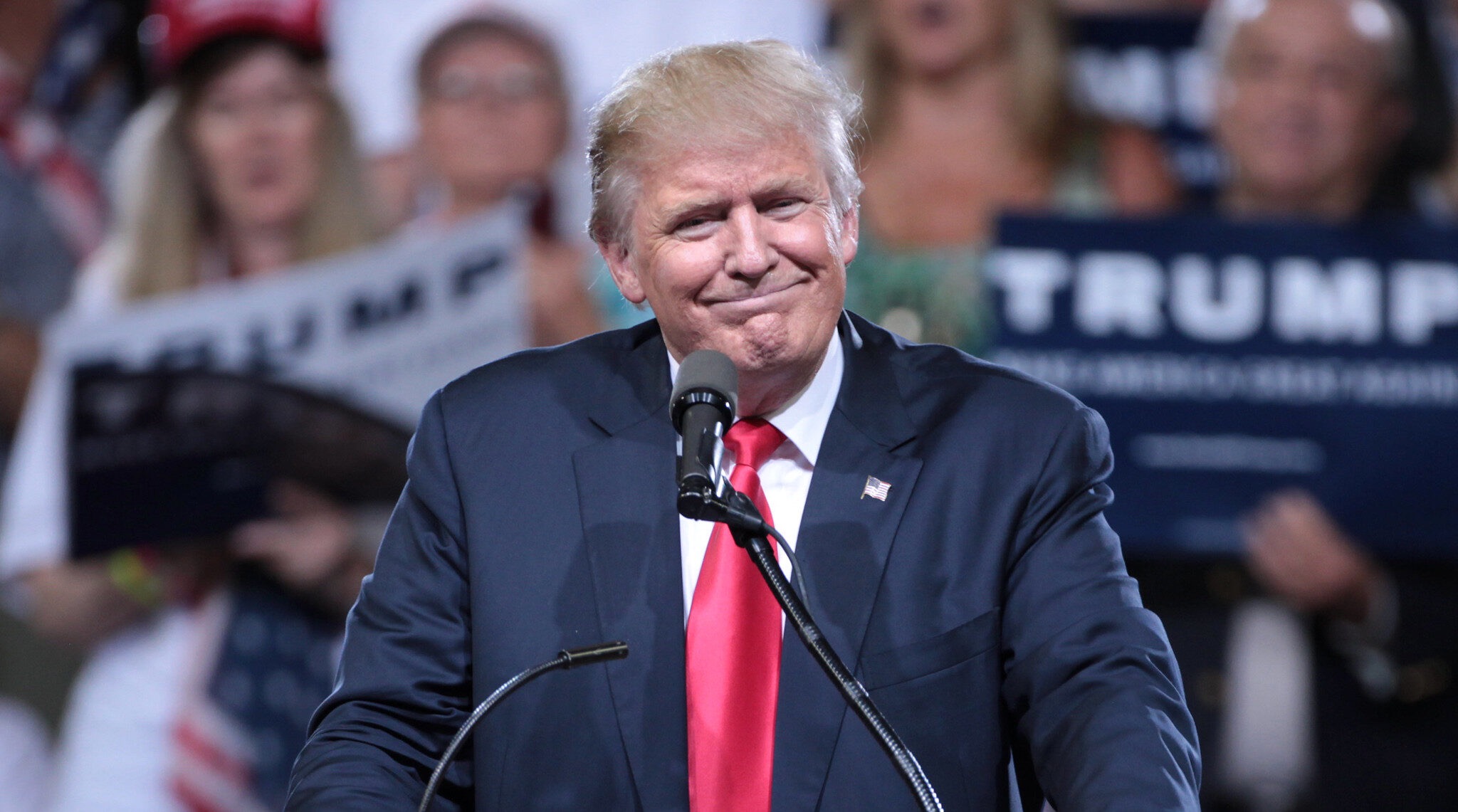
On February 13, 2026, President Donald Trump reignited a long-standing debate on election security with a pointed statement on Truth Social: “The Democrats refuse to vote for Voter I.D., or Citizenship. The reason is very simple — They want to continue to cheat in Elections.” This declaration came amid discussions in Congress about voter identification requirements and as the nation gears up for the 2026 midterm elections. Trump’s post not only accused Democrats of obstructing reforms but also hinted at his intent to pursue an executive order to enforce nationwide voter ID measures, bypassing potential legislative gridlock.
This article delves into the origins of Trump’s statement, the historical and current landscape of voter ID laws in the United States, the positions held by both major parties, the empirical evidence regarding election fraud, the legal challenges surrounding executive actions on voting, and the potential ramifications for American democracy. By examining these elements through a fact-based lens, we aim to provide a balanced perspective on a topic that has polarized the political arena for years.
The Statement and Its Immediate Context
President Trump’s February 13 post was part of a broader push for election reforms. In the message, he claimed to have “searched the depths of Legal Arguments not yet articulated or vetted on this subject” and promised an “irrefutable” case for implementing voter ID ahead of the midterms, “whether approved by Congress or not.” 0 This echoed his administration’s earlier efforts, including a March 2025 executive order titled “Preserving and Protecting the Integrity of American Elections,” which sought to impose proof-of-citizenship requirements for voter registration and other measures to “safeguard” the process. 19
The timing is notable: The House of Representatives had recently advanced legislation like the Safeguard American Voter Eligibility (SAVE) Act, which would mandate documentary proof of citizenship for federal elections. However, the bill faced slim chances in the Senate due to Democratic opposition. 16 Trump’s frustration with congressional inaction appears to stem from his belief that such measures are essential to prevent what he has repeatedly described as widespread fraud, particularly in the 2020 and 2024 elections—claims that have been extensively debunked but continue to resonate with his base.
Social media amplified the statement rapidly. Posts on X (formerly Twitter) from supporters, such as one from user @talham_K quoting Trump directly, garnered attention, while others linked it to ongoing narratives about election integrity. 10 Critics, including Democratic leaders, quickly labeled it as inflammatory rhetoric designed to undermine trust in the electoral system. 0 “LARGE”
The Evolution of Voter ID Laws in the United States
Voter identification requirements have been a contentious issue since the early 2000s, evolving from sporadic state-level experiments to a patchwork of policies across the nation. As of February 2026, 36 states have laws requiring or requesting some form of ID at the polls, up from just a handful two decades ago. 26 These laws vary significantly in stringency:
- Strict Photo ID States (9 states): Georgia, Indiana, Kansas, Mississippi, Nebraska, North Carolina, Tennessee, Virginia, and Wisconsin require a government-issued photo ID, with limited alternatives for those without one. Voters lacking proper ID may cast provisional ballots that require follow-up verification.
- Non-Strict Photo ID States (10 states): Alabama, Arkansas, Florida, Hawaii, Idaho, Louisiana, Michigan, Rhode Island, South Dakota, and Texas request photo ID but allow alternatives like affidavits or non-photo documents.
- Strict Non-Photo ID States (3 states): Arizona, North Dakota, and Ohio mandate non-photo IDs, such as utility bills or bank statements.
- Non-Strict Non-Photo ID States (14 states): Alaska, Colorado, Connecticut, Delaware, Iowa, Kentucky, Missouri, Montana, New Hampshire, Oklahoma, South Carolina, Utah, Washington, and West Virginia request non-photo IDs but often permit voting without them via signatures or affidavits.
- No ID Required (14 states + D.C.): California, Illinois, Maine, Maryland, Massachusetts, Minnesota, Nevada, New Jersey, New Mexico, New York, Oregon, Pennsylvania, Vermont, and Wyoming verify identity through signatures, registration records, or other means.
This diversity reflects the federalist approach to elections, where states hold primary authority under the U.S. Constitution’s Elections Clause (Article I, Section 4). Proponents argue that ID laws enhance security, while opponents contend they disproportionately affect low-income, elderly, and minority voters who may lack easy access to required documents. 1 “LARGE”
Federal involvement has been limited but influential. The Help America Vote Act (HAVA) of 2002 established minimum standards, including ID for first-time voters in some cases. However, attempts at national mandates, like the SAVE Act, have stalled amid debates over potential disenfranchisement. 29
Democratic Perspectives on Voter ID and Citizenship Requirements
Democrats have consistently opposed strict voter ID laws, viewing them as barriers to participation rather than safeguards against fraud. Senate Minority Leader Chuck Schumer (D-N.Y.) has likened such measures to “Jim Crow 2.0,” arguing they could disenfranchise millions, particularly women who change names after marriage, people of color, and low-income individuals without ready access to birth certificates or passports. 16 A Brennan Center for Justice analysis estimates that proof-of-citizenship requirements could affect up to 21 million eligible voters. 24
In response to Trump’s 2026 statement and prior executive actions, Democratic lawmakers and advocacy groups like the ACLU have emphasized that noncitizen voting is already illegal and exceedingly rare. 18 They argue that existing safeguards—such as affidavits under penalty of perjury on voter registration forms—are sufficient. The League of Women Voters has called Trump’s approaches an “assault on our republic,” highlighting how they could disproportionately impact women (nearly 80% of whom adopt a spouse’s surname, complicating document matching). 21
Democrats also point to studies showing that ID laws suppress turnout without addressing verifiable threats. For instance, they warn that deploying federal agents near polls could intimidate voters, as raised by Sen. Mark Warner (D-Va.) in discussions about potential ICE involvement. 15
Assessing Claims of Widespread Election Fraud
Trump’s accusation that Democrats oppose voter ID to “continue to cheat” revives narratives from the 2020 and 2024 elections. However, extensive investigations have found no evidence of systemic fraud sufficient to alter outcomes.
- 2020 Election: Over 60 lawsuits filed by Trump and allies were dismissed, often for lack of evidence. 33 Officials in his own administration, including Republicans, declared the election secure. A group of GOP former judges concluded claims were baseless. 38 Studies, such as one from the Proceedings of the National Academy of Sciences, debunked statistical anomalies cited as “proof.” 36
- 2024 Election: Similar rumors emerged but fizzled as results solidified. Claims of “missing votes” were attributed to incomplete tallies, not fraud. 39 The Heritage Foundation’s database, often cited by conservatives, lists only about 1,500 proven fraud cases since 1982—amid billions of votes cast—representing a rate of less than 0.0001%. 31 In battleground states like Pennsylvania, fraud instances over 30 years totaled just 39 among over 100 million votes. 34
The Brennan Center notes that voter impersonation—the type ID laws target—is “virtually nonexistent.” 32 Most alleged fraud stems from errors, not malice. A 2024 survey found Republicans more likely to believe in fraud due to partisan and conspiratorial influences. 40
The Legality of Executive Orders on Voter ID
Trump’s vow to impose voter ID via executive order raises constitutional questions. The Elections Clause assigns election oversight to states and Congress, excluding the president beyond veto power. 41 Courts have repeatedly struck down similar attempts: A federal judge blocked parts of Trump’s 2025 order requiring proof-of-citizenship, deeming it an overreach. 43 Another ruling affirmed the president cannot alter voter registration forms or dictate state procedures. 49
Legal experts, including those from the Bipartisan Policy Center, note that executive orders can direct federal agencies but cannot override state sovereignty or federal law like the National Voter Registration Act. 47 The ACLU and others have successfully challenged such orders, arguing they violate separation of powers and risk disenfranchising vulnerable groups. 42
Implications for the 2026 Midterms and Beyond
As midterms approach, Trump’s statement could galvanize his supporters while eroding public confidence. Polls show broad support for voter ID (around 80% of Americans), but opposition grows when framed as burdensome. 16 If pursued, an executive order might lead to legal battles, delaying implementation and creating confusion at polls.
Broader concerns include potential voter suppression and heightened polarization. Democrats fear tactics like federal oversight could intimidate minorities, while Republicans argue inaction invites vulnerabilities. Ultimately, sustainable reforms require bipartisan congressional action, not unilateral decrees.
In conclusion, Trump’s February 2026 statement encapsulates a enduring rift in American politics. While concerns about election integrity are valid, evidence suggests fraud is rare, and solutions must balance security with accessibility. As the nation navigates these debates, prioritizing facts over rhetoric will be crucial to preserving democratic trust.