

Trump Aides Debate Iran War Exit Strategy as Conflict Spreads
By Juba Global News Network Staff JubaGlobal.com March 13, 2026 Deep inside the White House, a fierce internal debate is raging over how — and when — to br
By Juba Global News Network Staff
JubaGlobal.com
March 13, 2026
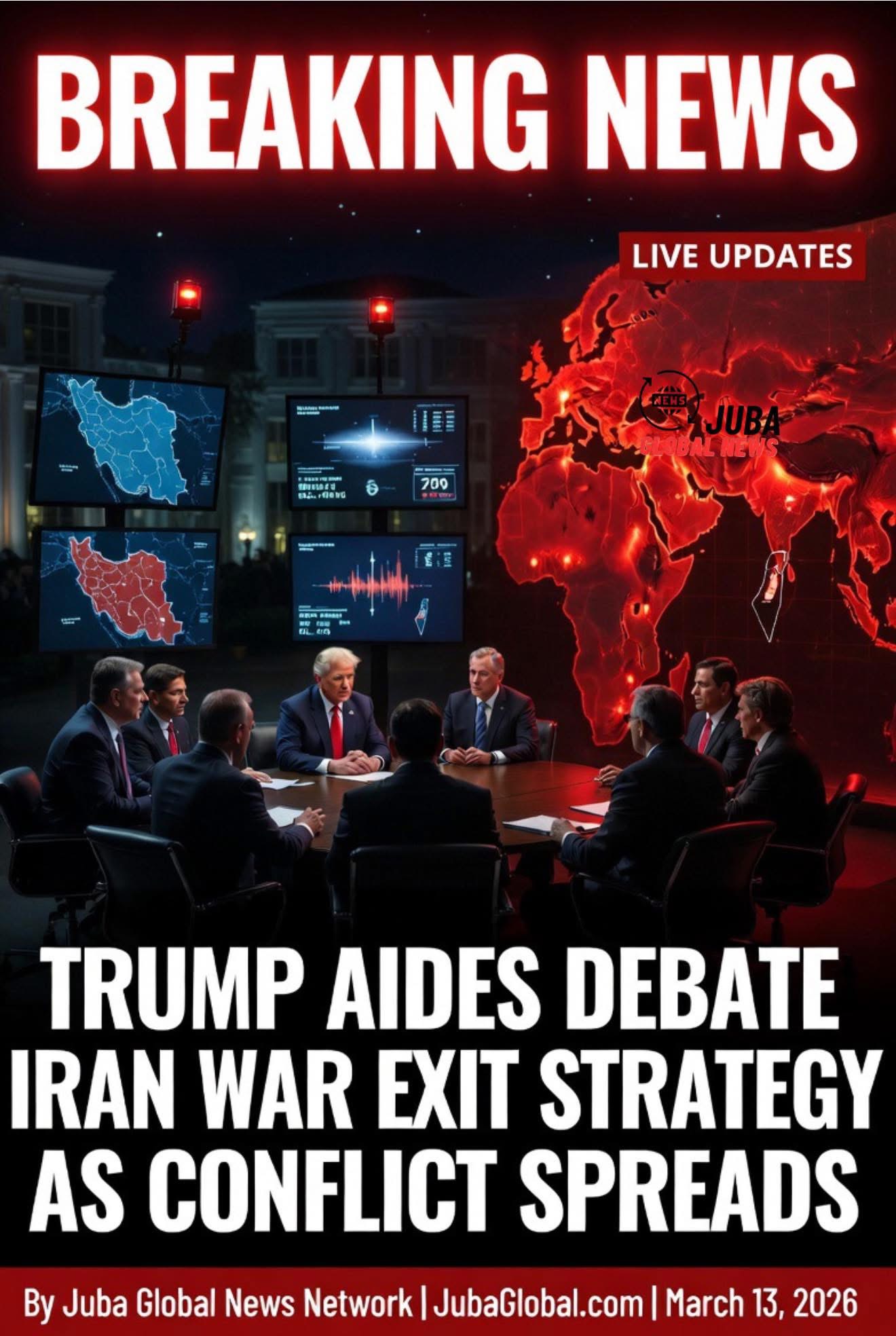
Deep inside the White House, a fierce internal debate is raging over how — and when — to bring the US-Israeli war against Iran to a close, even as the conflict enters its third week with no clear end in sight. President Donald Trump’s shifting public statements on the campaign’s progress reflect a complex tug-of-war among his top advisers: one faction pushes for a swift declaration of victory and de-escalation to shield the administration from soaring oil prices and domestic political backlash, while hawks urge sustained pressure to fully dismantle Iran’s military capabilities and regional influence.
The war, launched on February 28 under the banner of Operation Epic Fury, has already seen massive airstrikes destroy much of Iran’s ballistic missile arsenal, navy assets, and key nuclear-related sites. Yet as Iranian retaliation spreads — with missiles hitting northern Israel, drones targeting Gulf states including Dubai, and proxies like Hezbollah escalating attacks — Trump’s team grapples with defining “victory” in a conflict that shows signs of becoming prolonged and costly.
Internal Divisions Emerge
According to multiple sources familiar with White House discussions, political advisers including Chief of Staff Susie Wiles and Deputy Chief of Staff James Blair have urged Trump to frame the operation as a limited, largely successful campaign. They argue that higher gasoline prices — now pushing toward record levels due to disruptions in the Strait of Hormuz — and broader economic fallout could erode public support ahead of upcoming midterm elections. These aides recommend signaling that military objectives have mostly been achieved, allowing the US to wind down active operations while claiming a decisive triumph.
In contrast, defense hawks — including influential voices from Capitol Hill such as Senators Lindsey Graham and Tom Cotton, along with some conservative media figures — are pressing for continued military momentum. They warn that declaring victory prematurely could allow remnants of Iran’s regime, nuclear program, and proxy networks to survive and regroup, undermining the war’s core goals of preventing a nuclear-armed Iran and crippling its ability to sponsor terrorism.
A third perspective comes from Trump’s populist base and figures like Steve Bannon and Tucker Carlson, who have cautioned against another prolonged Middle East entanglement reminiscent of past US interventions. They emphasize the need to avoid “forever wars” that drain resources and alienate voters who elected Trump on promises to end endless conflicts.
Trump’s Shifting Rhetoric
The president’s own comments reflect this internal tension. In recent days, Trump has oscillated between triumphalism and caution. At a campaign-style rally in Kentucky earlier this week, he declared “we won” the war, only to pivot moments later: “We don’t want to leave early, do we? We’ve got to finish the job.” In interviews, he has described the campaign as “very complete” and “way ahead” of the initial four-to-six-week timetable, boasting that Iran has “practically nothing left” in terms of navy, air force, or communications.
Yet Trump has repeatedly insisted the final decision rests with him alone. White House officials emphasize that the war will end when the president determines military objectives — including destroying Iran’s missile production, demolishing its navy, ending proxy support, and blocking nuclear weapon development — have been met. Some aides have privately floated the idea of a narrow victory declaration even if elements of Iran’s leadership and nuclear infrastructure survive, focusing on military degradation rather than full regime change.
Economic and Political Pressures Mount
The debate is intensified by real-world consequences. Oil prices remain elevated above $100 per barrel as Iran maintains its blockade of the Strait of Hormuz, sending shockwaves through global markets and driving up fuel costs for American consumers. Polling cited by advisers shows eroding support for a prolonged conflict, even among many Republicans, who initially backed the strikes but grow wary of open-ended commitments.
Critics outside the administration, including some former officials and analysts, argue that the White House has struggled to articulate consistent war aims. Initial messaging highlighted an “imminent” nuclear threat from Iran — a claim experts have largely dismissed — while later statements shifted toward broader regime weakening and proxy disruption. The lack of a clear exit strategy has fueled concerns that the US could become mired in another extended regional war.
Broader Context: No Easy Off-Ramp
The internal White House divisions come amid escalating battlefield realities. Israel continues deep strikes inside Iran, hitting over 200 targets in the past day alone, while Iranian missiles and drones target Israeli cities and Gulf allies. Hezbollah’s rocket barrages from Lebanon, combined with potential Houthi involvement in the Red Sea, risk pulling the conflict into a multi-front regional conflagration.
Trump has rejected negotiations short of what he calls “unconditional surrender,” though aides say he remains open to scenarios where a successor Iranian leadership emerges without full regime collapse. Some reports suggest Trump has discussed backing the elimination of new Supreme Leader Mojtaba Khamenei if he refuses US demands.
As the war grinds on, the president faces the challenge of reconciling his desire for a quick, decisive win with the reality of a resilient adversary and mounting domestic costs. Whether the administration pivots toward de-escalation or doubles down on military pressure will likely shape not only the conflict’s trajectory but also Trump’s political legacy in his second term.
Juba Global News Network will continue tracking developments from Washington and the Middle East as this high-stakes debate unfolds.
Stay informed with real-time coverage.
Visit JubaGlobal.com
#Trump #IranWar #USPolitics #WhiteHouse #MiddleEastCrisis #GlobalNews #JubaGlobal
