

Thousands of Foreign Nationals, Including Americans, Stranded in Middle East Amid Escalating US-Israel-Iran War Chaos
By: Juba Global News Network | JubaGlobal.com March 5, 2026 – Updated 08:55 AM EST – Washington DC As the US-Israel military campaign against Iran—now in i
By: Juba Global News Network | JubaGlobal.com
March 5, 2026 – Updated 08:55 AM EST – Washington DC
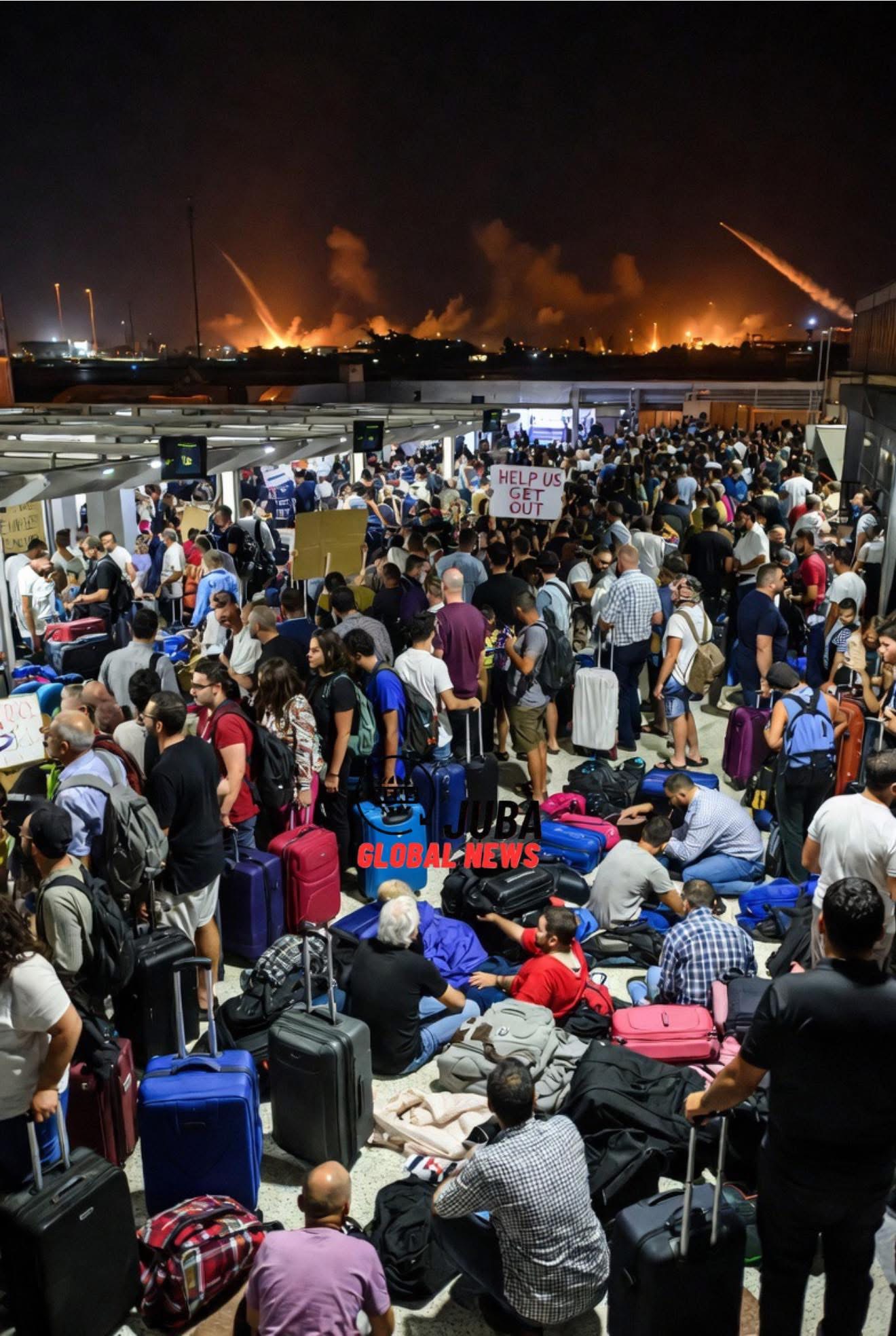
As the US-Israel military campaign against Iran—now in its sixth day—intensifies with submarine strikes in the Indian Ocean, relentless airstrikes on Tehran, missile barrages over Israel, and Israeli ground operations pushing into southern Lebanon, the region has descended into a travel and evacuation nightmare. Commercial airlines have cancelled or suspended flights into and out of major Middle Eastern hubs, land borders are congested or closed, and thousands of foreign nationals—including more than 2,000 American and Canadian citizens—are effectively stranded, unable to leave safely.
The U.S. State Department issued its highest-level travel advisory (Level 4: Do Not Travel) for Iran, Iraq, Lebanon, Syria, Israel, Jordan, Kuwait, Bahrain, Qatar, and the United Arab Emirates, warning of “ongoing military conflict, missile and drone attacks, terrorism, civil unrest, and arbitrary detention.” The advisory explicitly states that U.S. government ability to assist American citizens in many of these countries is “extremely limited.”
Scale of the Crisis
According to estimates compiled from embassy statements, airline data, and citizen reports:
- United States: The State Department confirmed it is aware of “several thousand” U.S. citizens in the region who have registered in the Smart Traveler Enrollment Program (STEP) and requested assistance. Unofficial tallies from social media groups and congressional offices suggest the real number could exceed 5,000–7,000 when including dual nationals, tourists, business travelers, students, and long-term residents who did not register.
- Canada: Global Affairs Canada reported more than 2,100 Canadian citizens have contacted the department seeking evacuation help, with the largest concentrations in Lebanon (≈1,200), Israel (≈500), and the UAE/Qatar (≈300).
- United Kingdom, Australia, Germany, France, India, Philippines, and others: Each government has acknowledged hundreds to low thousands of their nationals seeking urgent departure options.
Airports in Beirut, Amman, Dubai, Doha, Abu Dhabi, and Tel Aviv have seen mass cancellations. Many carriers—including Emirates, Qatar Airways, Etihad, Lufthansa, Air France, British Airways, and Delta—have suspended flights to the region indefinitely or until at least mid-March. The few remaining commercial flights out of safe hubs (primarily Amman, Dubai, and Larnaca, Cyprus) are booked solid for weeks, with one-way fares reaching $4,000–$8,000 on the black market for last-minute seats.
Stranded Stories Emerge
Social media and encrypted messaging groups are filled with desperate accounts:
- An American family of five in Beirut reported sleeping in the airport for three nights after their flight home was cancelled mid-check-in. They say Lebanese authorities are allowing limited departures but prioritizing Lebanese citizens.
- A group of Canadian university students in Amman, Jordan, wrote that their study-abroad program has collapsed; hostels are full, cash is running low, and they cannot cross into Israel or Syria to find alternative routes.
- Dual U.S.-Iranian citizens in Tehran described being unable to reach the Swiss Embassy (which handles U.S. interests) due to ongoing airstrikes and roadblocks. Some say they fear being targeted as “spies” if they attempt to leave openly.
- Indian and Filipino migrant workers in the Gulf states reported employers refusing to release them from contracts or provide exit visas amid fears of labor shortages if war escalates further.
Government Responses
- United States: The State Department activated its Task Force Lebanon and Middle East Crisis cells. Limited charter flights are being organized from Amman and Larnaca for U.S. citizens, but priority is given to those with “imminent danger.” Military-assisted evacuation (similar to 2021 Kabul or 2006 Lebanon) has not yet been announced, though officials say “all options remain on the table.”
- Canada: Ottawa chartered two flights from Amman this week and is coordinating with allies for additional departures from Beirut and Cyprus. Foreign Minister Mélanie Joly urged stranded Canadians to “register immediately” and prepare to move to safer locations.
- European nations: France and Germany have begun small-scale repatriation flights from Beirut and Amman. The UK Foreign Office is advising British nationals to head to Cyprus if possible.
- Other countries: India launched “Operation Sindhu” to repatriate its citizens via special flights from Dubai and Abu Dhabi. The Philippines declared a state of calamity for its overseas workers in the region.
Why Evacuation Is So Difficult
Several factors are compounding the crisis:
- Airspace restrictions — Multiple countries have closed airspace or imposed no-fly zones over conflict areas.
- Land border chaos — Crossings into Jordan, Turkey, and Syria are overwhelmed, with long waits, bribery demands, and sporadic closures due to security incidents.
- Maritime options limited — Beirut port remains open but dangerous; cruise ships and ferries have cancelled routes.
- Insurance & airline liability — Most travel insurance policies exclude war zones, leaving individuals to cover exorbitant last-minute costs.
- Host government priorities — Gulf states are reluctant to facilitate mass departures that could signal instability.
Outlook
With no ceasefire in sight and military action expanding geographically (from the Persian Gulf to the Indian Ocean and now deep into Lebanon), the window for safe commercial departure is closing rapidly. Humanitarian organizations warn that prolonged stranding could lead to shortages of food, medicine, cash, and safe accommodation—especially for vulnerable groups such as families with children, elderly travelers, and those with medical needs.
The U.S. Embassy in Beirut posted a stark message on X this morning: “If you are a U.S. citizen in Lebanon and want to leave, you should leave now by commercial means if possible. Opportunities are becoming extremely limited.”
For those still able to move, governments are urging immediate action: register with embassies, head toward functioning airports in Jordan or Cyprus, and prepare for long, expensive, and uncertain journeys home.
Juba Global News Network continues to track evacuation developments and citizen reports in real time.
Search Keywords: stranded Americans Middle East, evacuation Iran war 2026, Canada helps citizens Lebanon, travel chaos Middle East, US citizens stuck Beirut Amman, foreign nationals evacuation Gulf, Iran conflict travel disruption, Operation Epic Fury stranded citizens
Meta Description: Thousands of Americans, Canadians, and other foreign nationals remain stranded across the Middle East as flights cancel, borders close, and the US-Israel war on Iran escalates—evacuation options dwindle amid chaos and danger.
