

The World Cup in Danger? Trump’s Immigration “Pause” and Its Potential Impact on the 2026 FIFA Tournament
By: Juba Global News Network | JubaGlobal.com January 17, 2026 In a move that has sent shockwaves through the international community, the Trump administra
By: Juba Global News Network | JubaGlobal.com
January 17, 2026
In a move that has sent shockwaves through the international community, the Trump administration has announced an indefinite pause on immigrant visa processing for nationals from 75 countries, citing concerns over potential reliance on public benefits. This policy, effective January 21, 2026, includes a sweeping list of nations spanning Africa, Asia, Europe, the Middle East, and the Americas. While framed as a temporary measure to reassess visa procedures, critics argue it echoes the restrictive immigration policies of Trump’s first term, potentially disrupting global events like the upcoming 2026 FIFA World Cup, co-hosted by the United States, Canada, and Mexico.
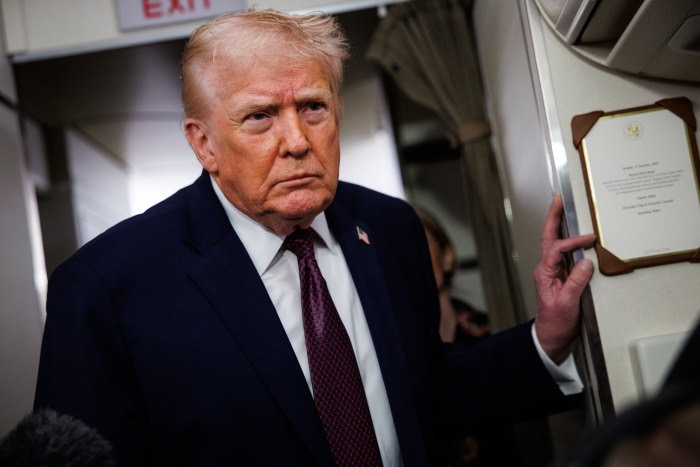
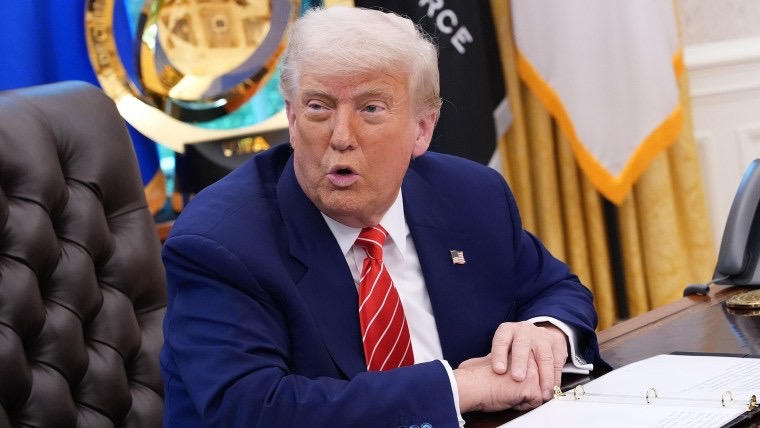
President Donald Trump has repeatedly touted the U.S.‘s role in hosting the World Cup, emphasizing America’s capacity to welcome fans and teams from around the globe. “This is going to be the biggest, the best World Cup ever—America is open for business, and we’re going to show the world what hospitality looks like,” Trump said in a recent rally. However, with the tournament set to kick off on June 11, 2026, the new visa pause has raised urgent questions: Will players from affected countries be able to participate in U.S.-based matches? And what about the millions of traveling fans eager to support their teams?
This article delves deep into the details of the policy, the full list of affected countries, its implications for the World Cup, potential exemptions, reactions from key stakeholders, historical parallels, and the broader geopolitical ramifications. As the world gears up for what promises to be a historic 48-team tournament—the largest in FIFA history—the shadow of this immigration measure looms large.
Understanding the Immigration “Pause”: Policy Background and Rationale
The policy was announced on January 14, 2026, via a proclamation from the White House, expanding on earlier restrictions. Officially titled a “pause” rather than an outright ban, it halts the processing of immigrant visas—those intended for permanent residency—for applicants from the listed countries. The administration justifies this by pointing to data suggesting higher rates of public benefits usage among immigrants from these nations, aligning with Trump’s long-standing “America First” agenda to prioritize U.S. resources for citizens.
According to the State Department, the pause will continue indefinitely until a comprehensive reassessment is completed. This isn’t the first time such measures have been implemented; during Trump’s first presidency (2017-2021), similar travel bans targeted predominantly Muslim-majority countries, sparking widespread protests and legal challenges. The current policy, however, is broader, encompassing 75 countries and focusing explicitly on immigrant visas rather than all entry.
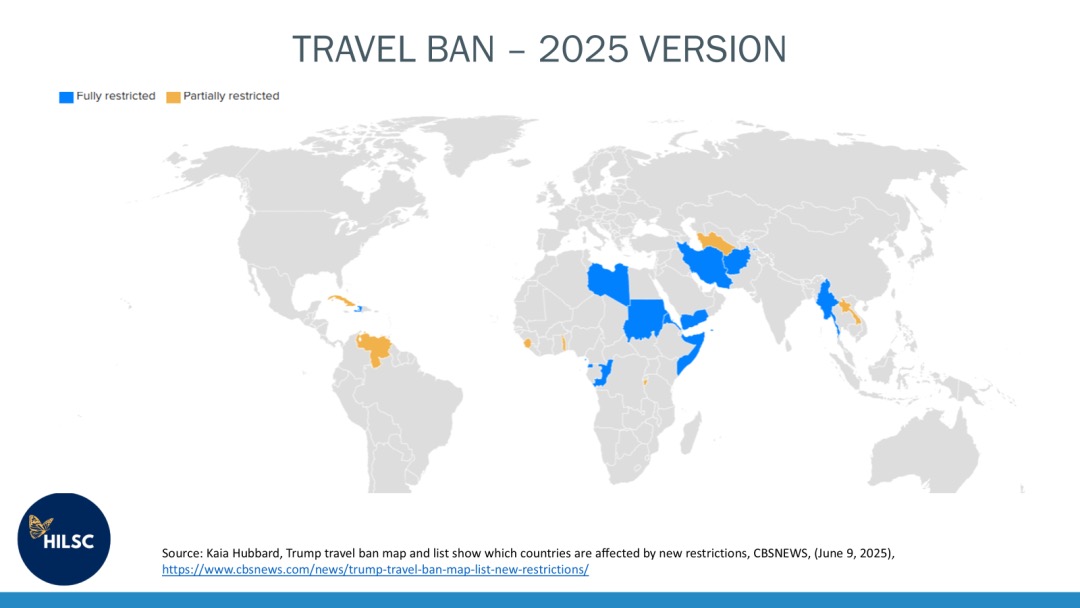
Importantly, the pause does not directly impact non-immigrant visas, such as tourist (B-1/B-2) or business visas, which most World Cup attendees would use. Yet, confusion persists, as some media outlets and analysts have conflated this with separate “travel bans” on 39 countries, which impose full or partial entry restrictions based on national security concerns. These overlapping policies—the 75-country visa pause and the 39-country travel ban—create a complex web that could indirectly affect short-term visitors through heightened scrutiny at ports of entry.
The administration insists the measure is necessary to protect American taxpayers. “We’re not going to let people come in and immediately go on welfare—that’s not fair to hardworking Americans,” a White House spokesperson stated. Critics, including immigration advocacy groups, argue it’s a thinly veiled attempt to reduce legal immigration overall, potentially violating international norms and harming U.S. diplomacy.
The Full List of Affected Countries
The list of 75 countries targeted by the immigrant visa pause is extensive, covering diverse regions and including both allies and adversaries. Here’s the complete roster, alphabetized for clarity:
- Afghanistan
- Albania
- Algeria
- Antigua and Barbuda
- Armenia
- Azerbaijan
- Bahamas
- Bangladesh
- Barbados
- Belarus
- Belize
- Bhutan
- Bosnia (Bosnia and Herzegovina)
- Brazil
- Burma (Myanmar)
- Cambodia
- Cameroon
- Cape Verde
- Colombia
- Cote d’Ivoire (Ivory Coast)
- Cuba
- Democratic Republic of the Congo
- Dominica
- Egypt
- Eritrea
- Ethiopia
- Fiji
- Gambia
- Georgia
- Ghana
- Grenada
- Guatemala
- Guinea
- Haiti
- Iran
- Iraq
- Jamaica
- Jordan
- Kazakhstan
- Kosovo
- Kuwait
- Kyrgyzstan
- Laos
- Lebanon
- Liberia
- Libya
- Moldova
- Mongolia
- Montenegro
- Morocco
- Nepal
- Nicaragua
- Nigeria
- North Macedonia
- Pakistan
- Republic of the Congo
- Russia
- Rwanda
- Saint Kitts and Nevis
- Saint Lucia
- Saint Vincent and the Grenadines
- Senegal
- Sierra Leone
- Somalia
- South Sudan
- Sudan
- Syria
- Tanzania
- Thailand
- Togo
- Tunisia
- Uganda
- Uruguay
- Uzbekistan
- Yemen
This list includes soccer powerhouses like Brazil (five-time World Cup champions), Uruguay (two-time winners), and Colombia, as well as emerging talents from Africa and the Middle East, such as Senegal, Cote d’Ivoire, and Iran.
The 2026 FIFA World Cup: A Global Spectacle Under Threat?
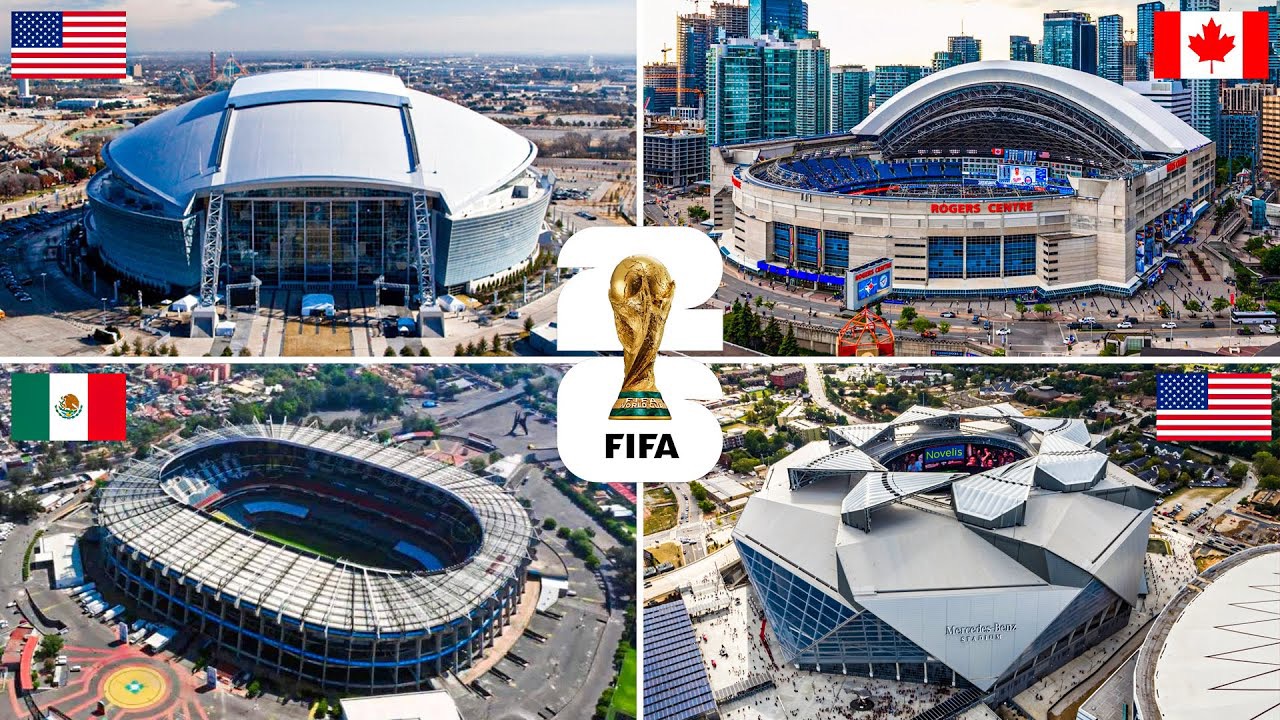
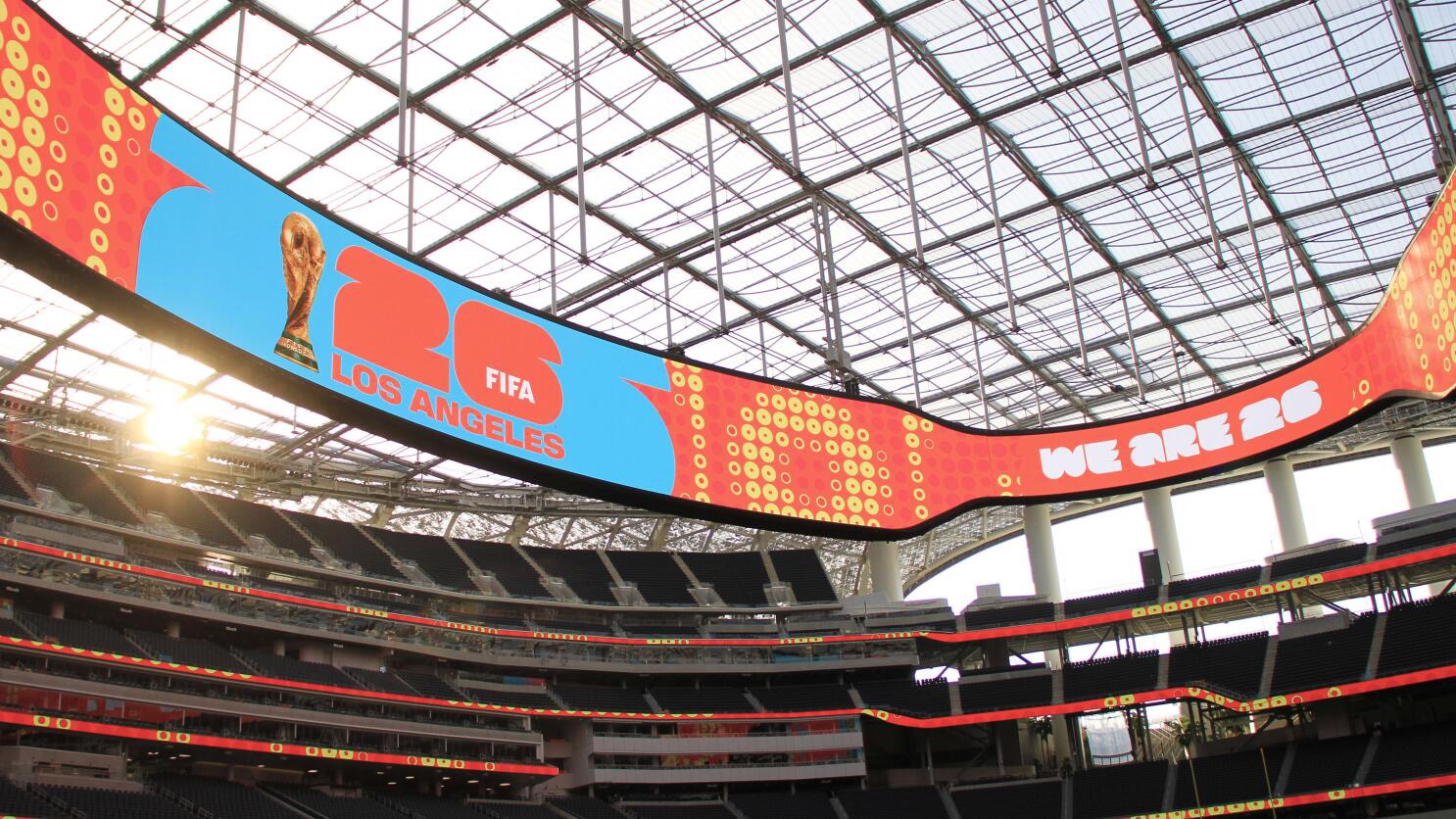
The 2026 World Cup marks a milestone: the first to feature 48 teams, expanded from 32, and the first co-hosted by three nations. Matches will span 16 cities across the U.S., Canada, and Mexico, with the opening game at Estadio Azteca in Mexico City and the final at MetLife Stadium in New Jersey. The U.S. will host the majority of games, including key group stages and knockouts, drawing an estimated 5-6 million international visitors and generating billions in revenue.
Trump has celebrated this as a triumph of American leadership. “We’re building the greatest stadiums, the best infrastructure—it’s going to be huge,” he proclaimed. But the visa pause has ignited fears that it could deter fans from banned countries, even if non-immigrant visas remain available. Advocacy groups warn of “chilling effects,” where applicants face delays or denials due to increased vetting.
Several qualified or likely qualifying teams hail from the list: Brazil, Uruguay, Colombia, Cote d’Ivoire, Iran, Senegal, and others. For instance, Iran and Haiti face full travel bans under the separate 39-country policy, potentially barring fans entirely unless they hold pre-existing visas.
Players and officials, however, appear largely protected. The State Department has explicitly exempted athletes, coaches, and support staff for “major sporting events,” including the World Cup, Olympics, and events sanctioned by FIFA. This carve-out extends to qualifying matches and includes family members. “Athletes from these countries will be allowed in—we’re not going to let politics ruin the game,” a State Department official clarified.
Despite this, uncertainties remain. What if a player needs to renew a visa mid-tournament? Or if fans from partially banned countries like Senegal encounter border issues? FIFA has expressed concern, noting that host nations must ensure “unhindered access” for all participants and spectators. A FIFA spokesperson stated: “We are monitoring the situation closely and expect full cooperation from host governments to make this a truly global event.”
Exemptions, Waivers, and Legal Loopholes
The policy includes several exemptions to mitigate disruptions. Beyond athletes, lawful permanent residents, dual nationals traveling on non-banned passports, diplomats, refugees, and asylees are unaffected. Waivers may be granted on a case-by-case basis if entry serves U.S. national interests, such as for humanitarian reasons or business ties.
For the World Cup, additional safeguards are in place. The proclamation delegates authority to the Secretary of State to define “major sporting events,” and a recent cable to embassies lists FIFA-sanctioned competitions as exempt. This could extend to fan groups or media personnel, though details are sparse.
Legal experts predict challenges. “This pause could face lawsuits under the Administrative Procedure Act or for violating equal protection,” says immigration attorney Maria Gonzalez. Previous Trump-era bans were partially upheld by the Supreme Court but modified after public outcry.
Reactions from Around the World: Outrage, Support, and Diplomacy
The announcement has elicited mixed responses. In the U.S., conservative supporters praise it as tough on immigration. “Finally, someone protecting our borders,” one pro-Trump commentator declared. Internationally, affected nations have condemned it. Brazil’s foreign ministry called it “discriminatory,” while Iran’s government labeled it “hostile.”
FIFA President Gianni Infantino urged dialogue: “Football unites the world—we cannot let visas divide it.” Fan groups, like Senegal’s supporters’ association, plan protests, fearing empty stadiums for their matches.
On social media, discussions highlight security concerns for the tournament, including drone threats and protests. Economists estimate potential losses: A 10% drop in international attendance could cost the U.S. $500 million in tourism revenue.
Historical Precedents: Lessons from Past Bans
This isn’t uncharted territory. In 2017, Trump’s “Muslim Ban” prompted FIFA warnings about the U.S.’s 2026 bid. Ultimately, the joint North American bid won, but with assurances of inclusivity. The COVID-19 era also saw visa disruptions for events like the Tokyo Olympics, teaching organizers to prepare contingencies.
Experts draw parallels to the 1980 U.S. boycott of the Moscow Olympics amid Cold War tensions, underscoring how politics can overshadow sports.
Broader Implications: Geopolitics, Economy, and Human Stories
Beyond soccer, the pause affects families, students, and businesses. A Nigerian engineer in Lagos shared: “My green card process is frozen—dreams deferred.” Geopolitically, it strains ties with allies like Brazil and Thailand, potentially boosting rivals like China in soft power.
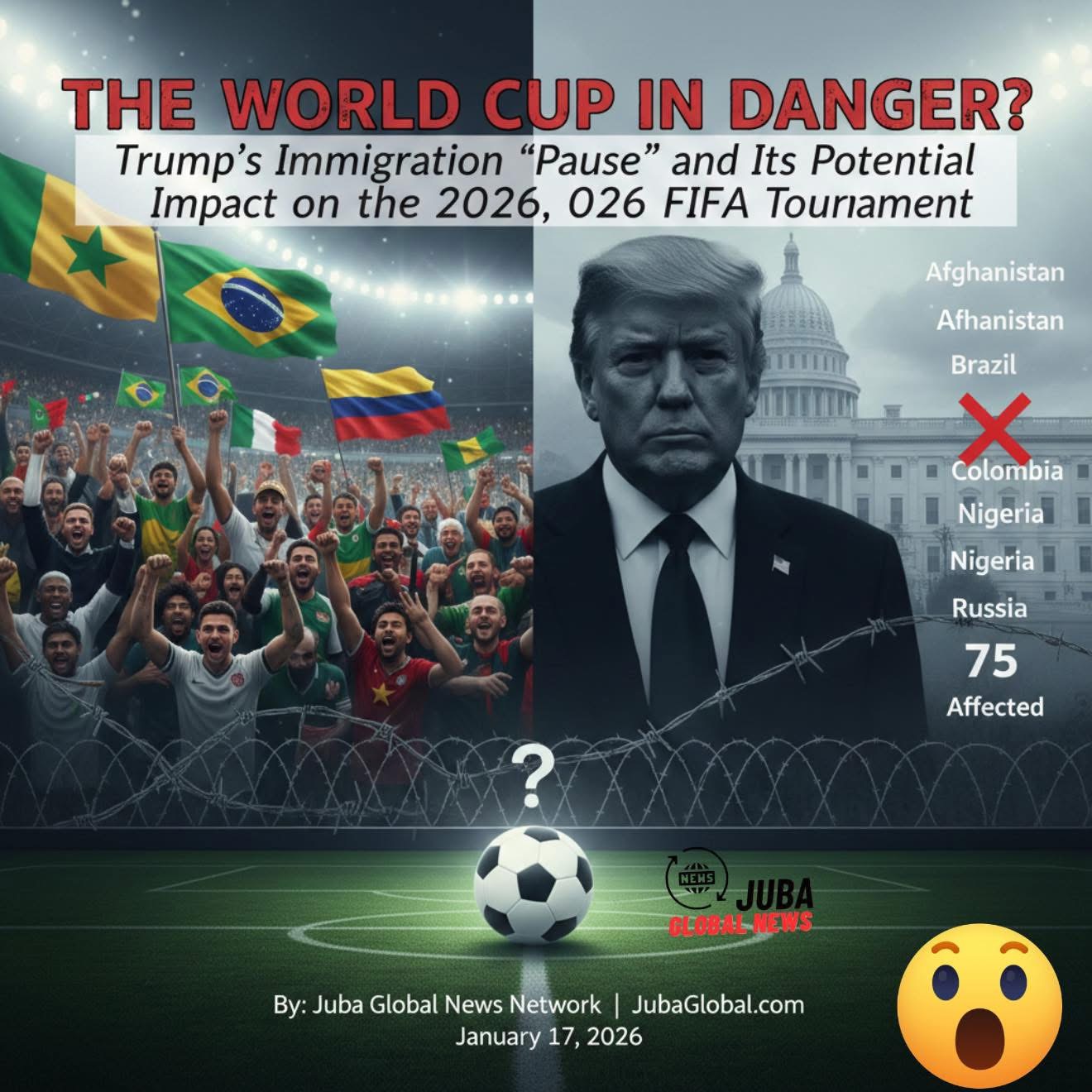
For the World Cup, the real danger isn’t cancellation but diminished spirit. If fans from 75 countries feel unwelcome, the tournament’s ethos of unity could suffer.
In conclusion, while exemptions safeguard players, the visa pause’s ripple effects on fans remain unclear. As June approaches, the administration must balance security with hospitality—or risk turning “the beautiful game” into a divided one. For now, the ball is in Trump’s court.
Juba Global News Network will continue monitoring developments. Stay tuned for updates.
