

The US-Israel War on Iran: Escalation, Leadership Transition, and Global Ripples – Day 11 Update
By Juba Global News Network | JubaGlobal.comMarch 10, 2026 The conflict between the United States, Israel, and Iran—now entering its 11th day—has rapidly e
By Juba Global News Network | JubaGlobal.comMarch 10, 2026
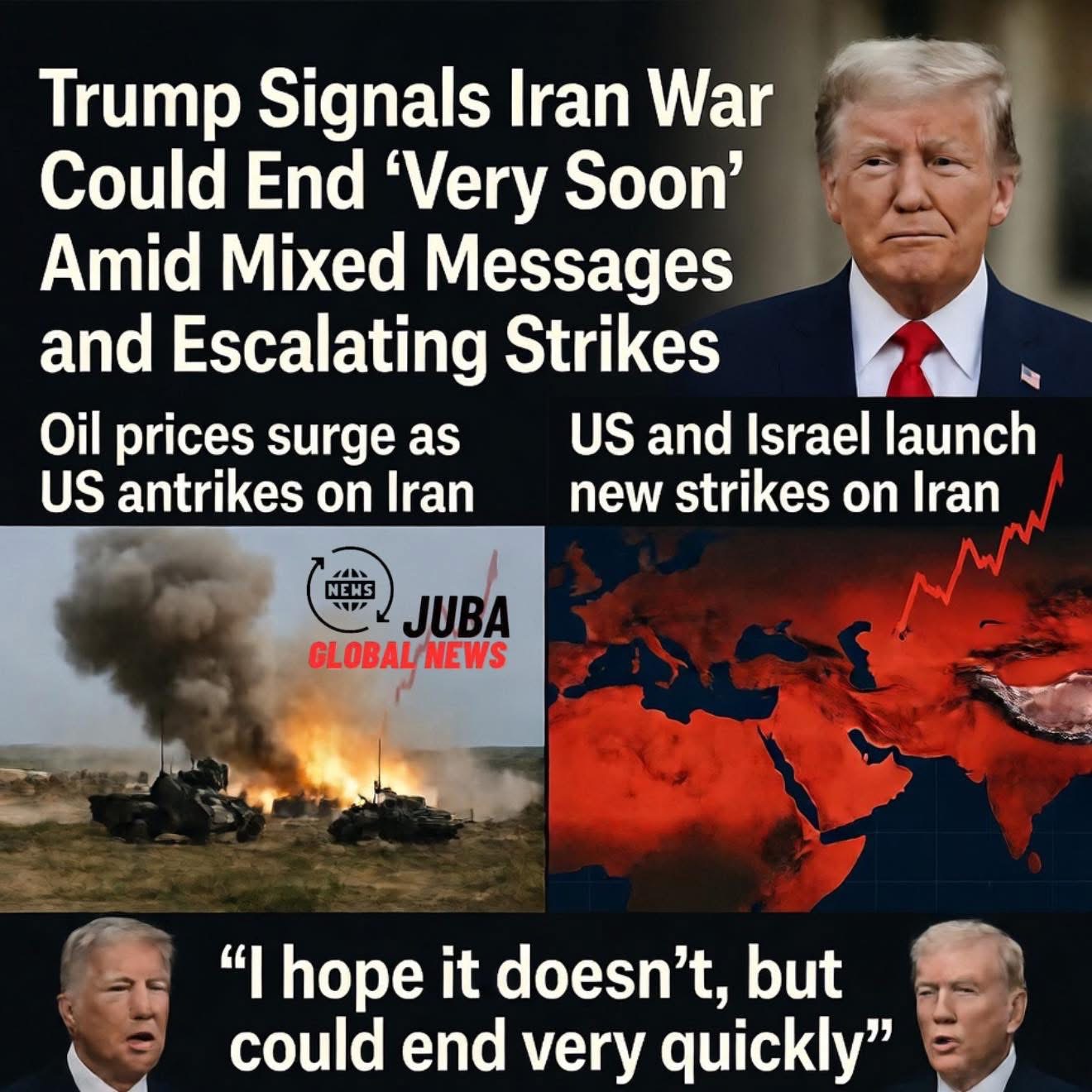
The conflict between the United States, Israel, and Iran—now entering its 11th day—has rapidly evolved into one of the most significant geopolitical crises of the 21st century. What began as coordinated airstrikes on February 28, 2026, under the U.S.-led Operation Epic Fury, has expanded into sustained military engagements, leadership upheaval in Tehran, threats to global energy security, and volatile economic fallout. President Donald Trump’s mixed messaging—claiming the operation is “very complete” and could end “very soon” while issuing stark warnings of far harsher retaliation—has kept the world on edge.
Origins and Rapid Escalation
The war’s roots trace back to failed negotiations in late 2025 and early 2026. The Trump administration imposed a 60-day deadline for Iran to reach a new nuclear and regional influence deal. When no agreement materialized, U.S. and Israeli forces launched large-scale strikes targeting Iranian military commanders, nuclear-related facilities, oil infrastructure, and top leadership. In the opening hours, Supreme Leader Ayatollah Ali Khamenei was killed, along with key figures including IRGC commanders and defense officials.
Iran responded swiftly with missile and drone barrages against Israel, U.S. bases in the region, and Gulf allies. Saudi Arabia, the UAE, Kuwait, and Qatar reported intercepting incoming projectiles, while Hezbollah targets in Lebanon faced renewed Israeli strikes. By early March, the conflict had spread, with reports of Iranian drones targeting Gulf states and Israel conducting precision hits on Iranian air force headquarters and oil depots in Tehran.
The U.S. military claims significant successes: Iran’s navy, air force, missile stockpiles, and drone capabilities have been “virtually wiped out” or severely degraded, with operations reportedly far ahead of schedule. However, Iran has demonstrated resilience through asymmetric tactics, including threats to commercial shipping and continued launches despite heavy losses.
Leadership Vacuum Filled: Mojtaba Khamenei Emerges as New Supreme Leader
In a move that solidified hardliner control amid chaos, Iran’s Assembly of Experts swiftly appointed Mojtaba Khamenei—son of the slain Ayatollah Ali Khamenei—as the new Supreme Leader on March 8. At 56, Mojtaba, a mid-ranking cleric long seen as a shadowy power broker behind his father’s regime, now holds ultimate authority over Iran’s military, judiciary, and foreign policy.
Analysts describe the transition as cementing the Islamic Revolutionary Guard Corps’ (IRGC) grip on power, with Mojtaba expected to pursue a defiant, resistance-oriented path. Iran’s Foreign Minister Abbas Araghchi has declared no future negotiations with the U.S., citing a “bitter experience” of betrayal after progress in prior talks. The IRGC has insisted that Iran—not the U.S.—will dictate when the war ends.
Trump has previously called Mojtaba an “unacceptable” choice, signaling potential for prolonged confrontation. The new leader’s appointment coincided with fresh Iranian missile volleys and vows of continued retaliation.
The Strait of Hormuz Crisis: World’s Energy Lifeline Under Threat
At the heart of global anxiety lies the Strait of Hormuz, the narrow chokepoint through which roughly 20-30% of the world’s seaborne oil typically flows. Since the war’s outbreak, Iran has effectively disrupted transit: declaring the strait closed to hostile vessels, attacking attempted passages with drones and missiles, and prompting a near-total halt in commercial traffic.
Ship-tracking data shows daily transits plummeting from over 150 vessels pre-conflict to an average of just 13 in recent days. No ships—including those from major buyers like China—are getting through without extreme risk. The U.S. has warned of massive retaliation if flows are blocked, with Trump vowing Iran would be hit “twenty times harder” or “at a much, much harder level” for any disruption.
European allies, led by France, are discussing a “defensive” coalition mission to reopen the strait, framing attacks on energy routes as threats to continental security.
Oil Prices and Economic Shockwaves
The disruption has triggered the largest energy supply shock in modern history. Brent crude prices surged dramatically in the war’s first week, briefly exceeding $100–$110 per barrel amid panic buying and fears of prolonged closure.
As of March 10, 2026, prices show volatility: recent sessions saw highs near $95–$99 before dipping (e.g., closing around $85–$91 in some futures contracts), partly on Trump’s optimistic signals that the war could wrap up “very soon.” Markets reacted with relief to his comments, but experts caution this may reflect tactical messaging rather than reality—some former advisers suggest possible market manipulation.
Gasoline prices in the U.S. and globally have skyrocketed, straining economies already facing inflation pressures. Developing nations, including those in Africa, face acute risks of fuel shortages and higher import costs.
Trump’s Messaging: Victory in Sight or Prolonged Fight?
President Trump has offered conflicting signals. In recent statements and press interactions, he described the campaign as “very far ahead of schedule” and predicted an end “very soon”—even suggesting within days or this week. He emphasized mutual decision-making with Israeli Prime Minister Benjamin Netanyahu on timing.
Yet he maintains demands for Iran’s “unconditional surrender,” regime change elements, and vows harsher action if oil routes are threatened. Critics, including former officials, question coherence in rationales—shifting from nuclear threats and protester killings to broader regime aggression and “liberation.” Reports also highlight concerns over U.S. military rhetoric invoking religious framing, with some commanders allegedly portraying the conflict in apocalyptic terms.
Broader Implications and No End in Sight?
Despite Trump’s optimism, de-escalation appears distant. Iran shows no signs of backing down, with its new leadership defiant and proxies active. Civilian casualties mount on all sides, humanitarian concerns rise, and diplomatic channels remain frozen.
The war has already reshaped alliances, boosted global arms flows, and exacerbated migration pressures. For now, the world watches a high-stakes standoff: a superpower-led campaign claiming dominance versus a resilient adversary controlling a vital global artery. Whether Trump’s “very soon” proves prophetic or prelude to deeper entanglement remains the defining question of March 2026.
Juba Global News Network will continue monitoring developments. Stay informed at JubaGlobal.com.
Sources: Aggregated from Al Jazeera, NPR, NBC News, CNN, BBC, Reuters, and maritime tracking analyses as of March 10, 2026.
