The Reopening of Gaza’s Rafah Border Crossing: A Fragile Step Toward Humanitarian Relief Amid Ongoing Ceasefire
On February 2, 2026, Gaza’s Rafah border crossing with Egypt reopened for limited humanitarian traffic, marking a significant yet tightly controlled develo
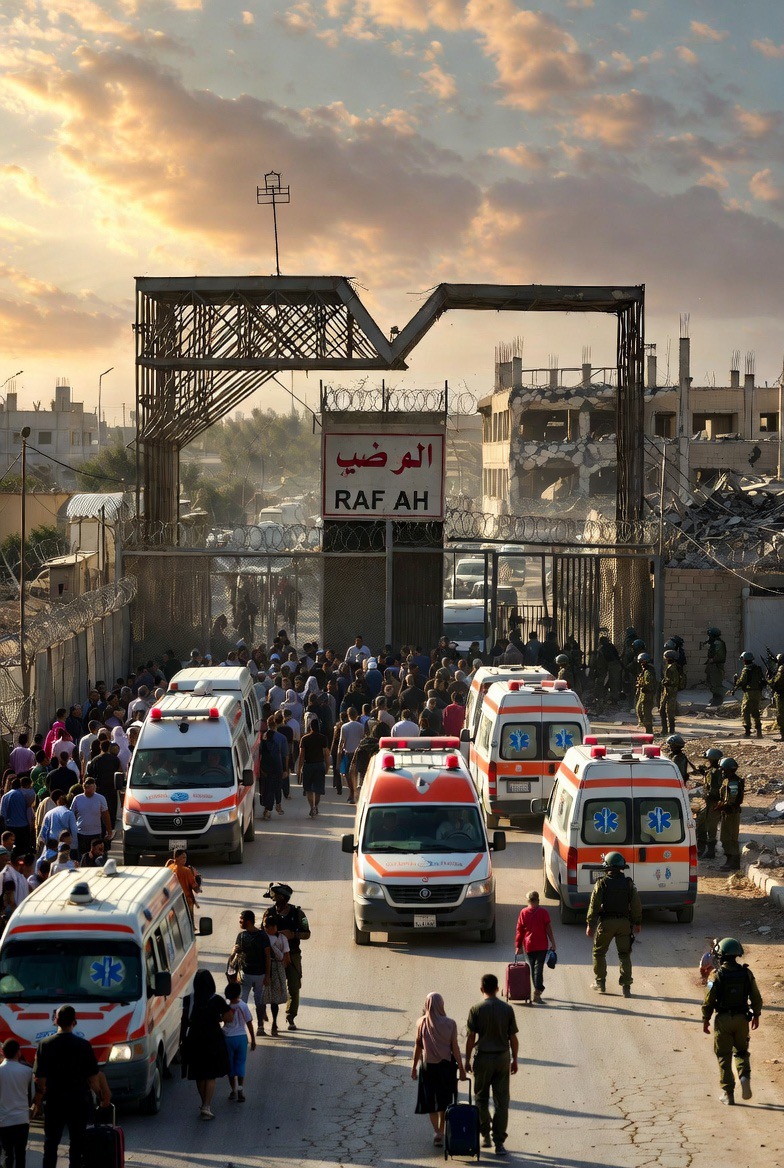
On February 2, 2026, Gaza’s Rafah border crossing with Egypt reopened for limited humanitarian traffic, marking a significant yet tightly controlled development in the long-running Israeli-Palestinian conflict. This move, described by Egyptian and Israeli security officials as a “key step” in advancing the fragile ceasefire between Israel and Hamas, allows restricted pedestrian movement after nearly two years of near-complete closure. The crossing, which has served as Gaza’s primary gateway to the outside world for its more than two million residents, had been largely shut since Israeli forces seized control of the Palestinian side in May 2024.
The reopening comes as part of the second phase of a U.S.-brokered ceasefire agreement that took effect in October 2025 under the administration of President Donald Trump. The deal, often referred to in reports as a multi-phase truce plan, has included hostage releases, temporary halts in fighting, and gradual humanitarian measures. The Rafah crossing’s partial reactivation was explicitly stipulated in the framework, though its implementation was delayed until the return of the last Israeli captive’s body—Ran Gvili—from Gaza, which occurred shortly before the border’s reopening.
Limited Scope and Strict Controls
The initial reopening is far from a full restoration of pre-war operations. Officials emphasize that it is a “pilot phase” or “trial basis,” focused exclusively on pedestrian traffic—no vehicles, commercial goods, or large-scale humanitarian aid convoys are permitted at this stage. Reports indicate the crossing operates for only about six hours per day, with caps on crossings: Israeli sources suggest around 50 patients (accompanied by up to two relatives each) may exit Gaza daily for medical treatment in Egypt or beyond, while some estimates allow up to 150 total exits and around 50 entries into Gaza.
Security remains paramount. All individuals must undergo intensive Israeli screening and prior clearance, coordinated with Egypt and monitored by the European Union Border Assistance Mission (EUBAM). This reflects Israel’s longstanding concerns over potential arms smuggling through the crossing, a rationale cited for its 2024 seizure and prolonged closure.
Humanitarian aid trucks have been positioned on the Egyptian side, with some reports of preparations for eventual inspection and entry, but goods remain blocked for now. The focus is squarely on people—primarily the sick and wounded Palestinians desperately needing medical care unavailable in Gaza’s devastated healthcare system.
The Humanitarian Crisis Driving the Urgency
Gaza’s health officials estimate that up to 20,000 children and adults require urgent treatment abroad for conditions ranging from war-related injuries and chronic illnesses to complications from malnutrition and lack of medicine. The enclave’s hospitals have been overwhelmed or destroyed during prolonged fighting, with infrastructure battered by airstrikes, ground operations, and restricted supplies.
Thousands of Palestinians who fled Gaza early in the conflict—estimated at around 80,000—have been waiting in Egypt to return home. For many families, the reopening represents a bittersweet opportunity: a chance to reunite or seek life-saving care, but under conditions that raise fears of one-way journeys. Medical professionals and aid workers have voiced concerns that patients allowed to leave may face barriers to re-entry, effectively forcing an “impossible choice” between treatment and permanent displacement.
Palestinians in Gaza have expressed a mix of fragile hope and impatience. Ambulances queued on the Egyptian side as early as February 1, 2026, signaling preparations, while residents watched workers finalize infrastructure at the crossing. Yet, confusion persists over exact criteria for approval, with some fearing the limited slots will prioritize only the most severe cases.
Broader Context: Ceasefire Progress and Challenges
This development follows earlier partial openings, such as brief medical evacuations during a short ceasefire in early 2025. Israel’s resistance to fuller access stemmed from security priorities, but the truce’s phased implementation—tied to hostage returns and de-escalation—has gradually shifted dynamics.
The ceasefire remains tenuous. Even as Rafah reopened, reports emerged of continued violence in parts of Gaza, including strikes that killed dozens in the days prior. The agreement’s success hinges on mutual compliance, with international mediators (including the U.S., Egypt, and Qatar) pressing for expansion to include unrestricted aid flows and eventual reconstruction.
For Egypt, managing the crossing involves balancing domestic security concerns—preventing instability spillover—with humanitarian obligations. Cairo has coordinated closely with Israel while advocating for broader access.
Implications and the Road Ahead
The limited reopening of Rafah is a tangible, if modest, humanitarian win in a conflict that has caused immense suffering. It offers immediate relief to a fraction of those in dire need and signals progress in the ceasefire’s implementation. However, experts caution that without scaling up to include goods, fuel, and medical supplies, Gaza’s crisis will persist.
Palestinians hope this pilot evolves into sustained two-way traffic, potentially easing isolation and aiding recovery. International observers, including the United Nations and aid groups, have long demanded full reopening as essential for addressing the enclave’s dire humanitarian situation.
As the pilot phase unfolds, the world watches closely. For now, the sight of ambulances moving and families preparing to cross represents a small crack in a long-closed door—one that could either widen into meaningful relief or remain narrowly ajar amid enduring tensions.