

The Pakistan-Afghanistan Border Conflict Explodes: Islamabad Declares ‘Open War’ on Taliban Government Amid Airstrikes on Kabul
On February 27, 2026, the long-simmering tensions between Pakistan and Afghanistan’s Taliban-led government erupted into what Pakistani officials are openl
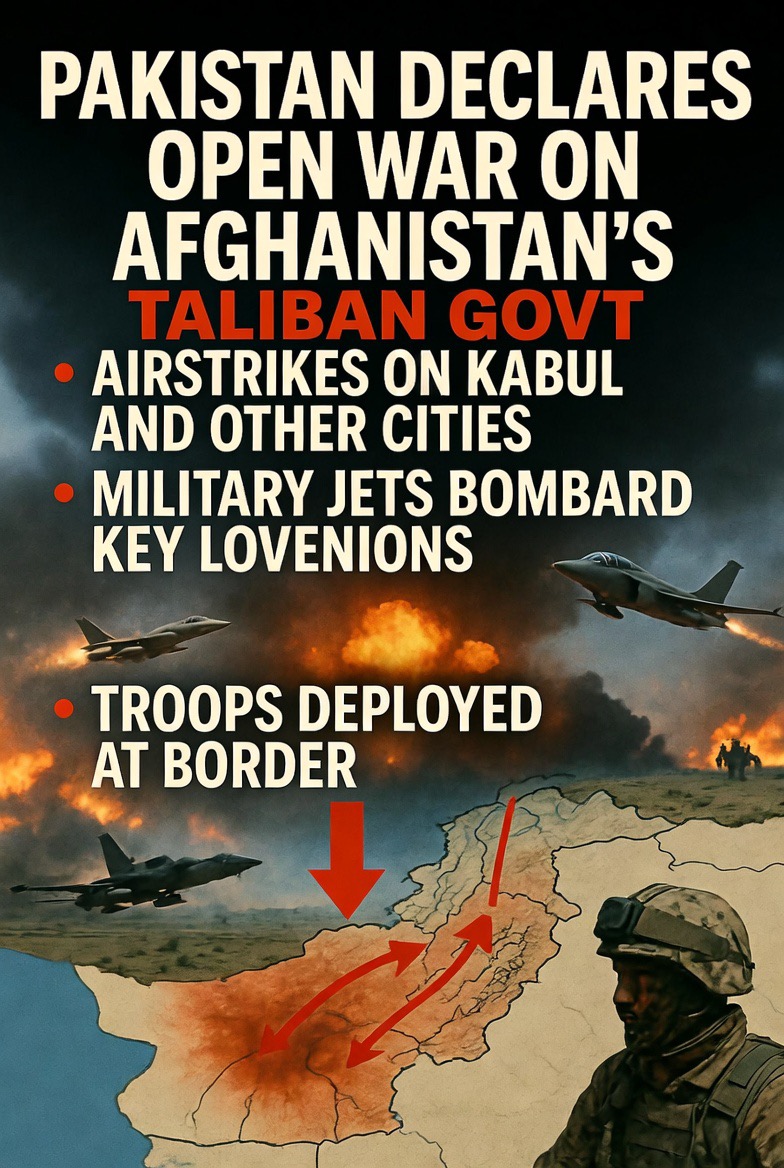
On February 27, 2026, the long-simmering tensions between Pakistan and Afghanistan’s Taliban-led government erupted into what Pakistani officials are openly calling an “open war.” In a dramatic overnight escalation, Pakistan launched airstrikes on targets in Kabul—the Afghan capital—and other key locations, including Kandahar and Paktia provinces. This marked a significant shift from previous limited cross-border operations, as Islamabad directly targeted facilities associated with the Taliban government itself, rather than solely militant hideouts.
The declaration came from Pakistan’s Defense Minister Khawaja Asif, who posted on X (formerly Twitter) that “our patience has now run out. Now it is open war between us and you.” Asif’s statement reflected months of mounting frustration in Islamabad over what Pakistan describes as the Taliban’s failure to rein in anti-Pakistan militant groups operating from Afghan soil, particularly the Tehreek-e-Taliban Pakistan (TTP), also known as the Pakistani Taliban.
Roots of the Current Crisis
The Durand Line—the 2,600-kilometer (1,615-mile) porous border dividing the two nations—has long been a flashpoint. Pakistan has repeatedly accused the Taliban regime in Kabul of providing safe havens, logistical support, and even tacit encouragement to TTP fighters who launch attacks inside Pakistan. Since the Taliban regained control of Afghanistan in August 2021 following the U.S. withdrawal, relations with Islamabad have deteriorated sharply despite Pakistan’s historical role in supporting the group during its insurgency against NATO forces.
In recent months, cross-border skirmishes intensified. Pakistan conducted airstrikes on alleged TTP camps in eastern Afghanistan as early as February 22, 2026, claiming to target militant infrastructure while minimizing civilian impact. Afghan sources reported civilian deaths in those strikes, fueling outrage in Kabul.
The tipping point arrived late on February 26, when Afghan Taliban forces launched what they described as a “large-scale offensive” against Pakistani military positions along the border. Taliban spokesperson Zabihullah Mujahid stated that these actions were retaliatory, responding to prior Pakistani incursions. Reports indicated Afghan troops used drones and ground forces to target Pakistani outposts, with claims from Kabul of capturing multiple checkposts and inflicting heavy casualties.
Pakistan responded swiftly and decisively. In the early hours of February 27, the Pakistan Air Force executed Operation Ghazab lil-Haq (translated roughly as “Righteous Fury” or “Wrath for the Truth”). Strikes hit military targets in Kabul—including a weapons depot on the city’s western outskirts that triggered prolonged secondary explosions audible across the capital—Kandahar (the Taliban’s spiritual heartland and base for supreme leader Hibatullah Akhundzada), and Paktia province near the border.
Casualties and Claims
Both sides have released sharply conflicting casualty figures, typical of fast-moving conflicts where independent verification remains challenging.
Pakistan’s military spokesperson reported that the strikes killed 228 Taliban fighters, injured 314, destroyed 74 posts, and captured 18 others. Information Minister Attaullah Tarar cited figures of over 130 Taliban “operatives” eliminated in initial assessments, with later updates pushing totals higher (some Pakistani media reports mentioned up to 274 Taliban losses since the escalation began). Pakistan also acknowledged losses, with at least 12 soldiers reported killed in the Afghan border attacks.
On the Afghan side, officials confirmed strikes in Kabul, Kandahar, and Paktia but downplayed damage to government facilities, emphasizing civilian panic and fear. Residents in Kabul described hours of explosions rattling homes, with some areas experiencing power outages and widespread alarm. Taliban sources claimed successful drone strikes on Pakistani targets in retaliation and accused Islamabad of aggression against Afghan sovereignty.
Civilians on both sides of the border bore the brunt of the fear, with reports of panic in Afghan cities and heightened alerts near Pakistani border crossings like Torkham.
Broader Implications
This escalation raises alarms across South Asia and beyond. Pakistan, a nuclear-armed state with a professional military, faces a battle-hardened Taliban foe experienced in asymmetric warfare. Analysts note the mismatch: Pakistan’s air superiority and conventional forces contrast with the Taliban’s guerrilla tactics and control of rugged terrain.
The conflict risks drawing in regional players. India, long accused by Pakistan of supporting anti-Pakistan elements via Afghanistan (claims Kabul denies), watches closely. China, with deep economic ties to Pakistan via the China-Pakistan Economic Corridor, has interests in border stability. The United States and other Western powers, having withdrawn from Afghanistan, have limited leverage but monitor for humanitarian fallout.
Humanitarian concerns mount in an already fragile Afghanistan facing economic collapse, food insecurity, and winter hardships. Further escalation could displace thousands more along the border and disrupt aid flows.
Calls for de-escalation have emerged, with some Afghan officials signaling openness to dialogue. Qatar, which has mediated Taliban-related talks in the past, may play a role again, though a ceasefire appears distant amid the heated rhetoric.
What Comes Next?
As of February 27, 2026, operations continue, with Pakistani officials stating the campaign is ongoing and Afghan forces mobilizing near key crossings. Explosions and clashes persist in border areas, and both capitals remain on high alert.
The “open war” declaration by Pakistan’s defense minister underscores a breakdown in what was once a complex patron-proxy relationship. Once instrumental in the Taliban’s rise, Pakistan now confronts its former allies as adversaries in a conflict that could reshape regional security for years.
The coming days will test whether diplomacy can prevail or if this marks the start of a prolonged and devastating confrontation between two neighbors already scarred by decades of instability. For millions living along the Durand Line, the stakes could not be higher.
(News developments are fluid; figures and events are based on reports from major outlets including Al Jazeera, Reuters, BBC, CNN, The Guardian, and others as of late February 27, 2026.)
