

Soyuz MS-25 Successfully Launches Multinational Crew to ISS: A Milestone in Ongoing Space Cooperation Amid Global Tensions
Baikonur Cosmodrome, Kazakhstan – February 11, 2026 – At 06:12 UTC (11:12 local time), the Soyuz MS-25 spacecraft lifted off from Launch Pad 31/6 at the Ba
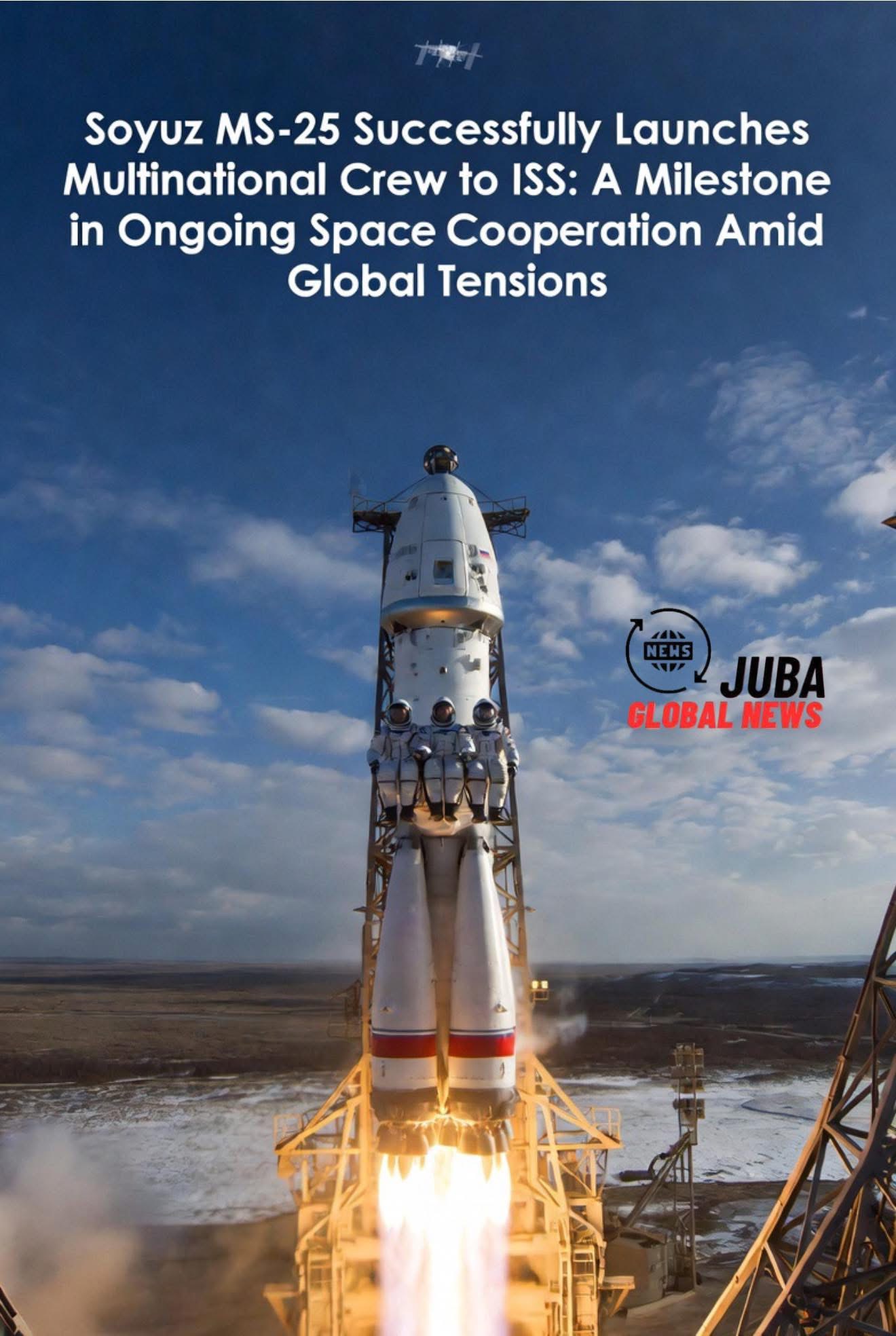
Baikonur Cosmodrome, Kazakhstan – February 11, 2026 – At 06:12 UTC (11:12 local time), the Soyuz MS-25 spacecraft lifted off from Launch Pad 31/6 at the Baikonur Cosmodrome, carrying a diverse international crew of three to the International Space Station (ISS). The flawless launch marked another successful chapter in long-duration human spaceflight and underscored the enduring value of multinational cooperation in low-Earth orbit, even as geopolitical relations remain strained on the ground.
The Crew: A Blend of Experience and New Talent
Soyuz MS-25 delivered three space travelers to the orbiting laboratory:
- Oleg Novitsky (Roscosmos, Commander) – Veteran cosmonaut on his fourth spaceflight. Novitsky previously commanded Soyuz MS-03 (2016–2017) and Soyuz MS-18 (2021), accumulating over 545 days in space. Known for his calm leadership and extensive experience with Russian segment operations, he serves as the Soyuz commander and will oversee docking maneuvers.
- Marina Vasilevskaya (Belarusian Space Agency / Roscosmos) – Belarus’s first female cosmonaut and the country’s second citizen to fly in space (after Petr Klimuk in 1973). A former flight attendant turned state media personality, Vasilevskaya underwent intensive training at Star City and became a symbol of Belarus–Russia scientific collaboration. She will conduct a series of Belarusian-sponsored experiments during her approximately 12-day visiting mission.
- Tracy C. Dyson (NASA) – American astronaut on her second long-duration expedition. Dyson previously flew on STS-133 (Discovery, 2011) and now returns for a six-month increment as Flight Engineer on Expedition 72/73. A veteran systems engineer with expertise in robotics and EVA operations, she will join the existing ISS crew of NASA, Roscosmos, JAXA, and ESA members.
The launch vehicle—a modernized Soyuz-2.1a booster with the Soyuz MS spacecraft atop—was rolled out to the pad under clear winter skies. Liftoff proceeded nominally, with all three stages performing as planned. After reaching orbital velocity, the Soyuz separated from the third stage, deployed its solar arrays and antennas, and began the standard two-day rendezvous profile to the ISS.
Rendezvous and Docking
Following 34 orbits and precise engine burns, Soyuz MS-25 autonomously docked to the Prichal nadir module of the Russian segment at 09:41 UTC on February 13, 2026. Soft capture was confirmed within seconds, followed by hard mate and hatch pressurization checks. The crew ingress occurred roughly two hours later, greeted warmly by the incumbent Expedition 71/72 residents: NASA’s Don Pettit, Roscosmos’ Alexey Ovchinin and Ivan Vagner, JAXA’s Kimiya Yui, and ESA’s Andreas Mogensen.
Upon boarding, the newcomers received the traditional symbolic bread-and-salt welcome and conducted standard safety briefings. Tracy Dyson immediately began familiarization with U.S. segment systems, while Novitsky and Vasilevskaya coordinated handover procedures for Belarusian payloads and Russian experiments.
Scientific and Symbolic Significance
Soyuz MS-25 carries more than just crew—it delivers approximately 2,600 kg of cargo, including:
- Fresh food, water, and life-support consumables.
- Scientific hardware for ongoing investigations in human physiology, biotechnology, Earth observation, and materials science.
- Belarusian experiments focused on plant growth in microgravity, radiation biology, and remote-sensing technologies.
- Components for future maintenance of the Russian segment, including replacement parts for the Elektron oxygen-generation system.
The mission symbolizes continued cooperation between Roscosmos and its partners despite Western sanctions and the suspension of many joint programs following Russia’s 2022 invasion of Ukraine. NASA and Roscosmos have maintained the crewed cross-fly agreement—allowing American astronauts to ride Soyuz and Russian cosmonauts to fly on Crew Dragon—ensuring continuous ISS staffing even if one partner’s vehicles face delays.
Belarus’s participation adds a geopolitical dimension: Minsk has deepened space ties with Moscow since 2022, viewing the flight as a national prestige project and scientific milestone.
Looking Ahead
Tracy Dyson is expected to remain aboard until late August 2026, participating in numerous U.S. and international experiments, potential spacewalks, and station maintenance. Novitsky and Vasilevskaya will return to Earth on March 23, 2026, aboard Soyuz MS-25, landing in Kazakhstan after a short but productive visiting mission.
The successful launch and docking of Soyuz MS-25 reaffirm the reliability of Russia’s human spaceflight architecture and the ISS’s role as a unique platform for international collaboration. As the station approaches its planned retirement window in the early 2030s, missions like this highlight both the achievements of the past quarter-century and the ongoing need for peaceful, science-driven partnership in orbit—even amid earthly divisions.
For now, the Expedition 72 crew—now seven strong—continues its work 400 kilometers above Earth, conducting research that benefits humanity while demonstrating that space can still bring nations together when the ground seems determined to pull them apart.
