

South Sudan on the Brink of Collapse: A Stark Warning from Dr. Joseph M. Nyieth, Chairman of the National Parties Alliance (NPA)
By: Juba Global News Network | JubaGlobal.com Juba, South Sudan – January 19, 2026 – As South Sudan grapples with an unprecedented convergence of crises—ec
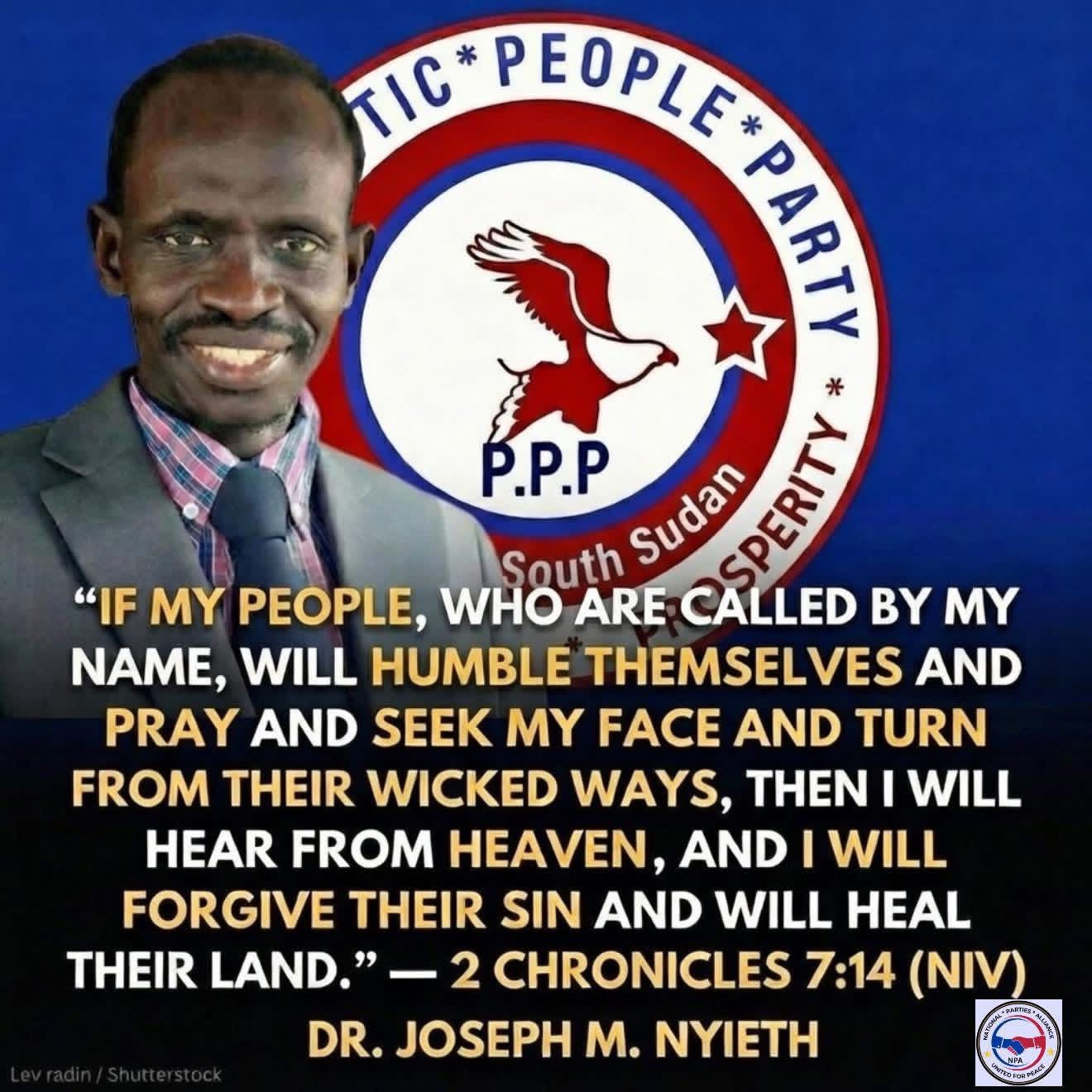
By: Juba Global News Network | JubaGlobal.com
Juba, South Sudan – January 19, 2026 – As South Sudan grapples with an unprecedented convergence of crises—economic implosion, widespread famine risk, surging intercommunal violence, and a stalled political transition—the country’s youngest nation appears closer than ever to total state failure. Amid this darkening landscape, Dr. Joseph M. Nyieth, Chairman of the National Parties Alliance (NPA)—one of the prominent holdout opposition coalitions that has remained outside the main Revitalized Agreement on the Resolution of the Conflict in South Sudan (R-ARCSS) framework—has issued a powerful public warning.
In a lengthy Facebook post shared late last night from his official page, Dr. Nyieth painted a grim picture of a nation in freefall and directly accused the transitional government of deliberate neglect, elite capture, and a refusal to implement genuine reforms. The post, which has rapidly circulated among South Sudanese diaspora communities, opposition supporters, and international observers, reads in full:
“Fellow citizens of South Sudan, brothers and sisters at home and in the diaspora,
Today I speak to you not as Chairman of the National Parties Alliance, but as a son of this suffering land who can no longer remain silent while our country slides into the abyss.
South Sudan stands on the brink of complete collapse. Our national currency is worthless—black-market rates have surpassed 2,500 SSP to the dollar. Teachers, doctors, soldiers, and police have not seen a salary in months. The state has ceased to function in most parts of the country. Oil revenues that should belong to all our people are siphoned off by a tiny elite while the rest starve.
Famine is not a future threat—it is already here in pockets of Jonglei, Upper Nile, and Warrap. The IPC warns that 2.3 million of our brothers and sisters will face Catastrophe (Phase 5) hunger in the coming months. Yet the government cuts food rations, blocks humanitarian access in some areas, and diverts resources to personal enrichment and patronage networks.
Violence has returned with vengeance. Cattle raiding has become full-scale communal warfare. Unpaid soldiers and armed youth kill with impunity. The so-called Unified Forces remain a fiction—cantonment sites are death traps where young men are abandoned without food or hope. The R-ARCSS is dead in all but name; the February 2026 deadline will pass without elections because those in power have no intention of ever relinquishing it.
We in the National Parties Alliance have warned repeatedly: without security sector reform, without inclusive national dialogue, without transitional justice, and without a genuine power-sharing arrangement that includes all South Sudanese—not just the same old faces—there will be no peace, no stability, and no future.
The international community must stop enabling this slow-motion suicide. Conditionalize aid. Enforce targeted sanctions on those blocking reform. Support genuine South Sudanese voices—not just the ones who sign agreements in foreign capitals and then ignore them.
To our people: do not lose hope, but do not accept this suffering as normal. The time for silence is over. The time for real change—real, inclusive, and accountable change—is now.
South Sudan is bleeding. If we do not act together, there will be nothing left to save.
Dr. Joseph M. Nyieth
Chairman, National Parties Alliance (NPA)
18 January 2026”
Dr. Nyieth’s statement arrives at a moment of acute fragility. The R-ARCSS transitional period—extended multiple times—expires next month with no viable election roadmap. The government of President Salva Kiir and First Vice President Riek Machar remains a fragile coalition of convenience, accused by holdout groups like the NPA of failing to implement core provisions: unification of forces, constitutional reform, transitional justice, and preparation for free and fair elections.
The NPA, an umbrella coalition of opposition parties and movements that rejected full participation in the R-ARCSS framework, has long called for broader inclusion and genuine power-sharing. Dr. Nyieth, a vocal critic of both the government and the SPLM-IO, has positioned the alliance as a voice for marginalized political actors and communities excluded from Juba’s elite bargains.
Independent analysts and humanitarian leaders have echoed many of Dr. Nyieth’s concerns. The Integrated Food Security Phase Classification (IPC) projects that acute food insecurity will reach catastrophic levels for millions in early 2026. The World Food Programme has cut rations due to chronic underfunding. Violence in Jonglei, Unity, and Upper Nile states has displaced tens of thousands in recent months alone. The UNMISS peacekeeping mission continues to protect civilians in displacement sites, but its mandate cannot substitute for a functioning state.
The international community faces difficult choices. Donor fatigue has set in after years of massive humanitarian spending with little progress toward stability. Calls are growing for more conditional aid, targeted sanctions on spoilers, and renewed pressure on the government to implement reforms before the transitional period collapses entirely.
Dr. Nyieth’s post has already generated hundreds of shares, comments, and reactions within South Sudan’s active online communities. Supporters praise his courage in speaking truth to power; critics accuse him of grandstanding or undermining fragile stability. Yet few dispute the underlying reality he describes: South Sudan is not merely in crisis—it is on the edge of becoming a failed state in every meaningful sense.
Whether his call galvanizes domestic and international action or simply adds another voice to the chorus of warnings remains to be seen. What is clear is that time is running out.
Juba Global News Network will continue to cover this rapidly deteriorating situation, including responses to Dr. Nyieth’s statement, humanitarian updates, and any developments in the political transition.
This article was updated on January 19, 2026, at 2:05 PM EST to include the full text of Dr. Joseph M. Nyieth’s Facebook post and immediate reactions.