

Senate Rejects War Powers Resolution as Trump Leads Iran Negotiation
sBy Juba Global News Network | JubaGlobal.comMarch 25, 2026 In a decisive vote on March 25, 2026, the U.S. Senate rejected a bipartisan War Powers Resoluti
sBy Juba Global News Network | JubaGlobal.comMarch 25, 2026
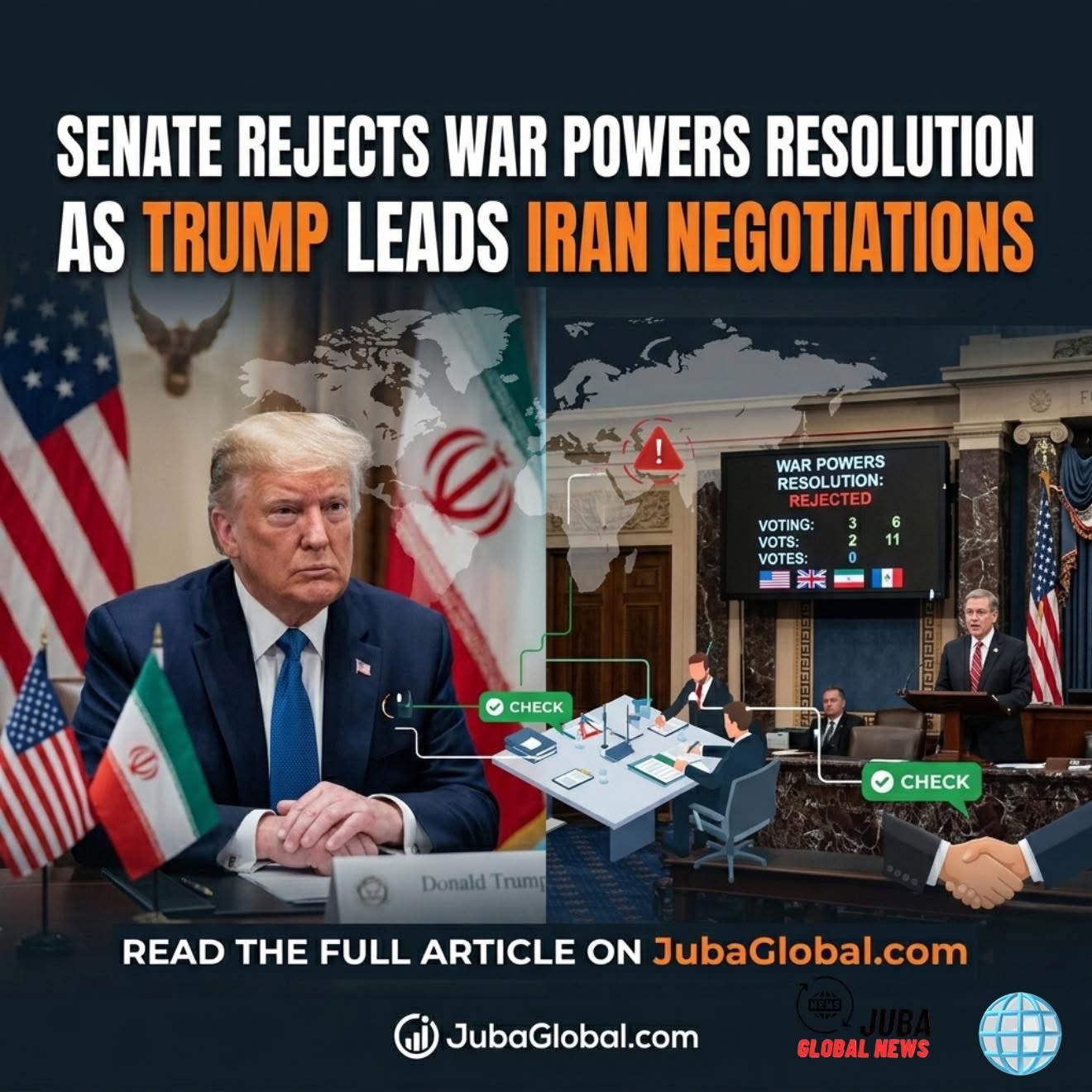
In a decisive vote on March 25, 2026, the U.S. Senate rejected a bipartisan War Powers Resolution that sought to limit President Donald Trump’s authority to conduct military operations in the ongoing conflict with Iran. The measure failed to advance, handing the administration broader latitude as Trump continues to claim progress in indirect negotiations with Tehran and pushes a comprehensive 15-point peace plan.
The resolution, introduced by a group of Democratic and Republican senators concerned about the scope and duration of U.S. involvement, would have required the president to seek explicit congressional approval for sustained military action beyond 60 days. With the conflict now on Day 25, the Senate’s rejection effectively removes a major legislative check on executive power at a critical moment.
Vote Breakdown and Senate Dynamics
The final tally saw the resolution fall short of the 60 votes needed to overcome a likely filibuster, with most Republicans joining a handful of Democrats in opposing the measure. Senate Majority Leader John Thune described the resolution as “premature and counterproductive,” arguing that it would undermine ongoing diplomatic efforts.
“President Trump is actively negotiating an end to this conflict,” Thune said. “Tying his hands now would only embolden Iran and weaken America’s position.”
Opponents from the Democratic side, led by Senator Chris Murphy of Connecticut, argued that the Constitution clearly assigns Congress the power to declare war and that the administration’s actions — including the deployment of over 1,000 paratroopers from the 82nd Airborne Division — have escalated without sufficient oversight.
Despite the failure, the debate highlighted deep partisan divisions over the war’s conduct and its potential long-term costs.
Trump Administration’s Position
White House officials welcomed the Senate’s decision, viewing it as validation of the president’s dual-track strategy of military pressure and diplomacy.
Speaking from the Oval Office earlier in the day, President Trump reiterated that “very good and productive conversations” are underway with “the right people” in Iran. He referenced the delivery of a detailed 15-point peace plan via intermediaries, including demands for the complete dismantlement of Iran’s nuclear program, cessation of support for proxy militias, and full reopening of the Strait of Hormuz.
Trump also highlighted the reported “very big present” from new Iranian leadership on oil and gas cooperation, which has contributed to volatile but hopeful swings in global energy markets. The Senate vote, administration sources say, gives the president the flexibility needed to maintain maximum pressure while pursuing a deal.
Military and Diplomatic Context on Day 25
The Senate decision arrives as the conflict shows no signs of immediate de-escalation:
- Israeli airstrikes continue on Iranian targets, while Iran launches fresh missile barrages against Tel Aviv and Gulf sites.
- The U.S. has paused strikes on certain Iranian energy infrastructure for five days to facilitate talks.
- Over 1,000 U.S. paratroopers are deploying to the Middle East as a show of strength and contingency planning.
- Fighting has spilled over into Lebanon, with Israel preparing possible occupation of southern areas to counter Hezbollah.
The War Powers Resolution’s rejection ensures that these operations can continue without immediate congressional intervention, even as critics warn of mission creep.
Historical Precedent and Constitutional Debate
The 1973 War Powers Resolution was passed over President Nixon’s veto to prevent future “Vietnam-style” engagements without congressional consent. It has been invoked — and often ignored — in conflicts from Libya to Syria.
In this case, the administration maintains that the initial strikes on Iran were authorized under existing AUMFs (Authorizations for Use of Military Force) related to terrorism and weapons of mass destruction threats. Legal scholars remain divided, with some arguing the scale of operations now exceeds those authorities.
Reactions from Capitol Hill and Beyond
- House of Representatives: A similar resolution is expected to face an even steeper challenge in the Republican-controlled House.
- Allies: Israel has expressed appreciation for unwavering U.S. support, while Gulf partners monitor developments closely amid their own exposure to Iranian retaliation.
- Iran: Tehran dismissed the Senate vote as “irrelevant theater,” insisting that any talks must respect Iranian sovereignty and that U.S. military moves only prolong the conflict.
- Public Opinion: Polls show Americans divided, with many supporting strong action against Iran’s nuclear ambitions but wary of another prolonged Middle East war.
Broader Implications
The Senate’s action strengthens Trump’s negotiating hand but also raises questions about long-term accountability. If talks fail and the conflict expands — potentially involving ground operations or new fronts — the lack of a clear congressional mandate could become a political liability heading into future election cycles.
For now, however, it clears the path for the administration to pursue what Trump calls a “maximum pressure, maximum deal-making” approach.
As Day 25 closes with continued missile exchanges, troop movements, and diplomatic maneuvering, the world watches whether congressional deference will lead to a swift resolution or prolong a conflict that has already disrupted global energy markets and drawn in multiple regional actors.
Juba Global News Network will continue to monitor Capitol Hill developments and their intersection with the 2026 Iran war. For live updates and the full series on this rapidly evolving story, visit JubaGlobal.com.
This comprehensive report provides balanced context on a pivotal congressional decision with significant implications for U.S. foreign policy. Stay informed with Juba Global News Network.
