

Russian Drone Strike Kills Three in Ukraine’s Zaporizhzhia Region as Deadly Attack on Passenger Train Causes Widespread Panic and Casualties
By: Juba Global News Network | JubaGlobal.com January 29, 2026 – Zaporizhzhia / Kyiv, Ukraine A Russian Shahed-type drone struck a residential area in the
By: Juba Global News Network | JubaGlobal.com
January 29, 2026 – Zaporizhzhia / Kyiv, Ukraine
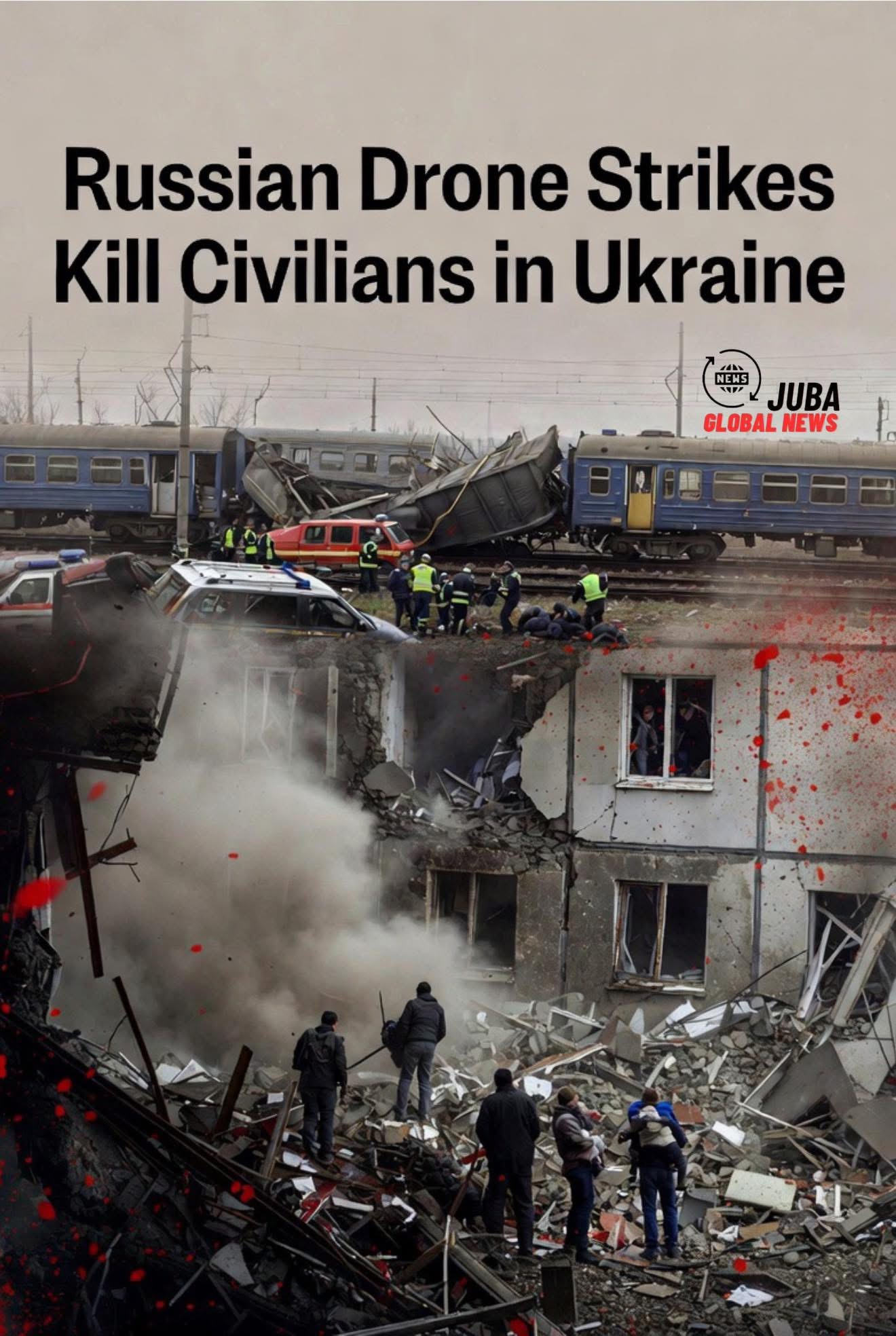
A Russian Shahed-type drone struck a residential area in the southern Ukrainian city of Zaporizhzhia early on January 29, 2026, killing at least three people and injuring more than a dozen, local authorities reported. The attack came just hours after another deadly Russian drone strike targeted a passenger train in the Dnipropetrovsk region, killing at least seven civilians and injuring over 30, in one of the most serious attacks on civilian rail infrastructure in recent months.
The twin incidents underscore the relentless intensity of Russian aerial bombardment against civilian targets deep inside Ukrainian-controlled territory, even as frontline fighting remains largely static in the east.
The Zaporizhzhia Residential Strike
According to Zaporizhzhia regional governor Ivan Fedorov, the drone hit a multi-story apartment building in the city’s central district shortly after 4:00 a.m. local time. Rescue teams worked through the night and into the morning pulling survivors from the rubble.
“Three people are confirmed dead, including one child,” Fedorov wrote on Telegram. “Fifteen others were injured, several critically. The building is severely damaged—windows shattered across several floors, roofs collapsed in places. People are still trapped.”
Emergency services deployed sniffer dogs and heavy machinery to search for survivors. Videos circulating on social media showed thick black smoke rising from the building and firefighters battling flames amid shattered glass and twisted metal.
Zaporizhzhia, located about 50 km from the front line and close to the occupied Zaporizhzhia Nuclear Power Plant, has been repeatedly targeted by Russian drones and missiles since the full-scale invasion began in 2022. The latest strike followed a pattern of nighttime attacks designed to maximize terror and disrupt civilian life.
Deadly Attack on Passenger Train
Earlier on January 28 evening, a Russian drone struck a passenger train traveling between Dnipro and Zaporizhzhia near the town of Apostolove in the Dnipropetrovsk region. The strike hit one of the rear carriages, causing a fire and derailing several cars.
Ukraine’s national railway company Ukrzaliznytsia confirmed that seven passengers were killed and 31 injured, including children. Eyewitnesses described scenes of panic as passengers smashed windows to escape the burning carriage.
“People were screaming, trying to get out. The carriage filled with smoke very quickly,” one survivor told Suspilne, Ukraine’s public broadcaster. “Some were trapped under seats that had collapsed.”
Rescue operations lasted several hours, with firefighters and medics working under the threat of follow-up attacks. The train was carrying mostly civilians evacuating from frontline areas or traveling for family reasons.
Ukrainian President Volodymyr Zelenskyy condemned both attacks as “deliberate terrorism against civilians.”
“Russia continues to target ordinary people—mothers, children, elderly passengers on a train, families sleeping in their homes,” Zelenskyy said in his nightly address. “This is not war. This is genocide.”
Broader Context: Escalating Aerial Campaign
The attacks are part of a sharp increase in Russian long-range drone and missile strikes on civilian infrastructure in late January 2026. Ukrainian air force officials reported that Russia launched more than 140 Shahed drones and several cruise missiles over the past week, with roughly 70% intercepted by Ukrainian air defenses.
Military analysts note that Russia has significantly increased production of Iranian-designed Shahed-136/131 drones, allowing for near-nightly barrages even as its stock of precision-guided missiles remains constrained.
In Zaporizhzhia and Dnipropetrovsk regions, the strikes appear aimed at demoralizing the population, disrupting logistics, and pressuring Ukrainian authorities to divert air-defense systems away from the eastern front.
Ukraine’s air defenses have been stretched thin, with Western partners struggling to keep pace with Kyiv’s requests for additional Patriot, IRIS-T, and NASAMS batteries. The European Union and United States announced new aid packages in mid-January, but delivery timelines remain slow.
International Reaction and Humanitarian Impact
The United Nations condemned the attacks on civilian targets, calling them potential war crimes. UN humanitarian coordinator in Ukraine Denise Brown stated: “Striking passenger trains and residential buildings is unacceptable and violates international humanitarian law.”
Several European capitals echoed the condemnation. UK Foreign Secretary David Lammy called the train attack “barbaric,” while French President Emmanuel Macron said France would accelerate delivery of Mirage 2000 jets and SCALP missiles to Ukraine.
On the ground, the human toll continues to mount. Zaporizhzhia’s hospitals reported treating dozens of shrapnel and burn victims from the apartment strike, while Apostolove’s local clinics were overwhelmed by the train survivors.
Power outages, already frequent due to previous strikes on energy infrastructure, worsened in both regions after the attacks damaged nearby substations.
Looking Ahead
Ukrainian officials have warned that Russia may intensify attacks on civilian infrastructure in the coming weeks, especially as the anniversary of the full-scale invasion approaches on February 24. Military intelligence reports suggest Russia is preparing another large-scale drone and missile barrage.
Ukraine continues to call for stronger Western action, including the removal of restrictions on long-range strikes into Russian territory and faster delivery of air-defense systems.
As the war enters its fourth year, incidents like the Zaporizhzhia residential strike and the Apostolove train attack serve as grim reminders that no part of Ukraine remains truly safe from Russian aerial terror.
Juba Global News Network will continue to monitor the situation in southern and central Ukraine. For the latest updates, visit JubaGlobal.com.
