Russia Launches Devastating Assault on Kyiv Hours Before Crucial Zelenskyy-Trump Peace Talks
By: Juba Global News Network | JubaGlobal.com December 28, 2025 In a brazen display of military aggression timed to coincide with high-stakes diplomatic ef
By: Juba Global News Network | JubaGlobal.com
December 28, 2025
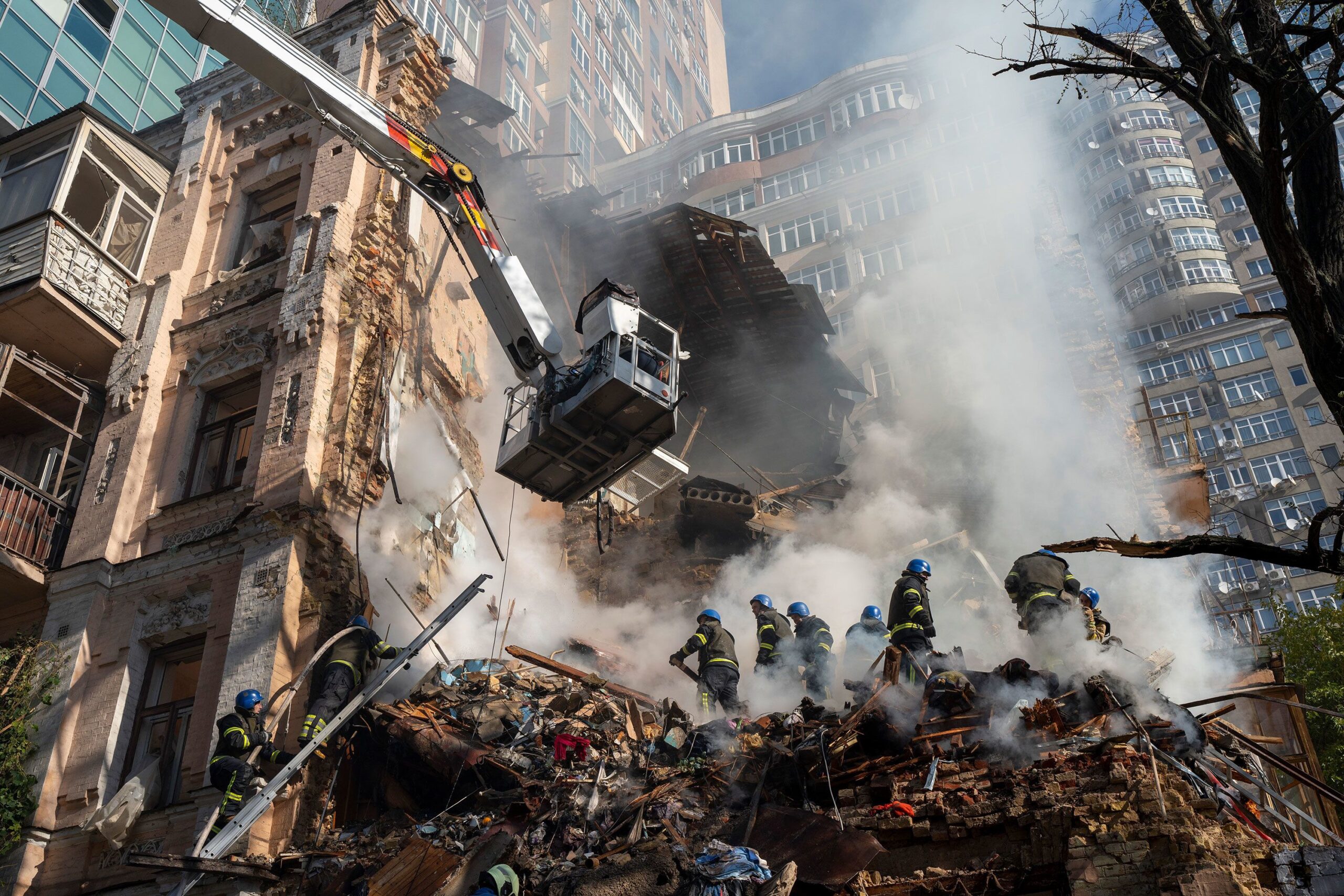
In a brazen display of military aggression timed to coincide with high-stakes diplomatic efforts, Russian forces unleashed one of the most intense aerial barrages on Ukraine’s capital, Kyiv, in recent months on December 27, 2025. The overnight attack, involving approximately 500 drones and 40 missiles—including hypersonic Kinzhal missiles—targeted energy infrastructure and civilian areas, killing at least two people and injuring dozens more. Ukrainian President Volodymyr Zelenskyy described the onslaught as Russia’s direct “answer” to ongoing peace initiatives, underscoring Moscow’s apparent reluctance to engage in genuine negotiations.
The assault began in the early hours of Saturday morning and lasted nearly 10 hours, with explosions echoing across the city as air defenses scrambled to intercept the incoming threats. According to Ukraine’s air force, Russia deployed a mix of Shahed drones and various missiles, primarily aiming at power facilities supporting both civilian life and military operations. Fires erupted in residential buildings, a car repair shop, and even a care home for the elderly, forcing evacuations amid freezing temperatures around 0°C (32°F).
Casualties included a 71-year-old man in Kyiv’s Dniprovskyi district and another individual in the nearby town of Bila Tserka. At least 32 people were wounded in the capital alone, including two children, with reports of up to 46 injuries across the broader Kyiv region. Power outages affected over a million homes, leaving a third to 40% of residential buildings without heating or electricity, according to energy company DTEK and Ukrainian officials. Foreign Minister Andrii Sybiha noted that one-third of the capital was plunged into darkness and cold.
Zelenskyy, speaking to reporters via audio while en route to the United States, condemned the attack as proof that Russian President Vladimir Putin is a “man of war” uninterested in peace. “This attack is Russia’s answer on our peace efforts,” he stated, highlighting the contrast between Ukraine’s willingness to negotiate and Moscow’s escalation. “Russian representatives hold long talks, in reality the ‘Kinzhal’ and ‘Shaheds’ speak for them.” He called for stronger international pressure, including more air defense systems, to counter such “barbaric” actions during the holiday season.
The timing of the strike was no coincidence. It occurred just one day before Zelenskyy’s scheduled meeting with U.S. President Donald Trump in Florida, aimed at finalizing a revised 20-point peace framework to end the nearly four-year war. This plan, evolved from an earlier 28-point U.S.-backed proposal criticized for favoring Russia, reportedly addresses key issues such as security guarantees for Ukraine—modeled potentially on NATO’s Article 5 mutual defense clause—territorial arrangements in the contested Donbas region, and control of the Russian-occupied Zaporizhzhia nuclear power plant.
Zelenskyy has indicated the draft is about 90% complete, with Ukraine open to compromises like establishing a demilitarized economic zone in parts of Donbas still under Kyiv’s control, provided Russia reciprocates by withdrawing from equivalent territories. However, major sticking points remain: Moscow demands full control of Donetsk and Luhansk provinces, while Kyiv insists on halting fighting along current lines.
En route to Florida, Zelenskyy stopped in Canada for talks with Prime Minister Mark Carney, who announced an additional $2.5 billion in economic aid and condemned the “barbaric” Kyiv attack. Carney emphasized that lasting peace “requires a willing Russia.” Zelenskyy also coordinated with European leaders, including calls involving German Chancellor Friedrich Merz, French President Emmanuel Macron, and others, to align positions ahead of the Trump summit.
International reactions were swift and unified in support of Ukraine. European Commission President Ursula von der Leyen reaffirmed the EU’s commitment to a “just and lasting peace” preserving Ukraine’s sovereignty. Polish Prime Minister Donald Tusk decried the strikes on residential areas as contrary to Trump’s expectations for compromise. The attacks even prompted Poland to scramble fighter jets and temporarily close two southeastern airports due to airspace concerns.
From the Kremlin, responses were defiant. Putin, in military fatigues during a command post visit, claimed Russia would achieve its objectives by force if Ukraine showed no interest in peace. Russian officials reported battlefield gains, including captures in Donetsk and Zaporizhzhia regions, though these could not be independently verified. Deputy Foreign Minister Sergei Ryabkov expressed cautious optimism about a “turning point” but accused Kyiv of differing from U.S. proposals.
President Trump, in comments to media, positioned himself as the final arbiter: “He [Zelenskyy] doesn’t have anything until I approve it.” He anticipated a productive meeting but has previously pushed for swift resolutions, including potential territorial concessions.
As Zelenskyy arrives in Florida for today’s talks—potentially at Trump’s Mar-a-Lago residence—the world watches closely. This meeting represents a pivotal moment in U.S.-mediated diplomacy, amid Russia’s relentless offensive and Ukraine’s pleas for robust security assurances. Analysts warn that without ironclad guarantees and unified Western support, any deal risks collapsing, prolonging a conflict that has already claimed tens of thousands of lives and displaced millions.
The Kyiv barrage serves as a stark reminder of the human cost: shattered homes, blackouts in winter, and families mourning amid rubble. As diplomatic wheels turn in sunny Florida, the echoes of explosions in Kyiv underscore the urgency for a resolution that prioritizes justice, sovereignty, and enduring peace.
This article draws on reports from multiple international sources, including Reuters, AP, The New York Times, BBC, and Al Jazeera, to provide a balanced overview of the ongoing developments.