

Privacy Under Siege: Kenya’s High Court Halts Landmark US Health Deal Amid Data Protection Fears
By Juba Global News Network | December 11, 2025 The usually busy corridors of Nairobi’s Milimani Law Courts were abuzz on December 10, 2025, after a
By Juba Global News Network | December 11, 2025
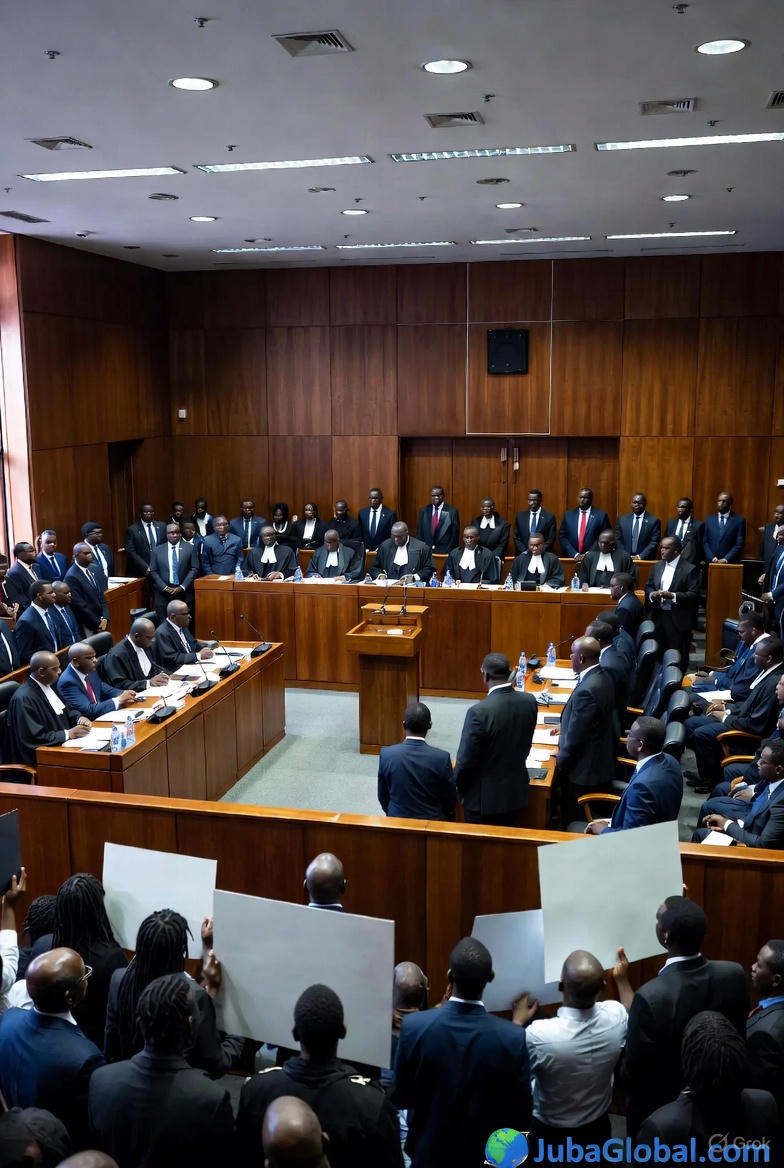
The usually busy corridors of Nairobi’s Milimani Law Courts were abuzz on December 10, 2025, after a High Court ruling sent shockwaves through what President William Ruto had touted as a cornerstone diplomatic win. Justice Bahati Mwamuye, presiding over the case, handed down conservatory orders that put the brakes on the Kenya-US Health Cooperation Framework—a whopping $1.6 billion agreement inked just six days before in Washington, D.C. This decision came on the heels of petitions by the Consumers Federation of Kenya (COFEK) and Busia Senator Okiya Omtatah, each raising red flags about the agreement’s provisions around sharing sensitive medical and epidemiological data. At stake? The privacy of millions of Kenyans, who now face possible exposure to irreversible privacy breaches, stigma, and maybe even outright exploitation.
What started off as a much-lauded partnership meant to transform Kenya’s health system—tackling everything from HIV/AIDS and malaria to maternal health and disease monitoring—has quickly become a lightning rod for fierce debates. Issues of sovereignty, digital rights, and ethical boundaries in international aid are all swirling around in the age of big data. With the court temporarily banning any “transfer, sharing, or dissemination” of personal health data until at least a full hearing set for February 12, 2026, there’s more than just funding on hold. The move seems to mark a broader shift across Africa, as the continent grows more wary of so-called data colonialism. Civil society is mobilizing, neighbors are watching—so the burning question remains: how far is Kenya willing to go for global partnerships, and who really keeps its most personal secrets safe?
The Deal That Promised Hope but Sparked Controversy
On December 4, 2025, Ruto and US Secretary of State Marco Rubio signed off on a Health Cooperation Framework that, on the surface, looked like a game changer. Kenya, the first African country to try out a direct government-to-government model under the Trump administration’s revamped foreign aid structure, found itself at center stage. The package—worth up to $2.5 billion over five years, with $1.6 billion coming from the US and Kenya contributing $850 million in increasing annual payments—was hailed as a “landmark” leap toward universal health coverage. Supporters painted a bright picture: smoother supply chains for vital drugs, lots of training for epidemiologists and lab techs, robust outbreak surveillance, and better insurance for the most vulnerable. After having helped broker peace talks between the DRC and Rwanda at the White House, Ruto called it a “major boost” for Kenya’s health plans, promising a focus on recruiting local talent and confronting emerging problems like antimicrobial resistance. Rubio, clearly upbeat as well, framed it as a template for “efficient, results-driven” aid that cuts out the usual NGO middlemen.
But beneath all the praise, certain clauses around data sharing stirred up a storm. An appendix to the memorandum of understanding described joint access to Kenya’s health databases—covering anonymized HIV records, TB treatments, vaccine histories, and even genomic samples from pathogen tracking efforts. Allegedly, an earlier version of the agreement would’ve given the US “unfettered access,” though later drafts promised to stick to Kenyan law. Critics, though, said the wording was still “vague,” maybe even allowing indefinite retention of Kenyan data after the deal expired—a digital handover of Kenya’s biological assets, some argued.
It didn’t help that the whole deal got signed behind closed doors, with no parliamentary oversight or public input. By sidestepping Article 10 of Kenya’s Constitution, which demands transparency and public participation in governance, officials left themselves open to criticism. COFEK’s petition—filed under HCCHRPET/E809/2025—argued the agreement flew in the face of the Data Protection Act (2019), the Health Act (2017), the Digital Health Act, and brand-new 2025 regulations on sharing health data. These laws were meant to keep sensitive info away from foreign interests. Omtatah’s lawsuit doubled down, taking aim at the financial aspect: with Kenya set to pay KSh 10 billion in 2026 (ramping up to KSh 50 billion by 2030), he argued the commitment represented an unconstitutional burden on public funds, especially with no Senate approval.
The Legal Showdown: Everything on Pause
Justice Mwamuye didn’t waste time. Her order, detailed and direct, granted COFEK’s motion and froze any part of the deal that involved the “transfer, sharing or dissemination of medical, epidemiological or sensitive personal health data.” With those conservatory measures taking effect immediately, the State Law Office, the Senate, and all other respondents are restrained from putting those provisions into action—at least until the court hears both sides. COFEK has until December 17 to serve all documents, and the government gets until January 16, 2026, to respond.
The judge’s logic was straightforward: if data like genetic information or outbreak maps are exported, the damage can’t be undone—they can’t be “recalled or restricted” once overseas. Petitioners pointed to grim historical examples, like the Tuskegee syphilis experiments, to show the very real risks of stigma and misuse for marginalized groups (those living with HIV, for instance). Mwamuye called the issues “weighty,” stressing the need to protect privacy and health rights enshrined in Articles 14, 31, and 45 of the Constitution by maintaining the status quo.
The fallout was immediate. Data-driven elements of the deal are now frozen, delaying emergency drug orders tied to surveillance programs and stalling the hiring of new staff to monitor disease outbreaks. This could make it harder for Kenya to react to urgent threats—think mpox or cholera spikes. Some parts of the deal, like infrastructure grants, might still go forward, but experts are already warning about a “chilling effect” that could damage bilateral trust.
Echoes of Distrust: Public Outrage and Regional Ripples
Kenyans wasted no time voicing their outrage. Social media lit up with hashtags like #ProtectOurData and #NoToDataColonialism. Memes spread fast, some accusing the government of “selling our DNA for dollars.” “This isn’t aid; it’s extraction,” tweeted activist Boniface Mwangi, echoing COFEK’s demand for “public, auditable” decision-making with meaningful consumer oversight. Hopewell Chin’ono, a journalist from Zimbabwe, called the deal a “treacherous” model for the continent, warning how genomic data might feed future biotech dominance.
These concerns aren’t just theoretical. Kenya’s health data, boosted by digital systems like Afya House, is a goldmine for AI-powered drug discovery and new vaccine development. Memories of past betrayals linger—during COVID-19, when sharing Omicron data led to swift travel bans for South Africa and Botswana, or when Ebola samples from West Africa disappeared into foreign labs without fair compensation or access. COFEK’s Stephen Mutoro cautioned that foreign control over cloud storage and drugs could undermine Kenya’s “strategic health-security infrastructure.”
Regionally, the court’s move has people watching closely. Rwanda and Uganda have signed similar deals, but now there’s growing pressure for scrutiny. The African Union’s goal to produce 60% of its vaccines locally by 2040 could be at risk, as fragmented deals threaten to make Africa a perpetual exporter of biological raw materials. Activists at the Health Global Access Project and elsewhere are calling for continent-wide rules on access to pathogens and how benefits are shared.
Government Pushback and What Comes Next
The government’s tone, not surprisingly, has been both defiant and oddly reassuring. Ruto, in an address on December 10, insisted the Attorney General had “combed through” the MOU with a “tooth comb,” guaranteeing Kenyan law would always take precedence on data sovereignty. “Our data remains ours,” he promised, saying changes would be made if necessary, even as he dismissed the lawsuits as “politically motivated.” The US State Department has kept quiet so far, but Rubio is under growing pressure to clarify what protections are actually in place—especially as he tries to get more African countries to sign on. Stepping out of court, Omtatah called the ruling a “victory for sovereignty,” pointing to what he described as a “budget-straining” agreement pushed through without the Senate’s say. The win for COFEK highlights Kenya’s judiciary as a kind of safeguard against unchecked executive power, but honestly, the journey forward won’t be easy. With the clock ticking—petitions needing to be in by mid-December and responses due by mid-January—the February hearing looms large. It’s possible this session could not only decide the fate of this specific deal, but also set the standard for future US-Africa health partnerships.
A Crossroads for Aid and Autonomy
This ongoing story really shows how global health partnerships can be a double-edged sword. Sure, the resources are essential, but they almost always come with conditions that might end up tying a country’s hands for years. For Kenya, the pause offers a brief window to shore up its data governance—maybe that’s through stronger local servers, required audits, or adopting African Union-aligned guidelines. At the same time, though, any holdup can put lives on the line; if surveillance funding dries up, disease outbreaks could get out of control and reverse progress on universal health coverage.
The broader message for Africa couldn’t be clearer. With biotechnology advancing at breakneck speed, the continent’s got to double down on its own sovereignty: putting real, enforceable policies in place for things like data reciprocity, IP sharing, and technology transfer. Otherwise, what’s called “aid” could become another form of bondage, and crucial health data—potentially the treasure trove that leads to new cures—could just end up locked away overseas.
In Nairobi, both in the courts and out on the streets, you can sense Kenyans pushing to own their story. The outcome of the US-Kenya pact is still up in the air, but perhaps its most lasting impact will be this growing, pan-African demand: Health aid should heal people, not just mine their data.
