North Korea’s Bold Leap: Unveiling Progress on Nuclear-Powered Submarine Amid Missile Ambitions
December 26, 2025 – In a dramatic escalation of its naval nuclear capabilities, North Korea’s state media released photographs showing significant advancem

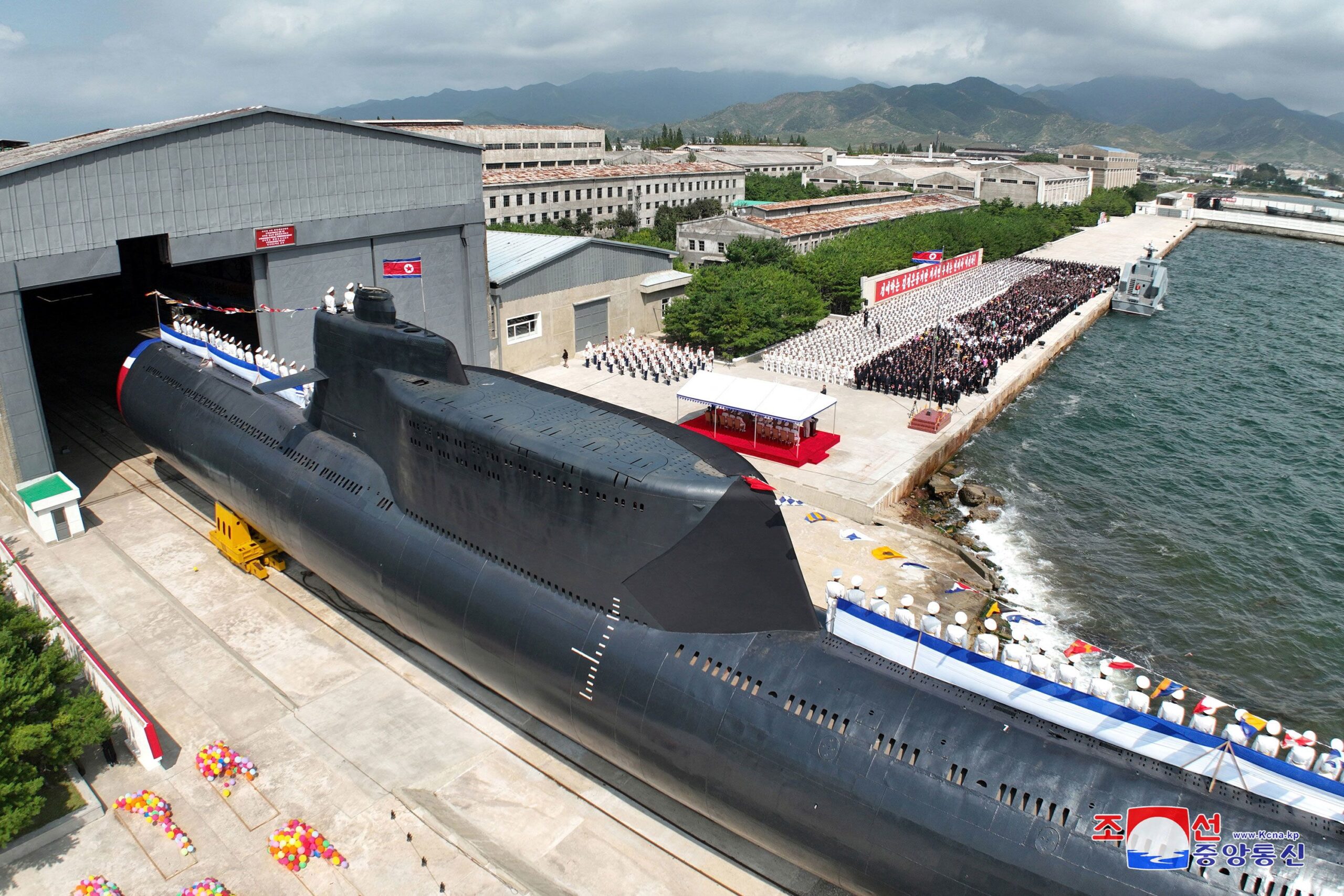
December 26, 2025 – In a dramatic escalation of its naval nuclear capabilities, North Korea’s state media released photographs showing significant advancements in the construction of its first nuclear-powered submarine. Leader Kim Jong Un personally inspected the vessel, described as an 8,700-ton “nuclear-powered strategic guided missile submarine,” while condemning South Korea’s parallel efforts to acquire similar technology. This revelation, coupled with signals of sustained missile development over the next five years, underscores Pyongyang’s unrelenting push to bolster its nuclear deterrent in an increasingly tense regional security environment.
The Submarine Reveal: A Largely Completed Hull
On December 25, North Korea’s Korean Central News Agency (KCNA) published images of Kim Jong Un touring an indoor shipyard facility, where a massive, burgundy-painted submarine hull dominated the scene. The vessel, coated in anti-corrosion paint and surrounded by officials—including Kim’s daughter Ju Ae, widely seen as a potential successor—appeared nearly complete in terms of its outer structure.
This marks the first full view of the submarine since partial images were released in March 2025. KCNA specified the displacement as 8,700 tons, comparable to U.S. Virginia-class attack submarines. Experts note that the hull design suggests provisions for vertical launch tubes capable of firing ballistic missiles, cruise missiles, and torpedoes, potentially including nuclear-armed variants.

Kim described the project as an “epoch-making” milestone in modernizing and nuclear-arming the North Korean navy. He framed its completion as essential for countering perceived threats from “enemy forces,” directly criticizing South Korea’s U.S.-backed plans to develop nuclear-powered submarines as an “offensive act” that infringes on North Korea’s security and sovereignty.
Analysts believe the submarine could be ready for sea trials within months to two years. South Korean experts, including former submarine officer Moon Keun-sik, suggest that the visible progress indicates most internal equipment, possibly including a nuclear reactor, may already be installed.
Roots in Long-Term Ambition
Kim Jong Un first publicly outlined the pursuit of a nuclear-powered submarine during a Workers’ Party congress in January 2021, listing it among five priority advanced weapons systems. Unlike North Korea’s existing diesel-electric submarines—which include a smaller “tactical nuclear attack” sub launched in 2023—this new vessel would enable extended underwater operations without surfacing, dramatically enhancing stealth and second-strike nuclear capabilities.
A nuclear-powered ballistic missile submarine (SSBN) would allow Pyongyang to maintain a more credible sea-based deterrent, complicating detection and preemptive strikes by adversaries. This aligns with North Korea’s doctrine of asymmetric warfare, leveraging nuclear threats to offset conventional military disparities with the U.S. and South Korea.

Regional Arms Race Intensifies
The timing of the reveal appears deliberate, coming amid heightened tensions over South Korea’s submarine ambitions. In October 2025, U.S. President Donald Trump signaled support for Seoul to pursue nuclear propulsion technology, overturning long-standing restrictions. South Korea aims to counter North Korean threats and Chinese naval expansion in the region.
Kim’s rhetoric portrays this as provocative, accelerating Pyongyang’s own program. Experts warn of a burgeoning underwater arms race on the Korean Peninsula, with both sides seeking nuclear-powered subs that could patrol indefinitely and launch undetectable missile strikes.
Parallel Push: Missile Development for the Next Five Years
In a related development reported on December 26, Kim visited major munitions factories, emphasizing the “paramount importance” of missile and shell production in bolstering North Korea’s “war deterrent.” He ratified modernization plans for these facilities to be presented at an upcoming Workers’ Party congress in early 2026, which will outline the country’s five-year development strategy.
This signals uninterrupted investment in missile technology through at least 2030, including potential advancements in intercontinental ballistic missiles (ICBMs), submarine-launched ballistic missiles (SLBMs), and hypersonic systems. The announcement follows recent tests, including long-range surface-to-air missiles observed by Kim.
Challenges and Skepticism
Despite the bold display, questions persist about North Korea’s technical prowess. Building a reliable naval nuclear reactor requires miniaturized, high-enriched uranium technology and advanced engineering—areas where sanctions have historically impeded progress. Some analysts speculate assistance from Russia or China, though no evidence has been confirmed.
International observers remain cautious: while the hull appears advanced, operational deployment with nuclear armament could take years, and reliability issues may arise.
Geopolitical Implications
This dual advancement—submarine progress and sustained missile focus—reinforces North Korea’s rejection of denuclearization talks, which collapsed in 2019. As ties with Russia deepen (including alleged arms supplies for Ukraine), Pyongyang’s capabilities could further destabilize Northeast Asia.
For the U.S., South Korea, and Japan, a functional North Korean SSBN would complicate missile defense and deterrence strategies, potentially prompting enhanced anti-submarine warfare investments and closer trilateral cooperation.
As 2025 ends, Kim Jong Un’s latest moves signal no retreat from nuclear ambitions. The world watches warily as North Korea edges closer to a transformative naval nuclear force, with missile enhancements promised for years to come.