

Nigeria’s President Tinubu Embarks on Historic UK State Visit: Strengthening Ties Amid Domestic Challenges
By Juba Global News Network | JubaGlobal.com March 19, 2026 In a landmark moment for Nigeria-UK relations, President Bola Ahmed Tinubu, accompanied by Firs
By Juba Global News Network | JubaGlobal.com
March 19, 2026
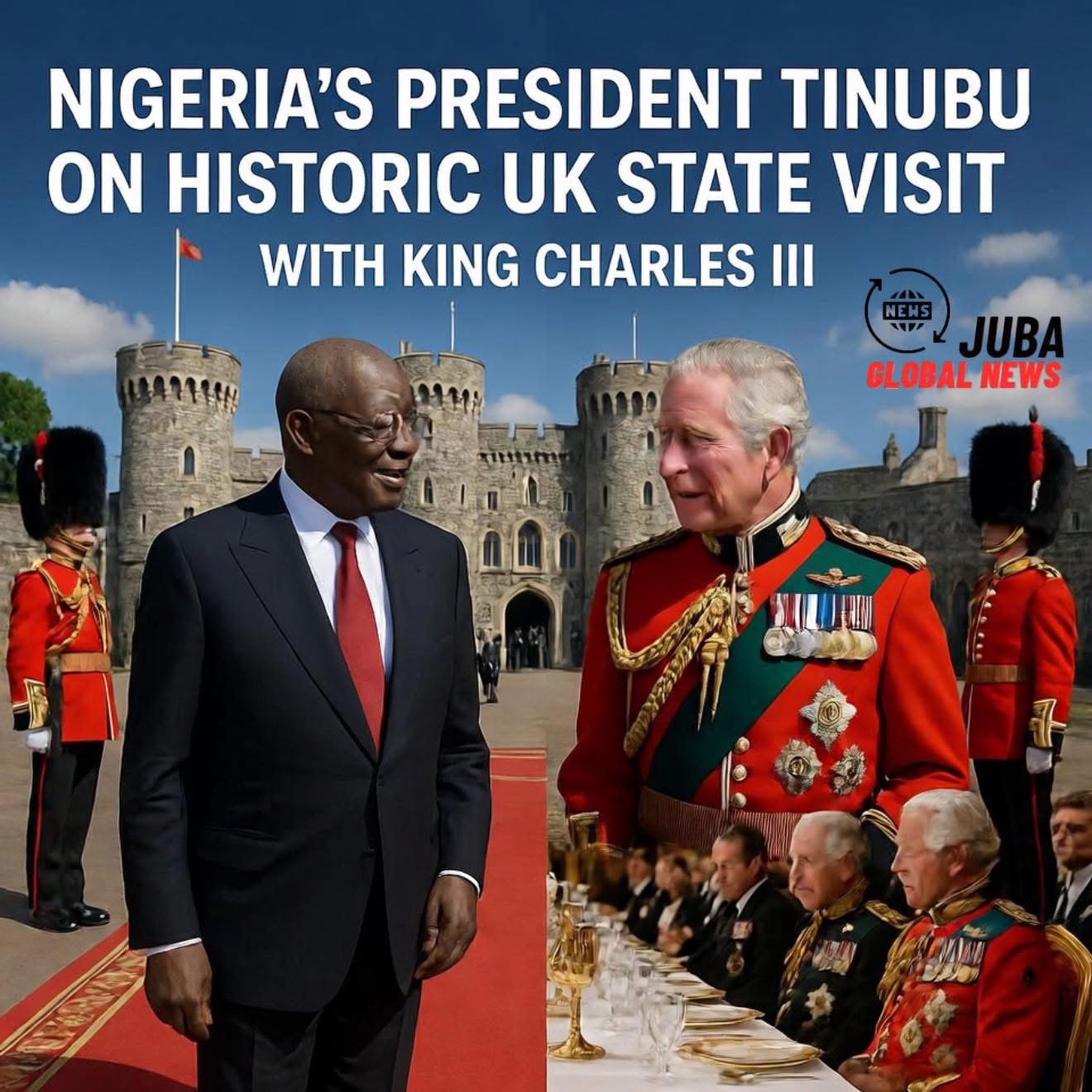
In a landmark moment for Nigeria-UK relations, President Bola Ahmed Tinubu, accompanied by First Lady Senator Oluremi Tinubu, concluded a two-day state visit to the United Kingdom on March 19, 2026. Hosted by Their Majesties King Charles III and Queen Camilla at Windsor Castle, this marks the first state visit by a Nigerian leader to the UK in 37 years—the last being General Ibrahim Babangida’s in 1989—and the first under King Charles’s reign. It also represents the first time a Nigerian president has been hosted at the historic Windsor Castle for such an occasion.
The visit, spanning March 18-19, was steeped in pomp and ceremony, underscoring the enduring “living bridge” between the two nations, as King Charles described it during a glittering state banquet in St George’s Hall.
A Warm Ceremonial Welcome
The official program commenced on March 18 under bright spring sunshine. President Tinubu and the First Lady received a full ceremonial welcome on the Royal Dais at Datchet Road, Windsor, complete with an honor guard, military procession, and carriage elements. King Charles III personally greeted the Nigerian delegation, highlighting the deep historical, cultural, and people-to-people ties.
The King, who as Prince of Wales visited Nigeria four times (in 1990, 1999, 2006, and 2018), spoke warmly of the Nigerian diaspora in the UK, referring to it as a vibrant “living bridge” that enriches both societies. He praised Nigeria’s contributions to global affairs and expressed optimism for enhanced collaboration in trade, investment, security, education, climate action, and technological innovation.
President Tinubu reciprocated the sentiments, emphasizing shared democratic values and the potential for renewed economic partnerships. The couple also viewed a special exhibition from the Royal Collection featuring items related to Nigeria, adding a cultural dimension to the diplomatic engagements.
The evening culminated in a spectacular state banquet attended by around 160 guests, including the Prince and Princess of Wales. The event featured Yoruba greetings from the King and toasts that celebrated bilateral achievements while looking forward to future cooperation.
On March 19, President Tinubu held bilateral discussions with British Prime Minister Keir Starmer at 10 Downing Street. Senior officials from both sides expanded talks on key sectors, with expectations of announcements on trade deals, investment commitments, and security cooperation.
Diplomatic Significance and Opportunities
This state visit arrives at a pivotal time for both countries. For the UK, it reinforces post-Brexit outreach to Commonwealth partners and Africa’s largest economy. Nigeria, Africa’s most populous nation and a major oil producer, seeks diversified partnerships amid economic reforms, including efforts to attract foreign direct investment and stabilize its currency.
Discussions focused on:
- Trade and Investment: Boosting bilateral trade, which has remained robust despite global challenges.
- Security Cooperation: The UK has long supported Nigeria’s counter-terrorism efforts through training, intelligence sharing, and capacity building—vital amid ongoing insurgencies in the northeast and banditry elsewhere.
- Education and Diaspora: Leveraging the large Nigerian community in the UK for knowledge exchange and remittances.
- Climate and Innovation: Aligning on sustainable development goals and technological partnerships.
The visit is seen as a diplomatic win for Tinubu’s administration, projecting Nigeria as a stable partner on the global stage.
Domestic Criticisms and Security Backdrop
Despite the fanfare, the trip drew sharp domestic criticism in Nigeria. It coincided with devastating suicide bombings in Maiduguri, Borno State, killing dozens and injuring scores—part of a surge in insecurity that has plagued the country.
Opposition figures, including ADC chieftain Kenneth Okonkwo, accused the president of prioritizing “red carpets and photo-ops” over addressing national crises. Clerics and commentators condemned the timing, calling it “criminal negligence” and urging cancellation to focus on victims and security command. Critics highlighted Tinubu’s frequent foreign travels amid rising poverty, hunger, and insecurity, questioning whether high-profile diplomacy translates to tangible domestic benefits.
The government dismissed much of the backlash as misinformation or mischief, insisting that international engagements are essential for attracting investment and support to tackle Nigeria’s challenges.
Some analysts noted that while the visit may yield investment pledges, structural issues—rampant insecurity, weak public services, and economic pressures—require sustained domestic action beyond diplomatic wins.
Looking Ahead
As President Tinubu returns to Abuja, the state visit stands as a historic milestone in Nigeria-UK relations. It reaffirms longstanding ties while opening doors for deeper collaboration in an uncertain global landscape.
Whether this pomp translates into concrete gains for ordinary Nigerians—amid persistent security threats and economic hardships—will be the true measure of its success.
Juba Global News Network will continue tracking follow-ups, including any announced deals or responses to domestic concerns arising from this landmark engagement.
By Juba Global News Network | JubaGlobal.com
March 19, 2026
