

Museveni Secures Seventh Term in Uganda’s 2026 Election Amid Fraud Allegations and Protests
By Juba Global News Network | JubaGlobal.com Juba, South Sudan – January 17, 2026 – In a development that has solidified his status as one of Africa’s long
By Juba Global News Network | JubaGlobal.com
Juba, South Sudan – January 17, 2026 – In a development that has solidified his status as one of Africa’s longest-serving leaders, Ugandan President Yoweri Kaguta Museveni has been declared the winner of the 2026 presidential election, extending his rule into a seventh term and pushing his total time in power beyond four decades. The Electoral Commission announced the results on Saturday, stating that Museveni, representing the National Resistance Movement (NRM), garnered 71.65% of the vote, equivalent to approximately 7.94 million ballots. His main rival, Robert Kyagulanyi Ssentamu, popularly known as Bobi Wine of the National Unity Platform (NUP), secured 24.72%, or about 2.74 million votes. 24 This victory comes amid widespread allegations of electoral fraud, voter suppression, and state-sponsored violence, casting a shadow over the democratic process in the East African nation.
Uganda’s general elections, held on January 15, 2026, were marked by high tensions, an internet blackout imposed by the government, and reports of opposition crackdowns. With a voter turnout of around 52.5%, the polls saw 11.09 million valid votes cast out of 21.65 million registered voters. 27 Electoral Commission Chairperson Simon Byabakama declared Museveni the winner in a televised address from Kampala, emphasizing that the incumbent had surpassed the 50% threshold required for a first-round victory. “Having obtained the highest number of votes in the election, and with votes cast in his favor exceeding 50 percent of the valid votes, the commission hereby declares the elected President: Tibuhaburwa Kaguta Museveni,” Byabakama stated. 24
A Legacy of Longevity: Museveni’s Path to Power
Yoweri Museveni, now 81 years old, first seized power in 1986 after leading a guerrilla rebellion that ousted President Milton Obote. Initially hailed as a liberator who brought stability to a country ravaged by civil war and dictatorship under Idi Amin, Museveni promised democratic reforms and economic revival. Over the years, his administration has overseen significant growth, with Uganda’s GDP multiplying tenfold since the 1980s, driven by sectors like agriculture, oil exploration, and infrastructure development. 33 Supporters credit him with modernizing the nation, including the discovery of oil reserves in the Albertine Graben, which Museveni has touted as a game-changer for Uganda’s economy.
However, critics argue that Museveni’s rule has devolved into authoritarianism. Constitutional amendments in 2005 removed presidential term limits, and in 2017, age restrictions were lifted to allow him to run indefinitely. This 2026 election marks his seventh term, bringing his total tenure to at least 45 years if completed—potentially the longest in the region’s history. 18 Museveni’s campaigns have often emphasized continuity, security, and economic progress, with slogans like “Protecting the Gains” resonating among rural voters and NRM loyalists.
The election buildup was fraught with controversy. Museveni’s son, General Muhoozi Kainerugaba, has been increasingly visible in politics, fueling speculation about a dynastic succession. Opposition figures, including Bobi Wine, faced arrests, harassment, and restrictions on campaigning. The government justified an internet shutdown as necessary to curb “misinformation,” but observers decried it as a tool to stifle dissent. 26
The Opposition’s Defiance: Bobi Wine Rejects Results
Bobi Wine, the 43-year-old musician-turned-politician, emerged as Museveni’s primary challenger, representing a generational shift. Drawing massive crowds, particularly among urban youth frustrated by unemployment, corruption, and inequality, Wine’s campaign promised radical change under the banner of “A New Uganda Now.” His National Unity Platform gained traction in Buganda and other opposition strongholds, but preliminary results showed him trailing far behind.
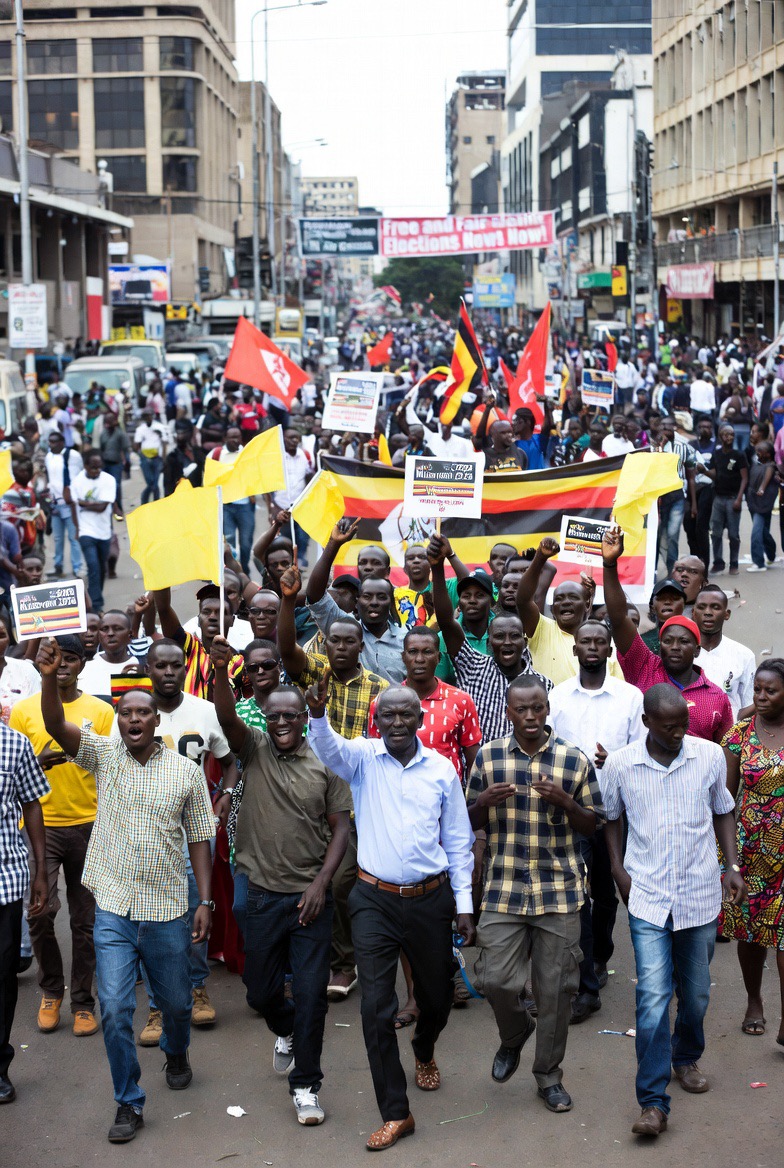
Immediately after the announcement, Wine rejected the results as “fake” and accused the regime of ballot stuffing, abductions of polling agents, and biometric voter verification failures in opposition areas. 23 In a statement from an undisclosed location—after reports of a military raid on his home—Wine urged Ugandans to “peacefully protest until the rightful results are announced.” 31 Protests erupted in Kampala and other cities, with at least seven demonstrators killed in clashes with security forces between January 15 and 16. 27
Wine’s supporters on social media platforms like X (formerly Twitter) echoed his sentiments, with posts decrying the election as rigged. One user lamented, “Just like the rigged elections organized by Paul Biya of Cameroon in October 2025, the Museveni regime in Uganda today January 17th 2026, wins another election with the election commission unable to prove with data voting station by voting station.” 2 Others predicted unrest, drawing parallels to past African leaders like Robert Mugabe.
Smaller opposition candidates, such as Nandala Mafabi of the Forum for Democratic Change (FDC) with 1.88% and Mugisha Muntu of the Alliance for National Transformation (ANT) with 0.53%, trailed significantly. 27 Some opposition voices, like ANT supporters, expressed skepticism about the electoral process itself, arguing that true change requires mass mobilization beyond the ballot box.
Celebrations and Divisions: Reactions on the Ground
In contrast, Museveni’s victory sparked jubilation among NRM supporters. Crowds gathered in downtown Kampala, waving yellow flags and chanting in celebration as provisional results showed Museveni leading with over 76% in early counts. 46 Posts on X captured the festive mood: “Some Ugandans have started holding celebrations in down town Kampala after the Electro commission released the provisional results where their favourite candidate President Museveni is leading with 76%. Congratulations sevo😎💛” 48
Yet, the divide is stark. Urban areas, where youth unemployment hovers around 70%, largely backed Wine, while rural voters, benefiting from government programs like Operation Wealth Creation, remained loyal to Museveni. Analysts note that this election highlights Uganda’s generational and urban-rural rift, with young people increasingly viewing Museveni as a relic of the past.
From a regional perspective, South Sudan—Uganda’s northern neighbor—watches closely. Museveni has been a key player in South Sudan’s peace processes, including the 2018 Revitalized Agreement. His continued leadership could stabilize bilateral relations, particularly in trade and refugee management, but ongoing instability in Uganda risks spillover effects.
International Scrutiny and Implications
The international community has expressed concern over the election’s conduct. The BBC reported on the “contested poll,” while Al Jazeera highlighted the “contentious election campaign.” 23 25 The European Union and United States have called for investigations into fraud allegations, with some observers barred from monitoring. Reuters noted the focus shifting to Museveni’s succession, amid rumors of grooming his son. 26
Economically, Museveni’s win promises continuity in oil development, with production expected to start soon. However, persistent corruption scandals—such as those involving iron sheet distributions—could erode investor confidence. Politically, the disputed results may fuel unrest, as seen in post-2021 protests. Experts warn that without reforms, Uganda risks deeper polarization.
Looking Ahead: A Nation at a Crossroads
As Museveni prepares for inauguration, Uganda stands at a crossroads. His supporters see a visionary leader safeguarding progress, while detractors view him as an autocrat clinging to power. Bobi Wine’s call for protests could escalate tensions, but with the military firmly behind Museveni, change through the streets seems unlikely without broader organization.
In the words of one X user reflecting on the opposition’s strategy: “We cannot continue treating elections as the silver bullet to end a 40-year regime. Instead, we should use the electoral process to educate, mobilize, and empower Ugandans.” 15 Whether Museveni’s seventh term brings prosperity or further division remains to be seen, but one thing is clear: Uganda’s political landscape is evolving, and the youth’s voice is growing louder.
Juba Global News Network provides independent coverage of East African affairs from South Sudan. For more on regional politics, visit JubaGlobal.com.
