

Mounting Civilian Toll in US-Israel-Iran War Sparks Humanitarian Alarm as Casualties Surpass Thousands on Day 17
By Juba Global News Network | JubaGlobal.com March 16, 2026 As the US-Israel war against Iran reaches its 17th day, the human cost has escalated dramatical
By Juba Global News Network | JubaGlobal.com
March 16, 2026
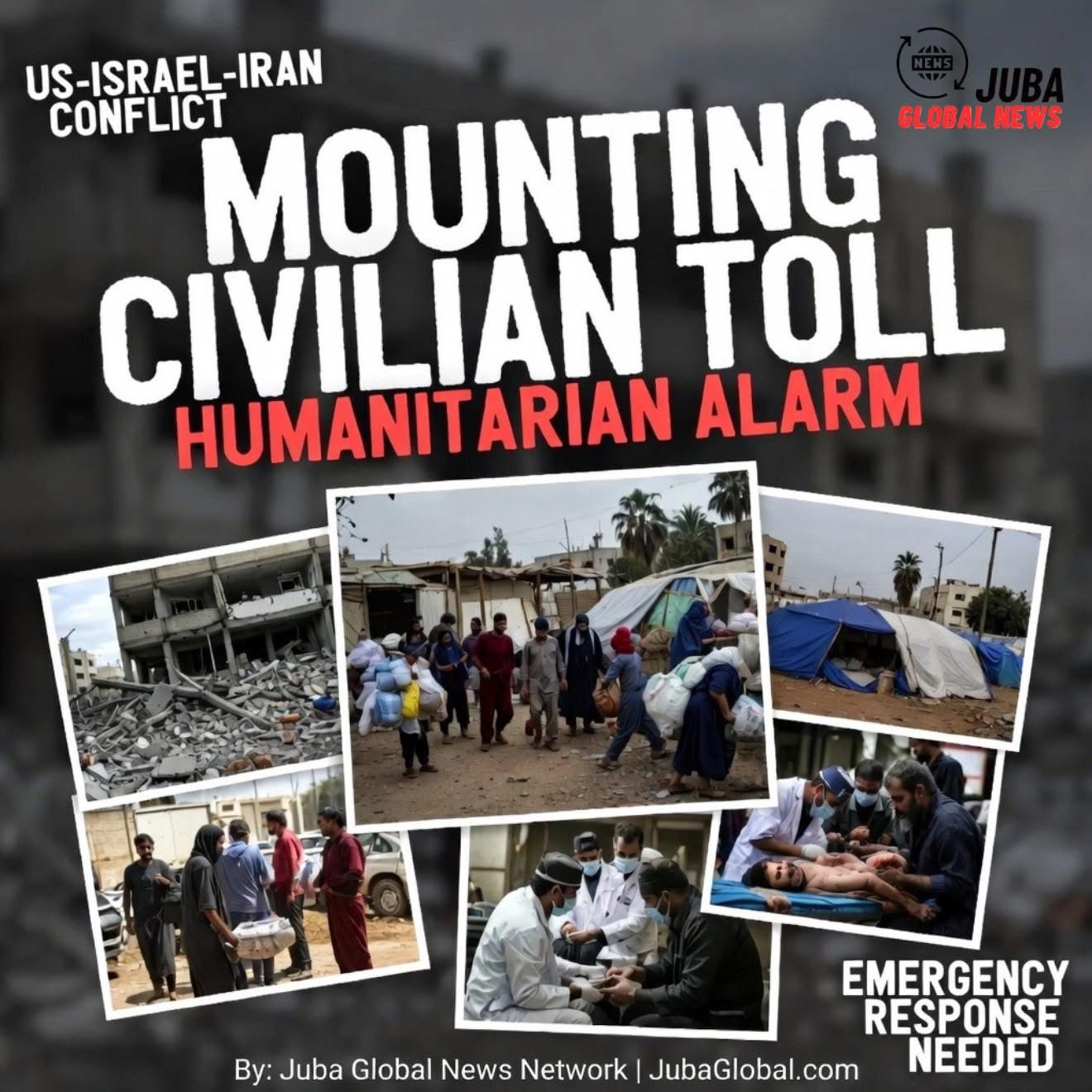
As the US-Israel war against Iran reaches its 17th day, the human cost has escalated dramatically, with civilian casualties mounting rapidly across multiple fronts. Iranian authorities report over 1,400 deaths and tens of thousands injured from sustained US-Israeli airstrikes, while Israeli officials confirm dozens killed and thousands wounded by Iranian missile barrages, Hezbollah rocket fire, and proxy attacks. Independent monitors and UN agencies warn of a deepening humanitarian crisis, including widespread displacement, infrastructure destruction, and risks of famine-like conditions in affected areas.
The conflict, which erupted on February 28 with joint US-Israeli surprise attacks on Iranian military and nuclear-related sites, has expanded to include proxy fronts in Lebanon, Iraq, Syria, and Yemen. While military targets remain the stated focus, collateral damage to civilian infrastructure—homes, schools, hospitals, and utilities—has drawn sharp international condemnation and calls for immediate de-escalation.
Iran’s Civilian Suffering: Tens of Thousands Affected
Iran’s Health Ministry and UN envoy have provided the most detailed figures to date. As of mid-March, official reports indicate at least 1,444 killed and 18,551 injured from US-Israeli operations, with victims ranging from infants to the elderly. Among the dead are 200 women and 168 children, including a devastating strike on an elementary school in Minab that killed dozens of students. Iran’s UN ambassador, Amir Saeid Iravani, stated that more than 1,348 civilians have been killed and over 17,000 injured, accusing the attackers of deliberately targeting civilian sites.
Government spokesperson Fatemeh Mohajerani revealed that US-Israeli strikes have damaged or destroyed over 42,000 civilian structures, including homes, schools, hospitals, and desalination plants. Human Rights Activists in Iran (HRANA), a US-based group, estimates higher figures: at least 1,825 killed (including 1,276 civilians, with at least 200 children), plus 197 military personnel and others unclassified. The UN Refugee Agency (UNHCR) reports that 3.2 million Iranians have been forced to flee their homes, creating one of the fastest-growing displacement crises in recent years.
Infrastructure collapse compounds the suffering: power outages affect millions, water shortages plague urban areas, and medical facilities report shortages of supplies amid strikes on healthcare workers (at least 11 killed, including physicians and nurses). UN human rights experts have condemned attacks on civilians, educational facilities, and medical institutions as grave violations of international humanitarian law, urging accountability and de-escalation.
Israel’s Civilian Front: Missile Barrages Take Heavy Toll
In Israel, repeated Iranian ballistic missile waves (including the recent debut of the advanced Sejjil) and intensified Hezbollah rocket attacks from Lebanon have killed at least 14-15 civilians and wounded over 3,000-3,138 since the war began. Magen David Adom emergency services report hundreds injured in the past 24 hours alone from missile impacts and interception debris.
Notable incidents include:
• A March 1 ballistic missile strike on Beit Shemesh killing 9 and injuring over 20.
• Cluster munition warheads in Iranian attacks causing widespread shrapnel injuries in civilian areas.
• Hezbollah barrages forcing over 3,000 residents to evacuate northern communities, with long-range projectiles reaching central Israel (e.g., Ramla and Mateh Yehuda).
Israeli authorities emphasize that most incoming threats are intercepted by multilayered defenses (Iron Dome, David’s Sling, Arrow), but saturation attacks overwhelm systems, leading to direct hits on residential zones. Thousands remain in shelters, with psychological trauma and economic disruption widespread.
Gulf States and Proxies: Collateral Damage Spreads
Gulf allies face Iranian drone and missile threats, with at least 19-26 killed across UAE, Saudi Arabia, and others from strikes near infrastructure (e.g., fires near Dubai International Airport). US forces report 13 soldiers killed and 140-150 injured in regional proxy attacks.
In Lebanon, Hezbollah’s involvement has drawn Israeli counterstrikes, displacing hundreds of thousands and killing hundreds more in populated areas.
Humanitarian Crisis Deepens: UN and NGOs Sound Alarm
The UN High Commissioner for Human Rights, Volker Türk, described the situation as “playing out our worst fears,” with millions experiencing panic and anxiety. UN experts warn of cataclysmic civilian harm, displacement, and humanitarian need, highlighting disproportionate impacts on children and vulnerable groups.
Refugees International predicts vast fallout beyond the immediate theater, potentially affecting neighboring countries through refugee flows and economic shocks. The International Network on Explosive Weapons (INEW) notes the intense use of explosive munitions in populated areas exacerbates civilian vulnerability.
Aid delivery remains hampered by active hostilities, internet blackouts in Iran, and restricted access. Calls for humanitarian corridors and ceasefires grow louder, though diplomatic channels stay frozen: Tehran demands attacks halt and reparations paid; the US and Israel insist on dismantling Iran’s nuclear and missile threats.
As the war grinds on, the civilian toll—already in the thousands dead and tens of thousands injured or displaced—underscores the urgent need for de-escalation to avert a broader catastrophe. Juba Global News Network continues to track this evolving humanitarian tragedy amid the geopolitical storm.
