

Israel Launches Simultaneous Strikes on Tehran and Beirut Amid Escalating Regional War
On March 3, 2026, the fourth day of the intensifying US-Israel-Iran conflict, Israel conducted simultaneous airstrikes on military targets in Tehran , Iran
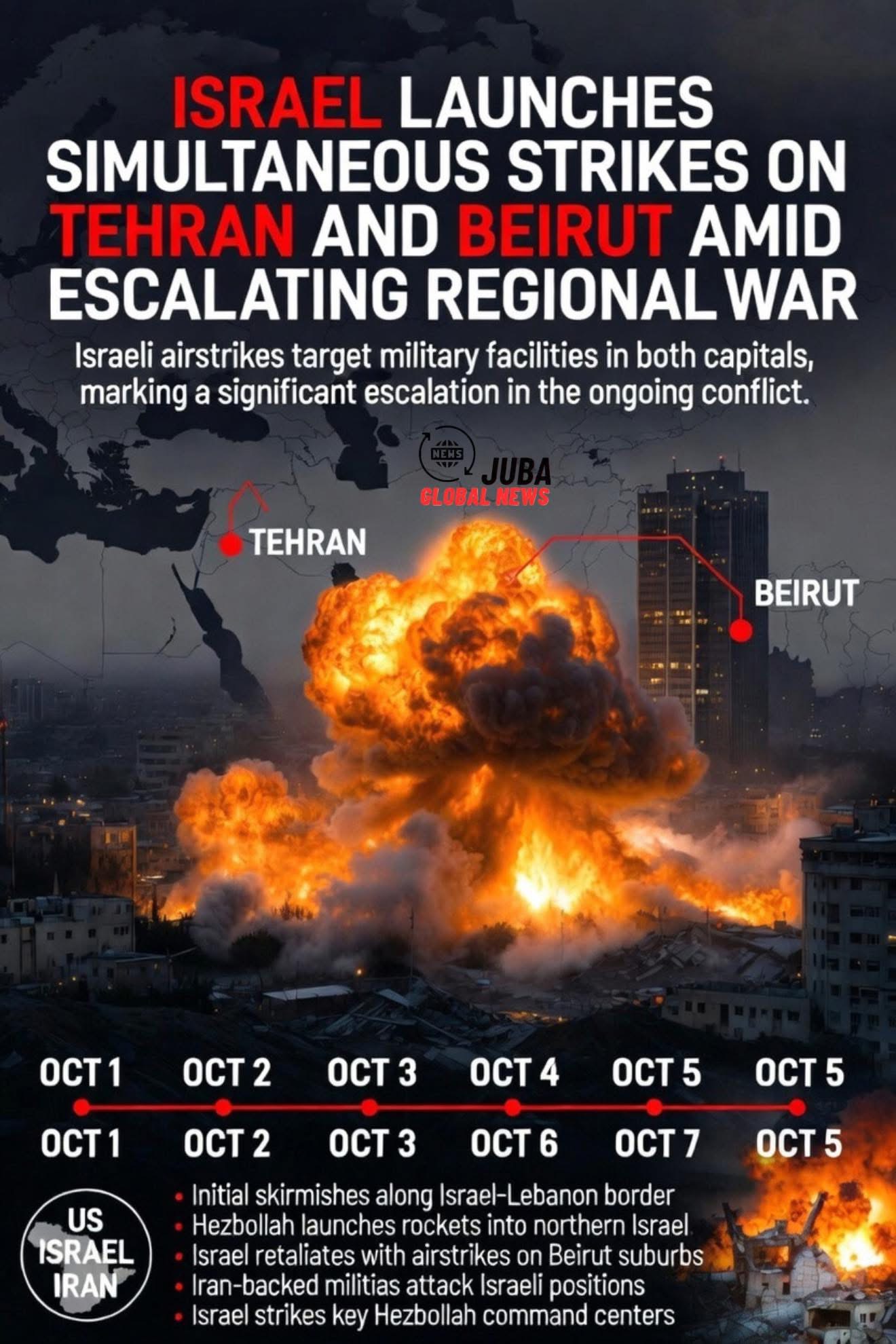
On March 3, 2026, the fourth day of the intensifying US-Israel-Iran conflict, Israel conducted simultaneous airstrikes on military targets in Tehran, Iran’s capital, and Beirut, Lebanon’s capital, targeting both Iranian regime infrastructure and positions held by the Iran-backed militant group Hezbollah. The Israeli Defense Forces (IDF) described the operations as “extensive” and “targeted,” hitting command centers, weapons storage facilities, air defense systems, and other strategic assets in a coordinated effort to degrade Iran’s military capabilities and its proxy network across the region.
The Dual Strikes: Tehran Under Fire
Israeli warplanes, supported by US coordination in the broader campaign, launched a fresh wave of attacks on Tehran overnight and into the early morning of March 3. Explosions rocked multiple districts of the capital, with plumes of smoke visible over government buildings, including reported strikes near the presidential office, the Supreme National Security Council, and IRGC-related sites. The Israeli Air Force emphasized “stand-in” munitions and direct overflights, marking a shift from earlier standoff strikes to more aggressive, close-range bombing to achieve greater precision and impact.
These attacks build on the ongoing Operation Epic Fury, the joint US-Israeli offensive that began February 28 and has already claimed over 1,250 targets across Iran, including the assassination of Supreme Leader Ali Khamenei and destruction of key nuclear-related facilities, missile production sites, and naval vessels. The UN has confirmed damage to at least one fuel enrichment plant in Iran, underscoring the campaign’s focus on crippling Tehran’s nuclear and ballistic missile programs. Iran’s Red Crescent Society reported the overall death toll from strikes since the conflict’s start has risen to at least 787, with civilian casualties mounting amid the bombardment of urban areas.
President Donald Trump has framed the operations as necessary to eliminate threats from Iran’s missiles, navy, nuclear ambitions, and proxy support, warning that “harder hits” and a “big wave” of intensified actions are forthcoming. He has projected the campaign could last four to five weeks but stressed US forces have the munitions and resolve for a much longer effort if required.
Hezbollah Targets Pounded in Beirut
Simultaneously, Israeli forces struck Hezbollah strongholds in Beirut’s southern suburbs (Dahiyeh), a Hezbollah-dominated area known for its dense infrastructure and command presence. The IDF reported targeting “centers of gravity,” including command centers, weapons depots, financial institutions linked to the group, and senior operatives. Explosions were heard across Haret Hreik and other neighborhoods, with smoke rising over residential and commercial zones. The strikes followed Hezbollah’s launch of rockets, missiles, and swarms of attack drones toward Israeli territory, including an assault on an airbase in northern Israel and earlier barrages into Haifa.
The IDF has intensified its ground operations in southern Lebanon, seizing additional positions and establishing what it calls a “buffer zone” to push back Hezbollah forces. Israeli troops have advanced to new areas across the border, with evacuation orders issued to civilians in dozens of villages in southern Lebanon and the Beqaa Valley. Reports indicate Hezbollah intelligence chief Hussain Makled and other high-ranking figures may have been killed or targeted in the Beirut strikes, though confirmations remain pending.
Hezbollah, which has framed its actions as retaliation for Khamenei’s killing and broader Israeli aggression, claimed responsibility for drone and rocket attacks, vowing continued resistance. Lebanese state media reported dozens of casualties from the latest Israeli raids, with at least 52 killed and over 150 injured in prior days’ strikes on Beirut suburbs and southern areas.
Broader Context and Regional Fallout
The simultaneous Tehran-Beirut strikes highlight Israel’s strategy to confront Iran on multiple fronts: directly in its homeland and through its most powerful proxy, Hezbollah. This multi-domain approach aims to prevent coordinated attacks from both Tehran and its Lebanese ally while US forces focus on degrading Iran’s core military and nuclear infrastructure.
The escalation has drawn sharp international concern. Russia has condemned the US and Israel for destabilizing the region, while China has urged Gulf unity against external interference. Domestically in the US, public opinion remains divided, with polls showing majority disapproval of the strikes and protests continuing in major cities.
As explosions persist in both capitals and ground fighting intensifies in Lebanon, the conflict shows no immediate signs of abating. With the Strait of Hormuz effectively closed, oil prices surging, and diplomatic facilities under threat—including recent drone hits on the US Embassy in Riyadh—the war’s ripple effects continue to spread, raising fears of a prolonged, transformative crisis across the Middle East.
By Joseph for Juba Global News Network | JubaGlobal.com
March 3, 2026 – Follow live updates at JubaGlobal.com as the situation develops rapidly.
