Iran’s Dramatic Succession: Mojtaba Khamenei Named New Supreme Leader Amid Escalating War with U.S. and Israel
In a move that signals continuity in Iran’s hardline leadership during one of the most perilous moments in the Islamic Republic’s history, Mojtaba Khamenei
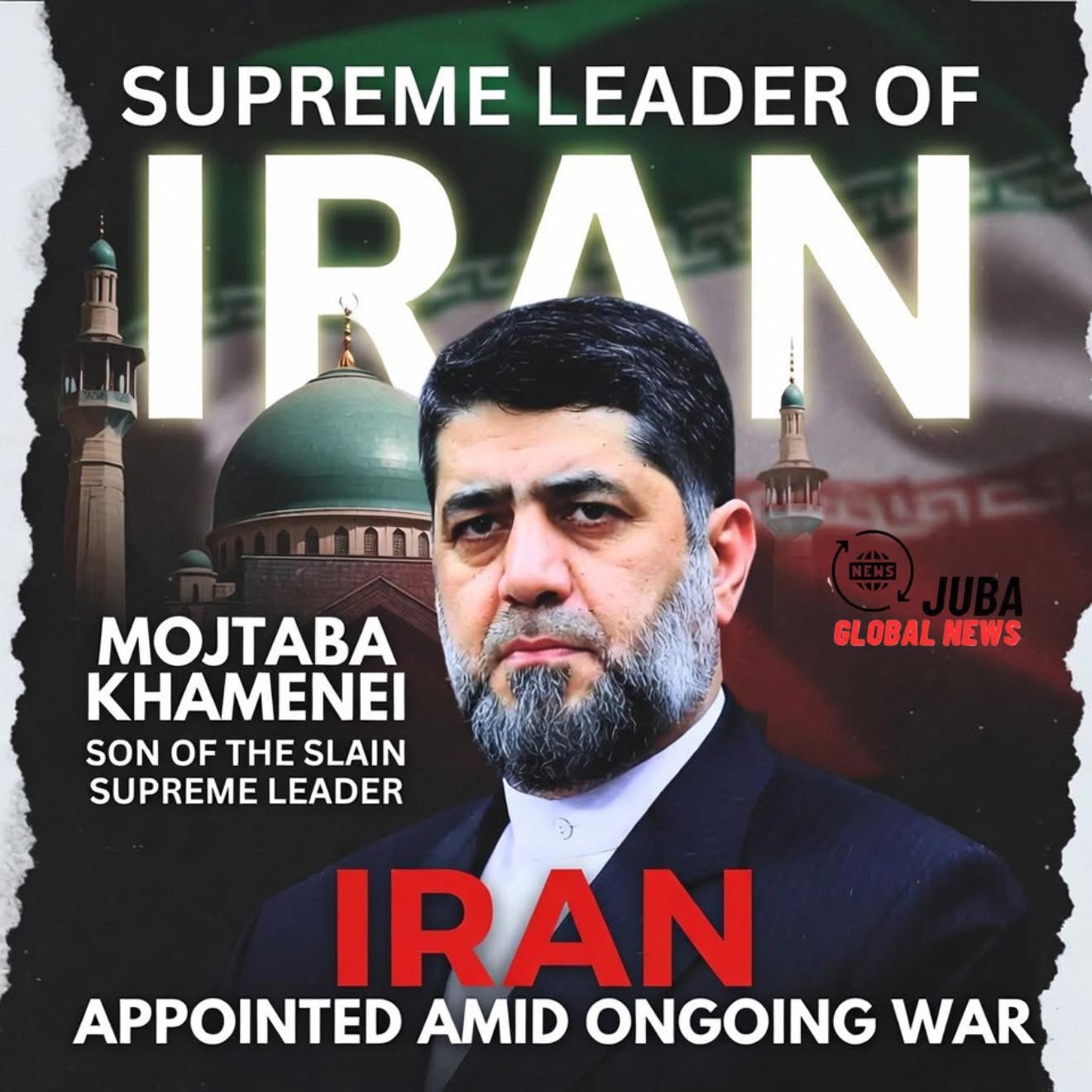
In a move that signals continuity in Iran’s hardline leadership during one of the most perilous moments in the Islamic Republic’s history, Mojtaba Khamenei, the second son of the late Ayatollah Ali Khamenei, has been appointed as the country’s new Supreme Leader. The announcement came from Iranian state media on March 8, 2026, just over a week after his father’s assassination in a joint U.S.-Israeli airstrike that ignited the ongoing regional conflict.
The Assembly of Experts, the 88-member clerical body constitutionally tasked with selecting the Supreme Leader, confirmed the decision in a statement released shortly after midnight Tehran time. “By a decisive vote, the Assembly of Experts appointed Ayatollah Mojtaba Hosseini Khamenei as the third Leader of the sacred system of the Islamic Republic of Iran,” the body declared, emphasizing a majority consensus amid extraordinary wartime pressures.
This succession marks only the third transition in the office since the 1979 Islamic Revolution. Ayatollah Ruhollah Khomeini, the revolution’s founder, served until his death in 1989, when Ali Khamenei—then a mid-level cleric—was unexpectedly elevated. Now, at 56, Mojtaba Khamenei steps into the role under far more volatile circumstances, inheriting command of Iran’s military, including the powerful Islamic Revolutionary Guard Corps (IRGC), oversight of foreign policy, and ultimate authority over the nuclear program and proxy networks across the Middle East.
Mojtaba Khamenei has long operated in the shadows of Iranian power. Unlike his father, who held public roles before ascending, Mojtaba has never occupied an elected or formal government position. Yet, he built significant influence through close ties to the IRGC, intelligence apparatuses, and vast family-linked business networks. Analysts describe him as a hardliner who shares his father’s uncompromising stance against the United States and Israel. Reports from sources like Iran International indicate the IRGC exerted considerable pressure on the Assembly of Experts to secure his selection, overriding concerns from some clerics about establishing a “hereditary” leadership—something the Islamic Republic has historically denounced in its critique of monarchy.
The timing of the announcement is no coincidence. It comes as the war—now in its second week—intensifies. U.S. and Israeli strikes have targeted Iranian infrastructure, oil facilities, and military sites, while Iran has retaliated with missile barrages and threats against Gulf states. Oil prices have surged past $100 per barrel, global markets are reeling, and civilian casualties mount on multiple fronts.
The selection of Mojtaba has drawn immediate international reactions. U.S. President Donald Trump dismissed him as a “lightweight” and reiterated that any new leader without U.S. approval “would not last long,” signaling potential for further escalation. Israel has vowed to target successors, with military statements warning that “every successor” to Ali Khamenei remains “an unequivocal target for elimination.” Despite these threats, Iranian military and political leaders, including President Masoud Pezeshkian, quickly pledged allegiance to the new Supreme Leader, framing his appointment as a manifestation of regime resilience.
Internally, the choice reflects a consolidation of power among hardliners. With the country under direct attack, pragmatists or moderates—like former President Hassan Rouhani or Hassan Khomeini (grandson of the revolution’s founder)—were sidelined. Mojtaba’s elevation ensures continuity in Iran’s “Axis of Resistance” strategy, supporting groups like Hezbollah, Hamas, and militias in Iraq and Yemen. It also quells immediate fears of factional infighting that could fracture the regime during wartime.
Yet, challenges loom large. Mojtaba assumes leadership without the religious credentials or public charisma of his predecessors—some observers call him a “mid-ranking cleric” elevated by circumstance rather than merit. Dissent has simmered, with unconfirmed reports of protests chanting against “hereditary rule.” The ongoing war strains resources, with infrastructure damage, economic isolation, and potential for broader regional involvement.
For now, the appointment projects defiance: Iran refuses to bend under bombardment. As Mojtaba Khamenei consolidates control, the world watches whether this “old supreme leader in slightly younger clothing”—as one analyst described him—will steer Iran toward escalation, negotiation, or survival in attrition. In a conflict already reshaping the Middle East, this succession could prove the decisive factor in its trajectory.
The Islamic Republic enters a new era not with reform, but with reinforced resolve—and the bombs continue to fall.