

Iran Delivers Stark Warning to Trump Administration: “Staged Strikes” Proposal Rejected with Threat of “Heavy U.S. Casualties”
By: Juba Global News Network | JubaGlobal.com February 8, 2026 Tehran has issued one of its most direct and defiant messages to the incoming Trump administ
By: Juba Global News Network | JubaGlobal.com
February 8, 2026
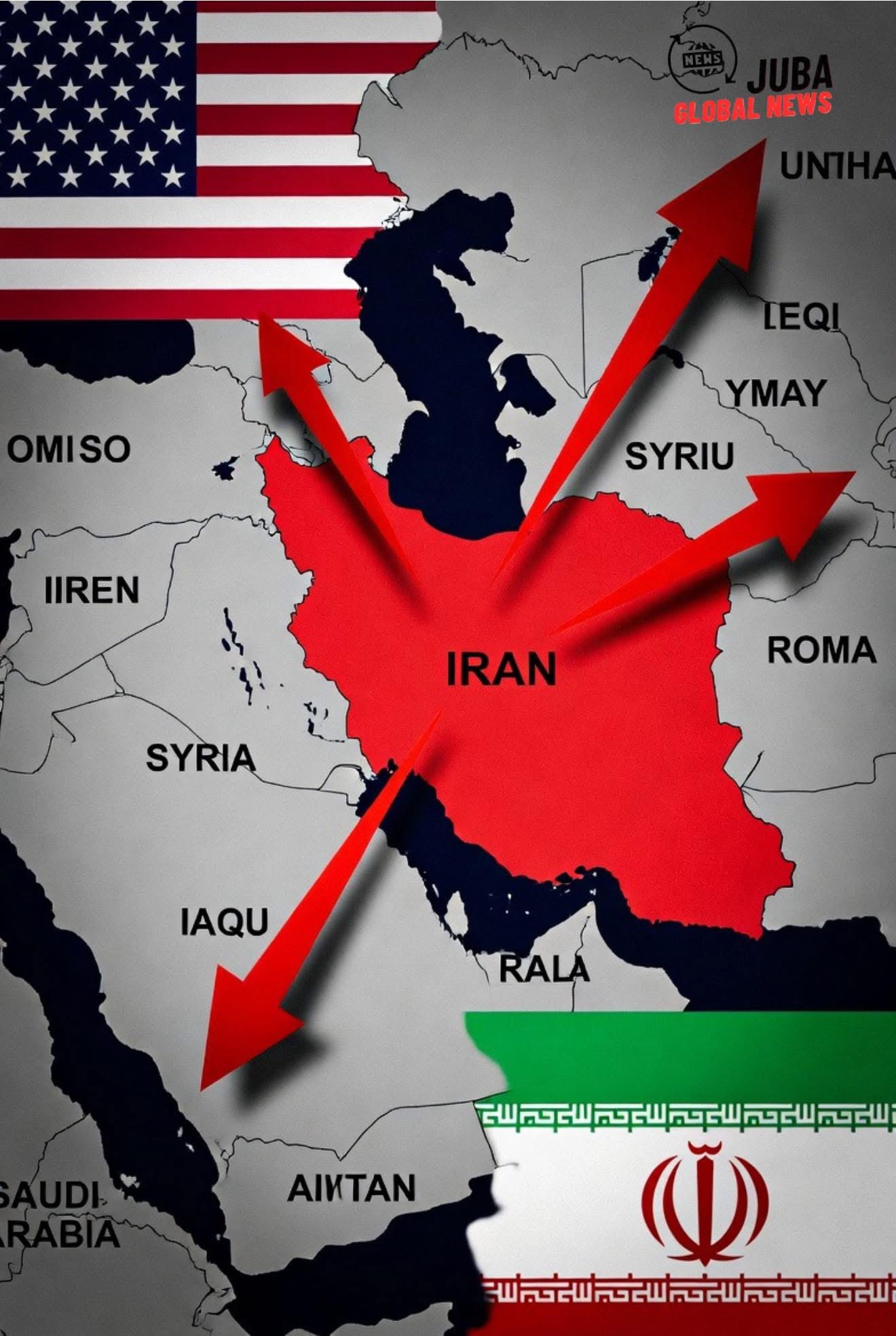
Tehran has issued one of its most direct and defiant messages to the incoming Trump administration, publicly rejecting what Iranian officials describe as a secret U.S. backchannel proposal involving “staged strikes” on Iranian targets. The revelation, made by a senior Iranian lawmaker on state television Saturday, has dramatically escalated tensions just days after Donald Trump’s return to the White House and amid fragile indirect nuclear negotiations in Oman.
Speaking to Iran’s IRIB state broadcaster, Mojtaba Zonnour, a hardline member of parliament and former chairman of the National Security and Foreign Policy Committee, declared that Iran had received and immediately dismissed a covert American offer. According to Zonnour, the proposal suggested that the United States would conduct limited, pre-arranged strikes on Iranian military or nuclear-related sites in exchange for Tehran agreeing to new restrictions on its ballistic missile program and regional proxy activities. Zonnour claimed the message was delivered through intermediaries in a third country and warned that any such action would result in “heavy U.S. casualties” and an “uncontrollable regional war.”
“We told them clearly: if you want to play with fire, we will burn you,” Zonnour said in the televised interview. “Our response was firm — we will not accept any staged or symbolic attack. Any aggression will be met with full force, and the casualties will not be on our side alone.”
The Iranian lawmaker’s statement marks the first public confirmation from Tehran of direct backchannel communications with the new Trump team since the January 20 inauguration. U.S. officials have so far remained silent on the matter, neither confirming nor denying the existence of the alleged proposal.
Background: Renewed Nuclear Diplomacy and Old Flashpoints
The alleged offer comes at a delicate moment. Indirect talks between the United States and Iran resumed in Muscat, Oman, earlier this month — the first such engagement since the collapse of the 2015 JCPOA nuclear deal under Trump’s first term. European diplomats and Omani mediators have described the current round as “serious but difficult,” with Tehran insisting that any new agreement must include ironclad guarantees against future U.S. withdrawal and the lifting of all “maximum pressure” sanctions.
Iran has repeatedly declared its ballistic missile program — which includes hypersonic missiles and a growing arsenal of precision-guided weapons — as non-negotiable. Supreme Leader Ayatollah Ali Khamenei reiterated this position in a speech last week, calling the missile capability “the backbone of our deterrence” and vowing that “not a single bullet” would be surrendered.
U.S. intelligence assessments have long viewed Iran’s missile development and support for regional militias (Hezbollah, Houthis, Iraqi Shia groups, and Syrian forces) as the primary threat to American interests and allies in the Middle East. Trump’s first-term “maximum pressure” campaign, which included the 2020 assassination of General Qassem Soleimani, pushed Iran closer to the nuclear threshold, according to IAEA reports. Iran now enriches uranium to 60% purity — one short step from weapons-grade levels — and has significantly expanded its stockpile.
Military Posturing on Both Sides
The rhetoric comes against a backdrop of heightened military activity. In the past ten days:
- The U.S. Navy’s USS Abraham Lincoln carrier strike group has been redirected toward the Gulf of Oman.
- Israeli Prime Minister Benjamin Netanyahu, fresh from a high-profile White House visit, publicly urged the new administration to “deal decisively” with Iran’s nuclear program.
- Iran conducted large-scale air-defense drills near its nuclear sites in Natanz and Fordow.
- The Islamic Revolutionary Guard Corps (IRGC) test-fired a new generation of ballistic missiles capable of carrying multiple warheads.
Pentagon spokespeople have described the carrier movement as “routine,” but analysts note the timing is anything but coincidental.
Reactions Pour In
European allies expressed alarm. The French Foreign Ministry called for “maximum restraint on all sides,” while Germany’s Foreign Minister warned that any miscalculation could “derail the Oman talks and plunge the region into chaos.”
In the Gulf, Saudi Arabia and the UAE — both quietly expanding security ties with Israel — have urged Washington to maintain a firm line on Iran’s missiles while avoiding actions that could trigger a wider war. Qatar, which hosts a major U.S. air base and maintains close ties with Tehran, has offered to mediate.
Inside Iran, hardliners celebrated Zonnour’s statement as a show of strength, while reformist voices (largely sidelined since the 2022 protests) warned privately that further escalation could deepen the country’s economic isolation.
U.S. congressional leaders were divided. Republican hawks praised Iran’s rejection as proof that only maximum pressure works, while Democrats urged the administration to return to the negotiating table without preconditions.
What Happens Next?
The Oman talks are scheduled to continue next week. U.S. Special Envoy for Iran Steve Witkoff (a close Trump ally) is reportedly leading the American side alongside career diplomats. The key question now is whether the backchannel proposal was a genuine negotiating tactic, a deliberate provocation, or a miscommunication amplified by hardliners on both sides.
Tehran has insisted it will not discuss its missile program in any forum. Washington, meanwhile, has repeatedly stated that “all options remain on the table” to prevent Iran from acquiring nuclear weapons.
As the February 19 Board of Peace meeting on Gaza reconstruction approaches, many observers worry that an Iran-related crisis could overshadow or derail broader regional stabilization efforts.
For now, the region holds its breath. One misstep — whether a real strike, a false flag, or simply a leaked message — could transform the current war of words into something far more dangerous.
Juba Global News Network will continue to monitor developments in Muscat, Tehran, and Washington and provide updates as the situation evolves.
Sources include statements from IRIB, Reuters, Associated Press, The New York Times, Axios, Al Jazeera, IAEA reports, and U.S. Defense Department briefings as of February 8, 2026.
