

Iran Army Helicopter Crashes into Market in Isfahan: Four Dead, Including Pilots and Civilians, as Domestic Instability Deepens
On Tuesday, February 24, 2026, an Iranian Army helicopter crashed into a busy fruit and vegetable market in Dorcheh, a town in Isfahan province, killing fo
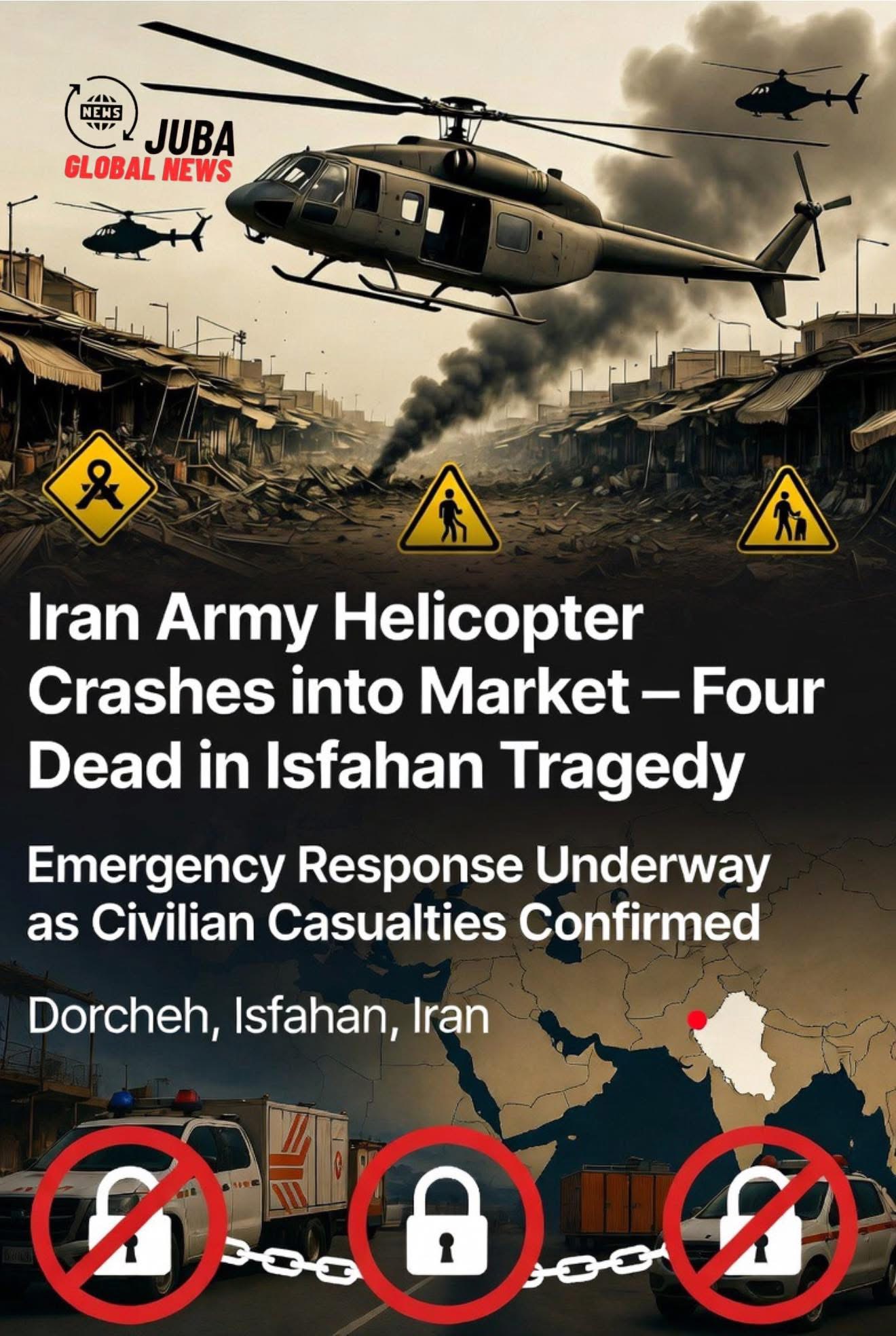
On Tuesday, February 24, 2026, an Iranian Army helicopter crashed into a busy fruit and vegetable market in Dorcheh, a town in Isfahan province, killing four people and injuring at least one other. The incident, which occurred around 9:09 a.m. local time, added to a recent string of military accidents and highlighted growing concerns over equipment maintenance, operational readiness, and the broader fragility of Iran’s domestic situation amid mounting external pressures and internal unrest.
Details of the Crash
According to Iranian state media (including Mehr News Agency and IRIB state television), the helicopter—a Bell AH-1J Cobra (locally modified as the Panha 2091 Toufan)—was on a routine training flight when it suffered a sudden technical failure. The aircraft plunged into the Dorcheh wholesale market, striking stalls and igniting a fire upon impact. Emergency services quickly responded, extinguishing the blaze and evacuating the area.
The fatalities included:
- The pilot, identified as Colonel Hamed Sarvazad.
- The co-pilot, Major Mojtaba Kiani.
- Two merchants (vendors) working at market stalls who were killed on the spot.
At least one additional vendor was injured and hospitalized. Footage broadcast by state media showed debris scattered across the market, thick black smoke rising from the wreckage, and rescue teams working amid charred stalls and scattered produce.
The Army Aviation Training Centre issued a statement confirming a “technical malfunction” as the likely cause and announced an official investigation. No further details on the specific mechanical failure were immediately released.
Dorcheh is located approximately 330 km (205 miles) south of Tehran in Isfahan province, home to major military bases and Iran’s key nuclear facilities (including the Natanz enrichment site). The proximity to sensitive military infrastructure has fueled speculation about whether the crash could be linked to broader operational strains.
A Pattern of Military Mishaps
The Dorcheh crash is the latest in a series of high-profile Iranian military aviation incidents in recent months:
- Less than a week earlier, a fighter jet crashed in Hamadan province, killing the pilot.
- Earlier in 2026, multiple reports emerged of maintenance issues with aging U.S.-origin helicopters and aircraft, exacerbated by long-standing international sanctions limiting access to spare parts and technical support.
Iran’s military fleet includes a mix of pre-1979 U.S.-supplied equipment (like the Bell AH-1 Cobra), domestically reverse-engineered variants, and Russian-supplied platforms. Sanctions have forced reliance on local repairs and cannibalization, contributing to higher accident rates. Critics inside and outside Iran have pointed to these incidents as signs of deteriorating military readiness amid economic hardship and resource diversion toward nuclear and missile programs.
Domestic Instability and Public Reaction
The crash occurred against a backdrop of severe internal challenges for the Islamic Republic:
- Nationwide protests over economic hardship, repression, and the regime’s handling of dissent have persisted into 2026, with deadly crackdowns reported in recent weeks.
- A severe energy crisis, water shortages, and inflation have fueled public anger.
- The regime faces growing scrutiny over military spending priorities while ordinary Iranians struggle.
Social media posts (heavily censored domestically) and diaspora commentary expressed frustration, with some users questioning why military helicopters were flying low over civilian areas during training. Others mourned the civilian victims, with calls for accountability and improved safety protocols.
State media framed the incident as a tragic accident and praised the quick response of emergency services. Supreme Leader Ali Khamenei and President Masoud Pezeshkian offered condolences to the families of the deceased.
Geopolitical Context and External Pressures
The crash comes at a particularly tense moment for Iran:
- U.S. military assets (including two carrier strike groups) remain positioned in striking range amid stalled nuclear talks and warnings from President Donald Trump.
- Iran has vowed retaliation for any strikes and faces internal instability that could be exploited in a conflict scenario.
- Recent military accidents raise questions about operational readiness if escalation occurs.
While no evidence suggests foul play in the Dorcheh incident, the timing adds to perceptions of vulnerability at a critical juncture.
As the investigation continues, the crash serves as a grim reminder of the human cost of Iran’s military challenges—both in the air and on the ground—while the nation grapples with internal unrest and external threats. For the families of the four victims and the people of Dorcheh, it is a tragedy that underscores the fragility of safety in an increasingly volatile environment.
