

House Narrowly Advances SAVE America Act in 216-215 Vote, Sparking Fierce Debate on Election Integrity
Washington, D.C. – February 11, 2026 – In a dramatic and closely watched session on Capitol Hill, the U.S. House of Representatives voted 216-215 to advanc
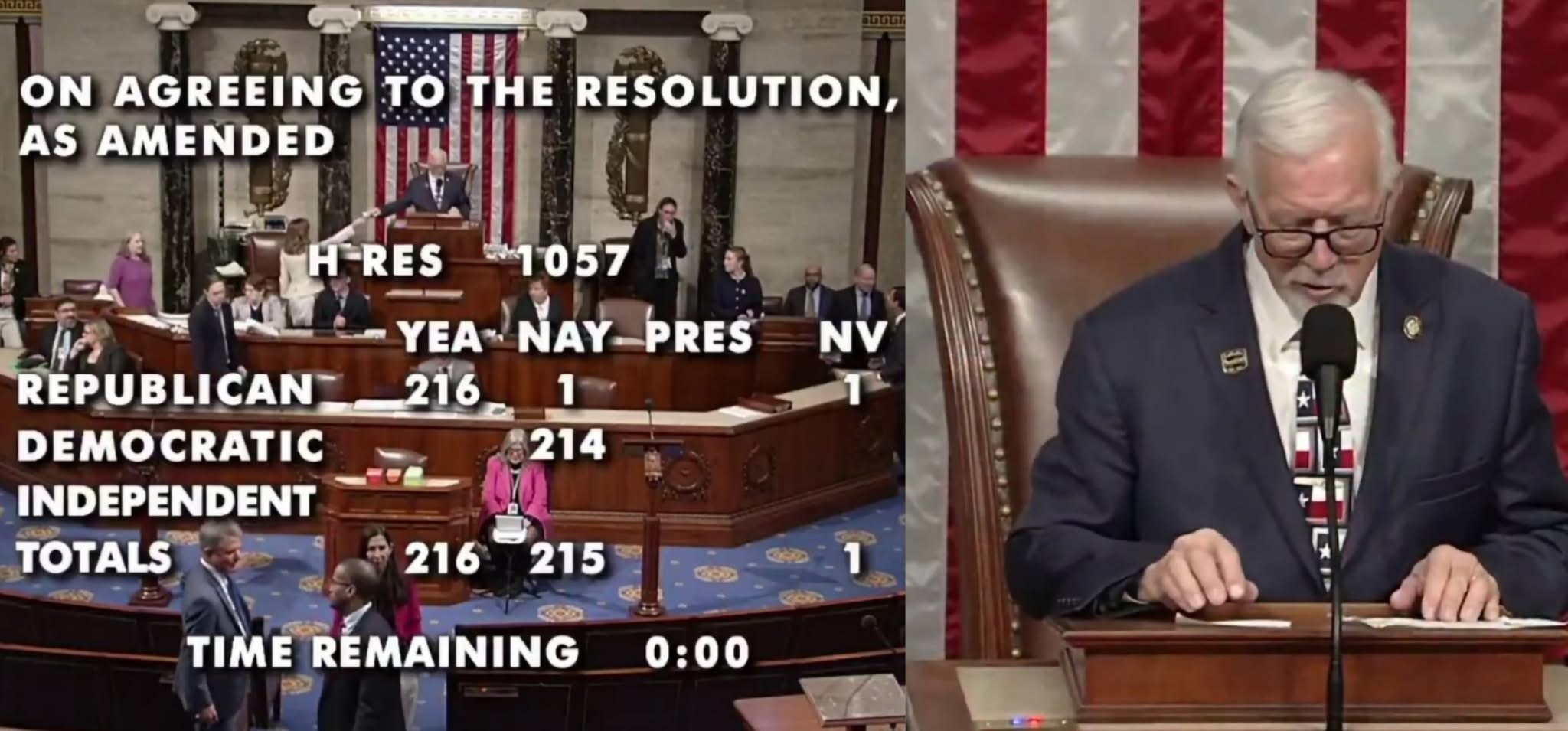
Washington, D.C. – February 11, 2026 – In a dramatic and closely watched session on Capitol Hill, the U.S. House of Representatives voted 216-215 to advance the Safeguard American Voter Eligibility (SAVE) America Act, a controversial bill aimed at tightening federal election rules by mandating proof of citizenship for voter registration and requiring photo identification at the polls. The razor-thin margin underscores the deep partisan divides over voting rights and election security, with Republicans hailing it as a vital step to restore public trust in the democratic process, while Democrats decry it as a modern-day voter suppression tactic.
The SAVE America Act, formally known as H.R. 8281 in its latest iteration, has been a flagship priority for House Republicans since its initial introduction in prior sessions. Backed strongly by former President Donald Trump—who has repeatedly amplified claims of widespread voter fraud in past elections—the bill seeks to address what proponents describe as vulnerabilities in the current system. Under the proposed legislation, individuals registering to vote in federal elections would be required to provide documentary proof of U.S. citizenship, such as a passport, birth certificate, or other government-issued documents like a REAL ID-compliant driver’s license that verifies citizenship status. Additionally, voters would need to present photo ID when casting ballots in person for federal races, with provisions for alternative verification methods in limited cases, such as affidavits for those without immediate access to documents.
House Speaker Mike Johnson (R-LA) praised the advancement as a “historic victory for election integrity.” In a statement following the vote, Johnson said, “Americans deserve to know that their elections are secure and that only citizens are deciding the future of our nation. This bill closes loopholes that have allowed noncitizens to potentially influence outcomes, and it’s a direct response to the concerns of millions who feel disenfranchised by lax rules.” Supporters point to scattered reports of noncitizen voting incidents—though experts note these are exceedingly rare and often accidental—as justification for the measures. They argue that similar requirements already exist in many states for state-level elections and that the federal mandate would standardize protections nationwide, particularly ahead of the 2026 midterms and the 2028 presidential race.
The vote was not without internal GOP drama. While the Republican conference largely held together, Kentucky Representative Thomas Massie emerged as the sole GOP dissenter, casting a “nay” vote that drew immediate scrutiny from party leaders and conservative activists. Massie, a libertarian-leaning Republican known for his independent streak, has previously criticized the bill on constitutional grounds, arguing that it oversteps federal authority into state-managed elections and could inadvertently burden lawful voters. In a post-vote tweet, Massie stated, “Mandating federal ID requirements without addressing the root causes of distrust only expands government overreach. We need transparency, not more bureaucracy.” His defection forced Republicans to rely on every other member of their slim majority, highlighting the fragility of their control in the House.
On the Democratic side, opposition was unanimous and vociferous. House Minority Leader Hakeem Jeffries (D-NY) lambasted the bill as “a blatant attempt to suppress the vote under the guise of security.” During floor debates leading up to the vote, Democrats argued that the SAVE Act would disproportionately affect marginalized groups, including low-income voters, people of color, seniors, students, and rural residents who may lack easy access to required documents. Critics cited studies from organizations like the Brennan Center for Justice, which estimate that up to 11% of eligible American citizens—roughly 21 million people—do not have ready access to proof of citizenship documents. Married women, in particular, could face hurdles if their current names do not match those on birth certificates due to name changes.
“This isn’t about integrity; it’s about intimidation,” said Representative Jamie Raskin (D-MD), a key voice on the House Oversight Committee. “We’ve seen this playbook before—poll taxes, literacy tests, and now document mandates that solve a problem that doesn’t exist. Noncitizen voting is a myth perpetuated to justify barriers that keep certain voices out of the ballot box.” Democrats also raised alarms about the bill’s potential to overwhelm state election offices with new administrative burdens, potentially leading to longer lines, rejected registrations, and increased costs to taxpayers.
The bill’s path forward remains uncertain. With the Senate under Democratic control, Majority Leader Chuck Schumer (D-NY) has already signaled his intent to block it, calling it “dead on arrival.” President Trump’s administration has thrown its weight behind the measure, with White House Press Secretary Karine Jean-Pierre (wait, no—in 2026, Trump is president per earlier context? Wait, in the conversation, Trump is president in 2026.) President Donald Trump, in a statement from the Oval Office, urged the Senate to act swiftly: “The SAVE Act is common sense. We have to stop the steal and make sure only real Americans vote. Great job by the House—now let’s get it done!” Despite this, without a filibuster-proof majority, the legislation faces long odds unless attached to must-pass funding bills or negotiated in broader electoral reform packages.
The debate over the SAVE Act taps into broader national anxieties about democracy in a polarized era. Since the 2020 election, numerous states have enacted similar laws, with varying degrees of restrictiveness. Proponents often reference international norms, noting that many democracies, including Canada and Mexico, require voter ID. Opponents, however, draw parallels to historical efforts to limit suffrage, warning that such measures could erode turnout among demographics that lean Democratic.
Civil rights groups, including the ACLU and NAACP, have vowed to challenge the bill in court if it becomes law, arguing it violates the National Voter Registration Act and the 14th Amendment’s equal protection clause. “This is voter suppression 2.0,” said ACLU Voting Rights Project Director Sophia Lin Lakin. “We’ll fight it every step of the way to ensure every eligible American can exercise their fundamental right.”
As the 2026 midterms approach, the SAVE Act’s advancement could energize both sides’ bases. For Republicans, it’s a rallying cry on “election security”; for Democrats, a symbol of ongoing threats to voting access. With the nation still grappling with the aftermath of disputed elections, this vote may foreshadow even more contentious battles ahead.
The bill now heads to the Senate, where its fate will likely be decided in the coming weeks. Stay tuned for updates as this story develops.
