

Gulf States Face Ongoing Iranian Drone and Missile Threats as War Widens
By Juba Global News Network | JubaGlobal.com March 14, 2026 The US-Israel campaign against Iran has spilled over dramatically into the Persian Gulf, with I
By Juba Global News Network | JubaGlobal.com
March 14, 2026
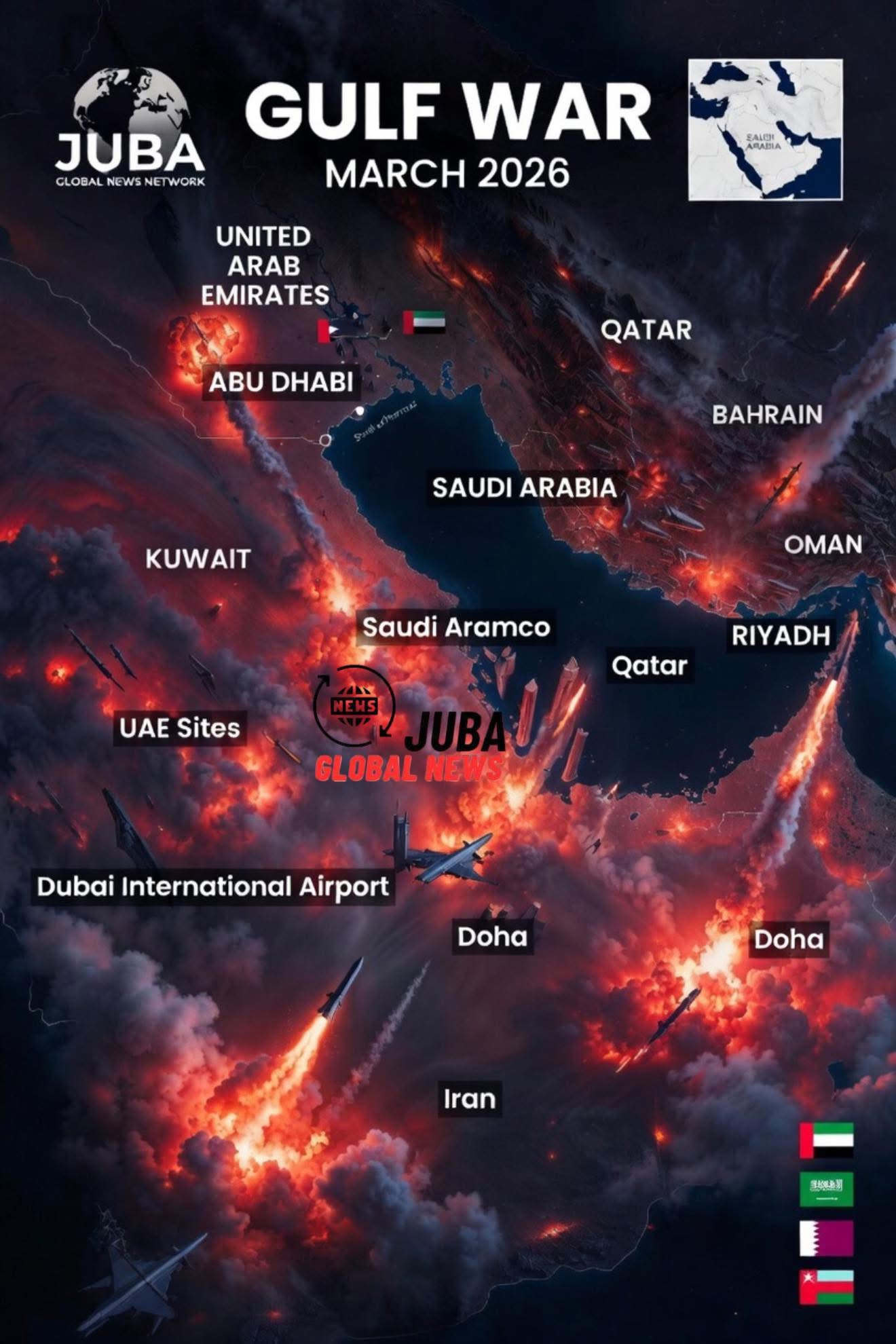
The US-Israel campaign against Iran has spilled over dramatically into the Persian Gulf, with Iranian forces launching repeated waves of drones, ballistic missiles, and cruise missiles targeting US-allied states across the region. Since the conflict began on February 28, all six Gulf Cooperation Council (GCC) members—Saudi Arabia, United Arab Emirates (UAE), Qatar, Bahrain, Kuwait, and Oman—have faced direct attacks, marking the first time a single actor has struck every GCC state simultaneously in such a short period.
Iranian retaliation has focused on military bases hosting US forces, energy infrastructure, airports, ports, and civilian areas, aiming to impose costs on Washington’s regional partners and disrupt global energy flows. Air defense systems in the Gulf—bolstered by US-supplied Patriot, THAAD, and indigenous interceptors—have intercepted the vast majority of incoming threats, but debris, occasional penetrations, and secondary fires have caused casualties, infrastructure damage, and widespread alarm.
Scale of Attacks and Interceptions
Defense ministries across the region have released partial tallies showing the intensity of Iranian barrages:
• UAE: More than 1,700 aerial threats (including ~253 ballistic missiles, ~1,440 drones, and cruise missiles) detected since late February. UAE air defenses intercepted 233 missiles, 1,359 drones, and most cruise threats, but ~18 missiles fell into the sea and ~2 landed on territory. At least 35 drones penetrated, causing material damage. Casualties include 3 foreign nationals killed and 58 injured. Strikes hit Dubai International Airport, Jebel Ali Port, Palm Jumeirah areas, and neighborhoods in Abu Dhabi, Sharjah, and Ras al-Khaimah.
• Saudi Arabia: Multiple interceptions reported, including 4–6 drones targeting the Shaybah oilfield and eastern regions. Debris from intercepted threats caused fires at Aramco’s Ras Tanura refinery (550,000 bpd capacity), forcing precautionary shutdowns. Additional drones and missiles aimed at Riyadh, including near the US embassy in the Diplomatic Quarter.
• Qatar: Air defenses intercepted missiles over Doha, with explosions heard across the capital. At least 16 people injured; reports of smoke in residential areas.
• Bahrain: Fuel storage tanks hit, leading to fires and force majeure declarations by state oil company on shipments. Multiple interceptions of drones and missiles.
• Kuwait: 32 injuries reported; airport and other sites targeted, with interceptions and falling debris.
• Oman: At least 2 killed by shrapnel from intercepted drone in Sohar governorate; fuel tanks damaged at Salalah port.
The UAE appears to be Iran’s primary focus in the Gulf, likely due to its hosting of major US military facilities (Al Dhafra Air Base) and its visible economic success. Bahrain, home to the US Fifth Fleet, has also faced intense barrages relative to its size.
Iranian Strategy and Escalation Pattern
Iran’s attacks have unfolded in stages:
• Days 1–2: Primarily military bases hosting US assets.
• Days 3+: Expansion to civilian infrastructure, airports, energy sites, and symbolic targets (e.g., US embassy in Riyadh).
• Recent waves: Continued drone and missile salvos, often in coordination with proxies, aiming to overwhelm defenses and cause economic disruption.
Iranian officials describe these strikes as legitimate retaliation for US-Israeli aggression, vowing to target “US-linked oil facilities” and maintain pressure until attacks on Iran cease. The partial blockade of the Strait of Hormuz amplifies the threat, as any escalation could further choke global oil supplies.
Gulf Response and Regional Fallout
GCC states have issued sharp condemnations, with Qatar’s foreign ministry spokesman calling the attacks “reprehensible” and urging de-escalation. Saudi Arabia, UAE, and Bahrain emphasized their “full readiness” to counter threats and protect citizens/residents.
Despite the attacks, Gulf leaders have so far avoided direct offensive participation in the war against Iran—refusing to allow basing for major counter-strikes or join airstrikes—likely to preserve diplomatic flexibility and avoid becoming primary targets. However, experts warn that continued Iranian strikes could push GCC states closer to active involvement, especially if energy infrastructure sustains major damage.
The US has reinforced regional defenses, deploying additional assets and vowing freedom of navigation. President Trump has threatened “major new retaliation” if disruptions persist.
Civilian impact includes injuries from debris, flight cancellations, port disruptions, and psychological strain in capitals under frequent alerts. Economic ripple effects compound the global oil price surge above $100/barrel.
Looking Ahead
As day 15 unfolds, the widening theater raises the specter of a broader regional war. Iran’s ability to sustain barrages—despite heavy losses to its missile production—remains a key variable. Gulf air defenses have performed strongly, but sustained pressure could strain interceptors, stockpiles, and public morale.
Juba Global News Network continues real-time tracking of threats, interceptions, and diplomatic responses. The Gulf’s nightmare scenario of simultaneous multi-front attacks is now reality—how long it persists will shape the conflict’s next phase and global energy security.
