

Former UK Prime Minister Boris Johnson Calls for Deployment of Non-Combat Troops to Ukraine Ahead of Potential Ceasefire Talks
London, February 22, 2026 – In a high-profile intervention that has reignited fierce debate in Britain and across NATO capitals, former Prime Minister Bori
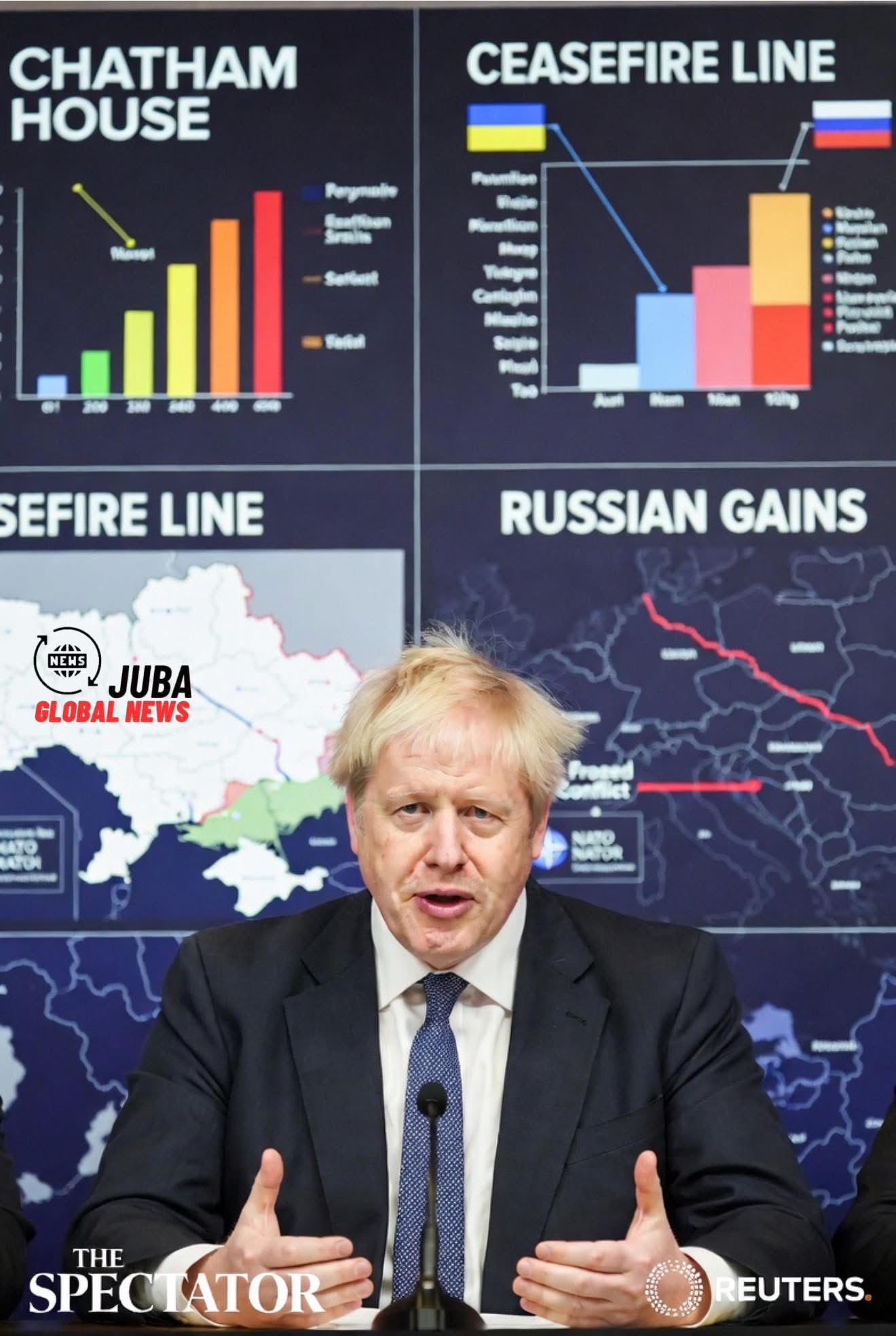
London, February 22, 2026 – In a high-profile intervention that has reignited fierce debate in Britain and across NATO capitals, former Prime Minister Boris Johnson has urged Western allies to deploy “non-combat” troops to Ukraine as a confidence-building measure ahead of any ceasefire or peace negotiations with Russia. Writing in The Spectator and speaking at a Chatham House event on Saturday, Johnson argued that a limited, clearly defined multinational presence—focused on monitoring, humanitarian support, and infrastructure protection—could deter renewed Russian aggression and strengthen Ukraine’s negotiating position without crossing into direct combat with Moscow.
Johnson’s Core Argument: “Boots on the Ground Without the Boots Fighting”
In his article titled “Peace Through Strength – Why Ukraine Needs Visible Western Commitment,” Johnson contended that the current stalemate on the battlefield, combined with war fatigue in Western publics and shifting U.S. policy under the incoming Trump administration, risks forcing Ukraine into a disadvantageous settlement. He proposed the following framework:
- Deployment of 10,000–15,000 troops from NATO and partner countries (excluding U.S. forces) under a UN or OSCE mandate.
- Troops would be “non-combat” in the sense of not engaging in frontline fighting: their roles would include
- Monitoring and verifying any ceasefire lines
- Protecting critical energy and transport infrastructure
- Supporting humanitarian corridors and reconstruction projects
- Training and advising Ukrainian forces behind the current line of contact
- Explicit rules of engagement that prohibit offensive operations against Russian forces.
- A clear “tripwire” commitment: any attack on these troops would trigger a collective NATO response under Article 5.
Johnson drew parallels with Cold War-era deployments (Berlin Brigade, Allied Mobile Force) and post-Dayton Bosnia, arguing that visible Western presence had historically deterred escalation without leading to direct war. He dismissed Russian red lines as “bluff” and insisted that Putin “respects strength, not appeasement.”
Reactions in Britain and Europe
The intervention has split opinion sharply:
Supportive voices
- Conservative MPs and defence hawks (Tom Tugendhat, Tobias Ellwood) welcomed the proposal as “realistic deterrence.”
- Ukrainian officials, including Foreign Minister Dmytro Kuleba, praised Johnson’s “continued solidarity” and said Kyiv would welcome any format that strengthens security guarantees.
- Some Baltic and Polish commentators endorsed the idea, arguing that a monitoring force could evolve into a longer-term deterrence posture.
Strong opposition
- Current Prime Minister Keir Starmer’s office issued a terse statement: “The UK remains committed to supporting Ukraine through military aid, training, and sanctions. We are not considering troop deployments inside Ukraine.”
- Labour left and Liberal Democrat figures accused Johnson of “reckless warmongering” and risking direct NATO-Russia confrontation.
- Germany’s Chancellor Olaf Scholz (via spokesman) reiterated Berlin’s long-standing rejection of boots on the ground. French President Macron’s team called the idea “premature” while indirect U.S.-Russia talks remain stalled.
- Kremlin spokesman Dmitry Peskov warned that any foreign military presence in Ukraine would be treated as “direct participation in the conflict” and met with “appropriate measures.”
Strategic Context: Ceasefire Talks and Trump’s Shadow
Johnson’s intervention arrives at a pivotal moment:
- Indirect U.S.-Russia contacts (via Turkey, Qatar, and Saudi channels) have intensified since January 2026, with reports of tentative discussions on a “frozen conflict” line and security guarantees.
- President Trump has repeatedly signaled he wants a deal “within weeks” of taking office and has expressed skepticism about open-ended U.S. funding.
- Ukraine faces acute ammunition and manpower shortages; Western stockpiles are strained, and recruitment challenges persist.
- Recent Russian territorial gains in Donetsk and Zaporizhzhia have increased pressure on Kyiv to negotiate from a position of relative weakness.
Johnson explicitly framed his proposal as a way to give Ukraine “a stronger hand at the table” and prevent a “bad peace” that would only invite future Russian aggression. He warned that without visible Western commitment, any ceasefire could collapse within months—repeating the pattern of Minsk I and II.
Risks and Feasibility
Critics highlight several dangers:
- Escalation ladder: Even non-combat troops could be targeted in false-flag operations or miscalculations, triggering NATO’s Article 5.
- Russian reaction: Moscow has repeatedly stated that foreign forces in Ukraine would cross a red line.
- Alliance cohesion: Germany, France, Italy, and Spain remain deeply opposed; forcing the issue could fracture NATO unity.
- Legal and political hurdles: A UN mandate looks impossible (Russia veto power in Security Council); OSCE or ad-hoc coalition would lack universal legitimacy.
- Domestic politics: No major European government currently enjoys public support for sending troops.
Supporters counter that the absence of Western forces on the ground is precisely why Russia continues to escalate: Putin perceives weakness and calculates that time is on his side.
Conclusion: A Provocative Voice in a Fractured Debate
Boris Johnson remains one of the most vocal and polarizing figures in Western discourse on Ukraine. His call for non-combat troops revives a debate that many thought had been settled in 2022–2023: direct Western military involvement inside Ukraine was too risky. Yet with battlefield dynamics shifting, U.S. policy uncertain, and ceasefire diplomacy accelerating, Johnson’s intervention has reopened a question many European leaders would prefer to keep closed.
Whether his proposal gains traction—or is dismissed as the wishful thinking of a former leader no longer in power—will likely become clearer in the coming weeks as Washington, Brussels, and Kyiv weigh their next moves on the long road toward ending Europe’s largest war since 1945.
By: Juba Global News Network | JubaGlobal.com
Compiled from The Spectator, Chatham House transcript, UK government statements, Reuters, BBC, Politico Europe, and Ukrainian official sources as of February 22, 2026.
