

Foiled Coup in Benin: Swift Government Response and ECOWAS Intervention Signal Resilience Amid Regional Turmoil
By Juba Global News Network | December 11, 2025 On the morning of December 7, 2025, the usually lively and humid streets of Cotonou—Benin’s economic heartb
By Juba Global News Network | December 11, 2025
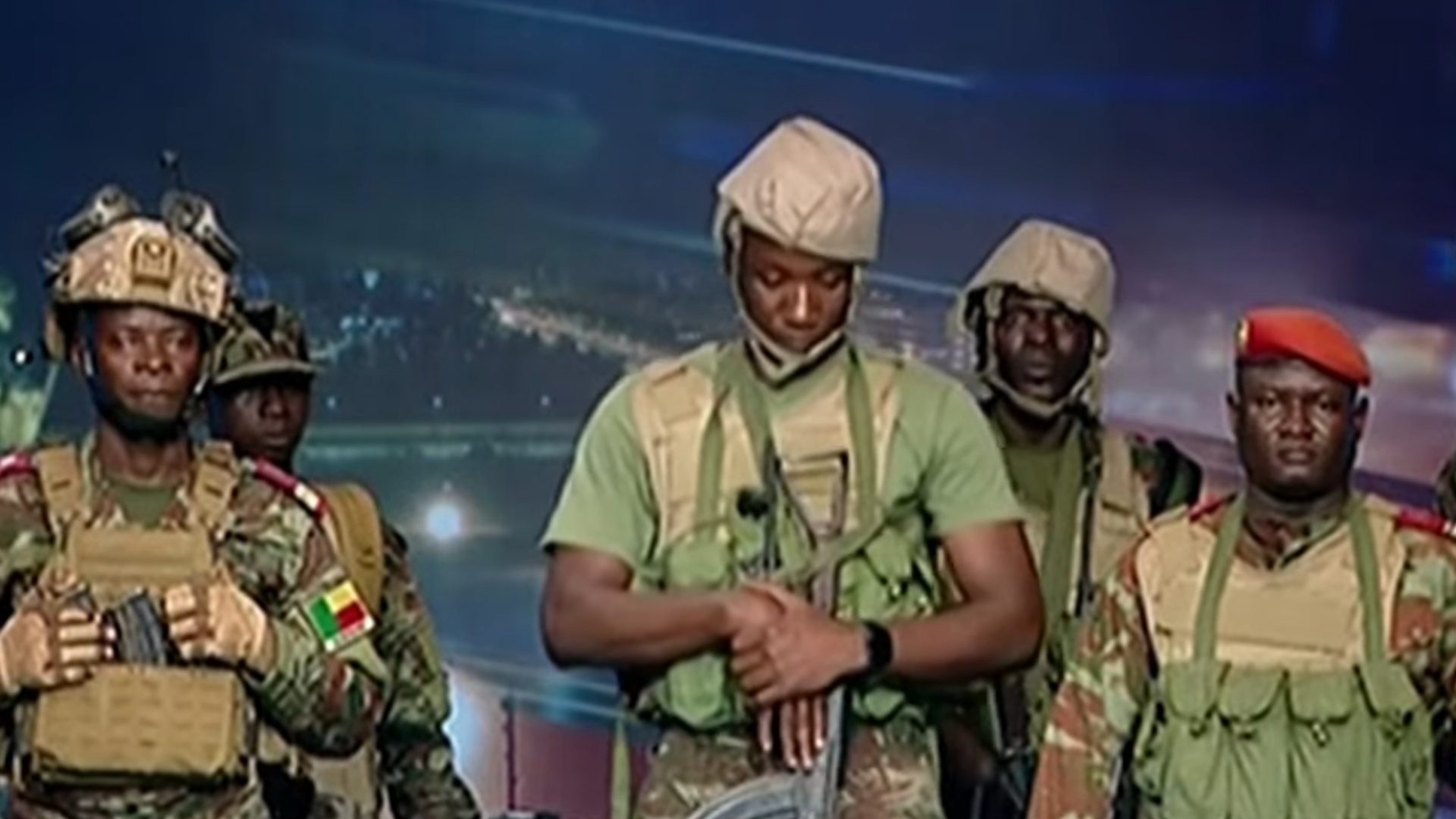
On the morning of December 7, 2025, the usually lively and humid streets of Cotonou—Benin’s economic heartbeat—suddenly fell into an uneasy hush. Gunshots rang out through the city, and heavily armed soldiers descended upon the headquarters of the state broadcaster. What followed was a bold yet ultimately failed coup, orchestrated by a disgruntled group of military officers. These plotters went live on national TV, declared President Patrice Talon ousted, and claimed the government had been dissolved. But by evening, loyalist forces had wrested control back, arrested fourteen of the coup leaders, and managed to restore a tense calm to the city.
In a rapid-fire response, troops from Nigeria, Sierra Leone, Côte d’Ivoire, and Ghana landed under the banner of the Economic Community of West African States (ECOWAS), aiming to stabilize the situation. The speed and scale of the intervention really underscored just how precarious democracy in West Africa remains. This was Benin’s most significant coup scare since 1972, and it’s tough to ignore the echoes of military unrest that have swept across the Sahel and Gulf of Guinea lately. With nearby countries like Niger, Burkina Faso, and Mali now under military rule, Benin’s quick suppression—thanks to internal and international support—offers, maybe, a slim ray of hope for constitutional order in the region.
Still, even as President Talon calls for harsh punishment and ECOWAS keeps its standby force on alert, a lot of questions hang in the air: What exactly drove these “adventurers”—Talon’s word—to take such drastic action? And is sending in foreign troops enough to stop future fractures, especially in a region battered by jihadist violence and economic troubles?
The Dawn of Disloyalty: How the Coup Unfolded
The attempted takeover began to take shape in the very early hours of December 7. A faction calling itself the “Military Committee for Refoundation” (CMR), headed by Lieutenant Colonel Pascal Tigri, launched a series of coordinated attacks on key targets. They fired shots at Talon’s presidential residence in Cotonou, targeted the homes of top military officials, and stormed the state media outlet, the Office de Radiodiffusion et de Télévision du Bénin (ORTB).
Around 7 a.m., CMR soldiers took control of the TV station and broadcast a chilling announcement: the constitution was void, parliament was suspended, and a transitional regime would now take charge, answerable only to the military. Their message, delivered by a masked officer on camera, railed against Talon’s “authoritarian drift,” economic mismanagement, and what they called neglect of security in the north—where jihadist attacks spilling over from the Sahel have only gotten worse. “The army solemnly commits to give the Beninese people the hope of a truly new era, where fraternity, justice, and work prevail,” the statement declared, borrowing language not unlike that of recent successful coups elsewhere in the region.
What happened next was messy. There were sporadic skirmishes—one rebel vehicle got blasted at the TV station, and mutineers at Camp Togbin military base briefly rose up before loyalists quickly countered. Benin’s authorities moved fast. Interior Minister Alassane Seidou gave credit to the Forces Armées Béninoises (FAB), saying they’d crushed the coup by 11:09 a.m. Loyalist troops counterattacked with help from French surveillance and logistics. For a tense few hours, rumors about Talon’s whereabouts swirled—some even whispered he’d been captured—until he appeared on state TV that evening to announce the situation was “totally under control.”
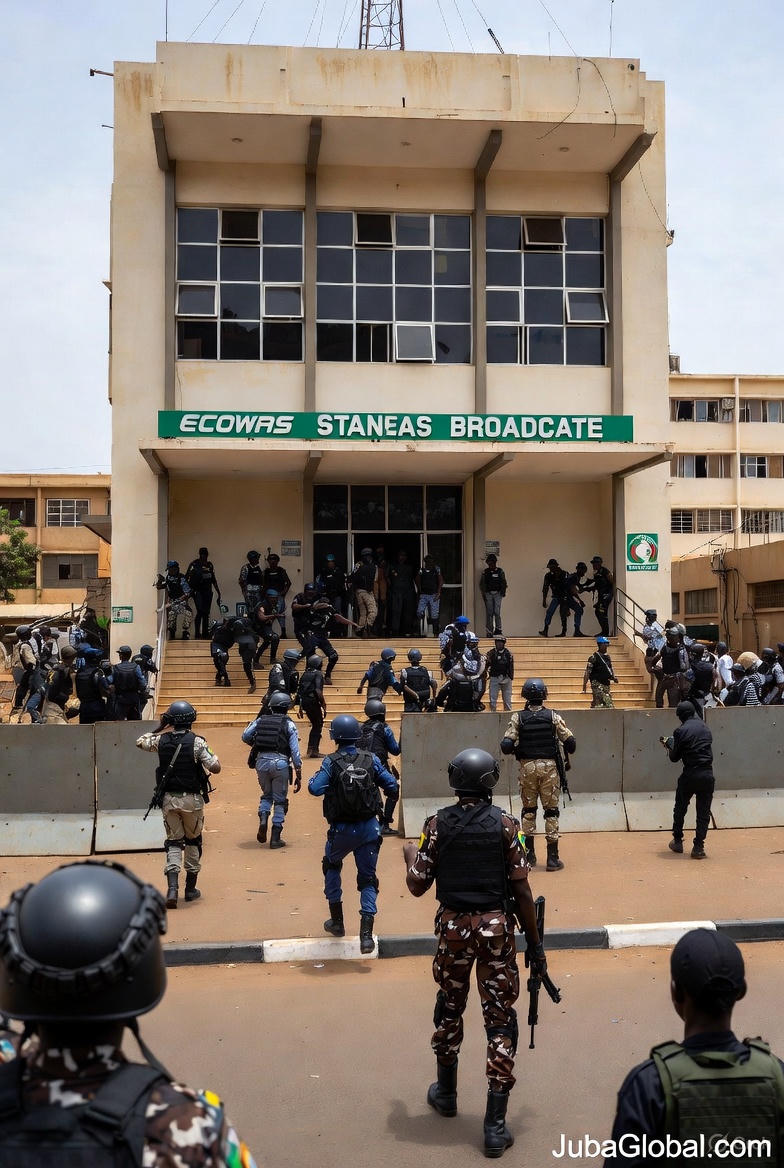
“This treachery will not go unpunished,” he warned, taking pains to emphasize the army’s loyalty and its constitutional duties. Government spokesperson Wilfried Léandre Houngbedji confirmed fourteen arrests, including Tigri, who reportedly slipped away to Togo, although a manhunt continues. Loss of life, though tragic, was limited: several soldiers from both sides died, and at least one civilian was killed in the crossfire near the broadcaster. By midday, the streets of Cotonou and Porto-Novo were mostly back to normal—markets reopened, and daily life resumed, more or less. Still, the coup’s brevity didn’t mean all was well beneath the surface; blocked access to international agencies and a luxury hotel hinted that rebels may have had much bigger plans.
Talon’s Tenure: Reforms, Repression, and Regional Ripples
To really grasp why the coup attempt happened, you have to look at the ups and downs of Patrice Talon’s presidency. Elected in 2016 as a wealthy cotton entrepreneur with no real political background, Talon pitched himself as the man to revive Benin’s economy. He made big moves on infrastructure and anti-corruption, and before COVID hit, Benin was posting solid GDP growth—averaging 6% annually—thanks in large part to expanded ports at Sèmè and a boost in agricultural exports. His “Benin Revealed” campaign to promote tourism and a series of digital reforms drew praise from the World Bank.
But, unsurprisingly, there’s another side to the story. Critics see Talon as an increasingly authoritarian figure. Changes to the constitution in 2019 barred opposition candidates, so his 2021 reelection went uncontested—boycotted by opponents, marked by protests. Journalists have felt the squeeze, facing harassment, and high-profile opponents like Reckya Madougou sit behind bars on terrorism charges. Meanwhile, in the north, violence spilling over from Mali and Burkina Faso has forced thousands to flee, straining both the army and public services. That’s left soldiers angry about low pay and poor equipment—a key grievance for the CMR plotters.
This isn’t just a Benin problem. Since 2020, West Africa’s seen a rash of coups—eight in total—toppling elected leaders and replacing them with juntas in Mali (twice), Guinea, Burkina Faso (twice), Niger, Chad, and even a near-miss in Guinea-Bissau last month. Benin, which had stood out for its peaceful power transitions since 1991, now finds itself infected by what some call the “coup contagion.” Adama Gaye, a former ECOWAS communications chief, noted that this plot “shouldn’t surprise anyone,” given Talon’s divisive approach and the seductive narrative of military strongmen—stories amplified by social media and outright disinformation.
ECOWAS Mobilizes: A Standby Force for Stability
The regional response came quickly and without division. ECOWAS Chair and Nigerian President Bola Tinubu didn’t mince words, branding the coup as a “direct assault on democracy.” Nigerian fighter jets were scrambled to watch over Beninese airspace, and ground troops were dispatched to help loyalists retake the TV station and Camp Togbin. By 7:37 p.m., ECOWAS announced it had activated its Standby Force—a rapid reaction force of about 5,000 soldiers—to “preserve constitutional order and territorial integrity.” Troops from Nigeria, Sierra Leone, Côte d’Ivoire, and Ghana landed in Cotonou by December 8, patrolling major sites and working with the FAB to mop up any remaining threats.
France, long an ally to Benin, pitched in with intelligence and coordination, with President Emmanuel Macron in direct contact with both Talon and ECOWAS. Heavyweights like the African Union and the UN also spoke out—AU Commission Chair Mahmoud Ali Youssouf promised to back “democratic institutions,” and Secretary-General António Guterres issued a stern condemnation.
This deployment signaled a return to ECOWAS’s tough-on-coups playbook, which had been under strain since Sahelian states like Burkina Faso, Mali, and Niger formed their own Alliance of Sahel States in 2024. The Standby Force, only set up earlier in 2025 amid ongoing insurgencies, seems to mark a shift from sanctions to more hands-on stabilization. The Nigerian Senate’s green light on December 9 officially locked in Abuja’s leadership role, despite the fact Nigeria’s juggling its own security headaches.
Broader Implications: A Beacon or a Warning?
Benin’s rapid suppression of the coup certainly lifted spirits within ECOWAS, but it also laid bare plenty of vulnerabilities. The coup’s collapse hinged not just on the loyalty within the FAB, but also on outside help—and persistent threats up north (jihadist attacks killed dozens in 2025 alone) mean discontent could easily flare up again. There’s also the risk that Talon’s promised “retribution” might turn into purges or further alienation of parts of the security forces, while the presence of ECOWAS troops can spark mixed memories—some remember interventions like The Gambia’s ECOMIG mission in 2017, which had its own complications.
Economically, the events shook investor nerves: Benin’s stock market slid 2% on December 7, but managed to rebound quickly. Tourism and cotton—core to Benin’s $18 billion economy—might take a short-term hit, though Talon’s focus on big-ticket projects like the Glo-Djigbé Industrial Zone still makes the country attractive. For the whole of West Africa, the incident puts ECOWAS’s “zero tolerance” for coups to a tough test. With juntas tightening their grip on power and waves of disinformation stoking tensions, experts are calling for hybrid solutions: strengthen civilian oversight over the military, tackle root causes like youth joblessness—which, by the way, sits above 30% in Benin—and push back against the online spread of radical ideas.
Charting a Steady Course: Pathways to Enduring Peace
Now, as ECOWAS troops begin to work alongside FAB patrols and investigations dig into the CMR networks, Talon faces a tricky balance between seeking justice and fostering reconciliation. Rolling out security reforms that actually include everyone—think: upping funds in the north, improving conditions for soldiers—might start to close old rifts. And you know, making sure any trials are transparent could discourage future coups without wrecking the independence of the courts.
On a broader scale, this “foiled” attempt seems to prove ECOWAS still has a role to play, but making a real difference means pouring resources into early warning systems and lifting up the youth. Benin—Africa’s oldest democracy, mind you—sits at a pivotal moment: either shore up its institutions to fend off the region’s coup contagion, or risk falling into the chaos that’s sweeping over neighboring countries.
In Cotonou, especially around those tough-as-nails vendors by ORTB, business is picking up again, and there’s a stubborn pride in the air. Even so, while Talon projects calm, the whole continent seems to be holding its breath: Is this Benin’s chance to prove its democratic backbone—or is it just a brief calm before the next storm hits?
